Show and Tell, April 2021

Ange: 

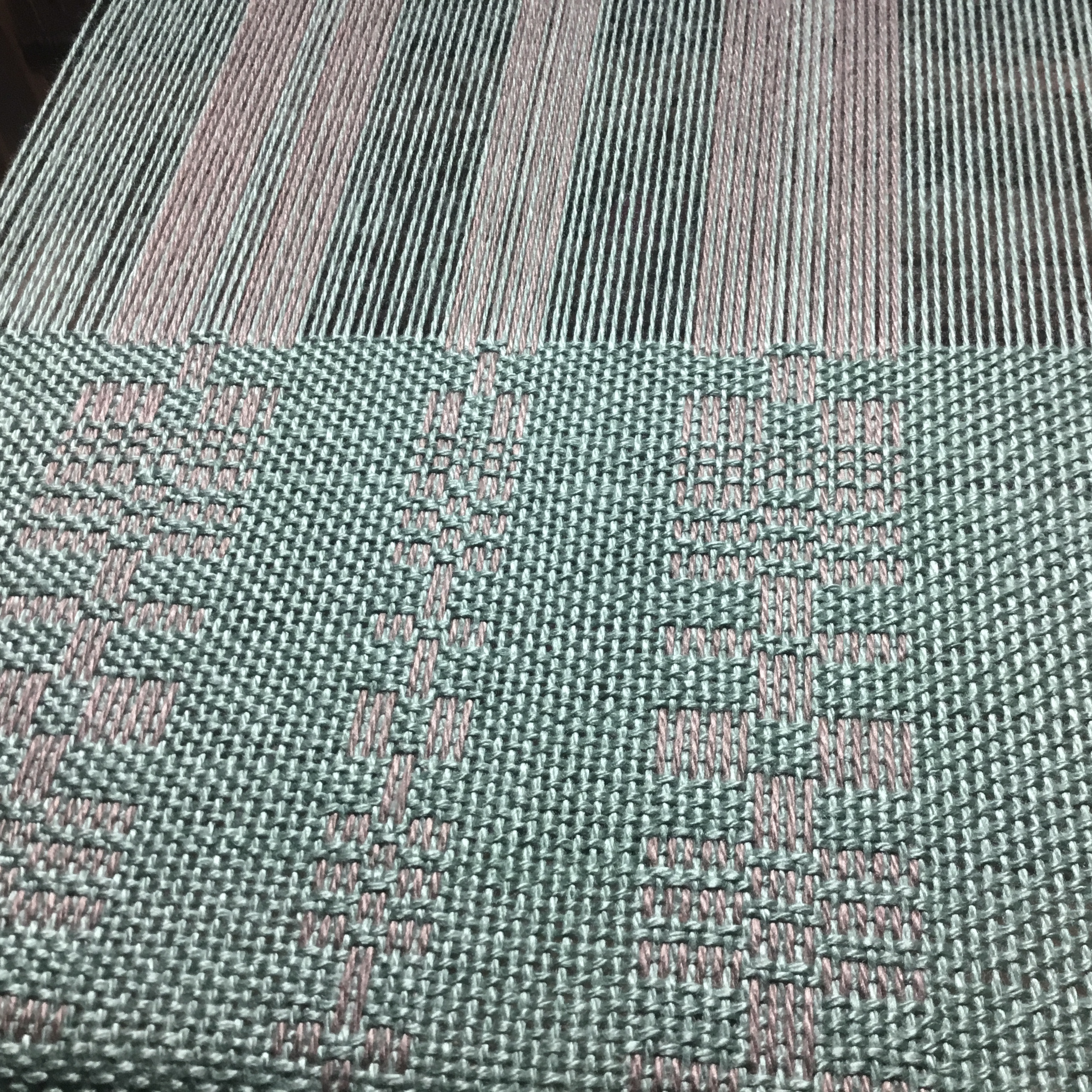
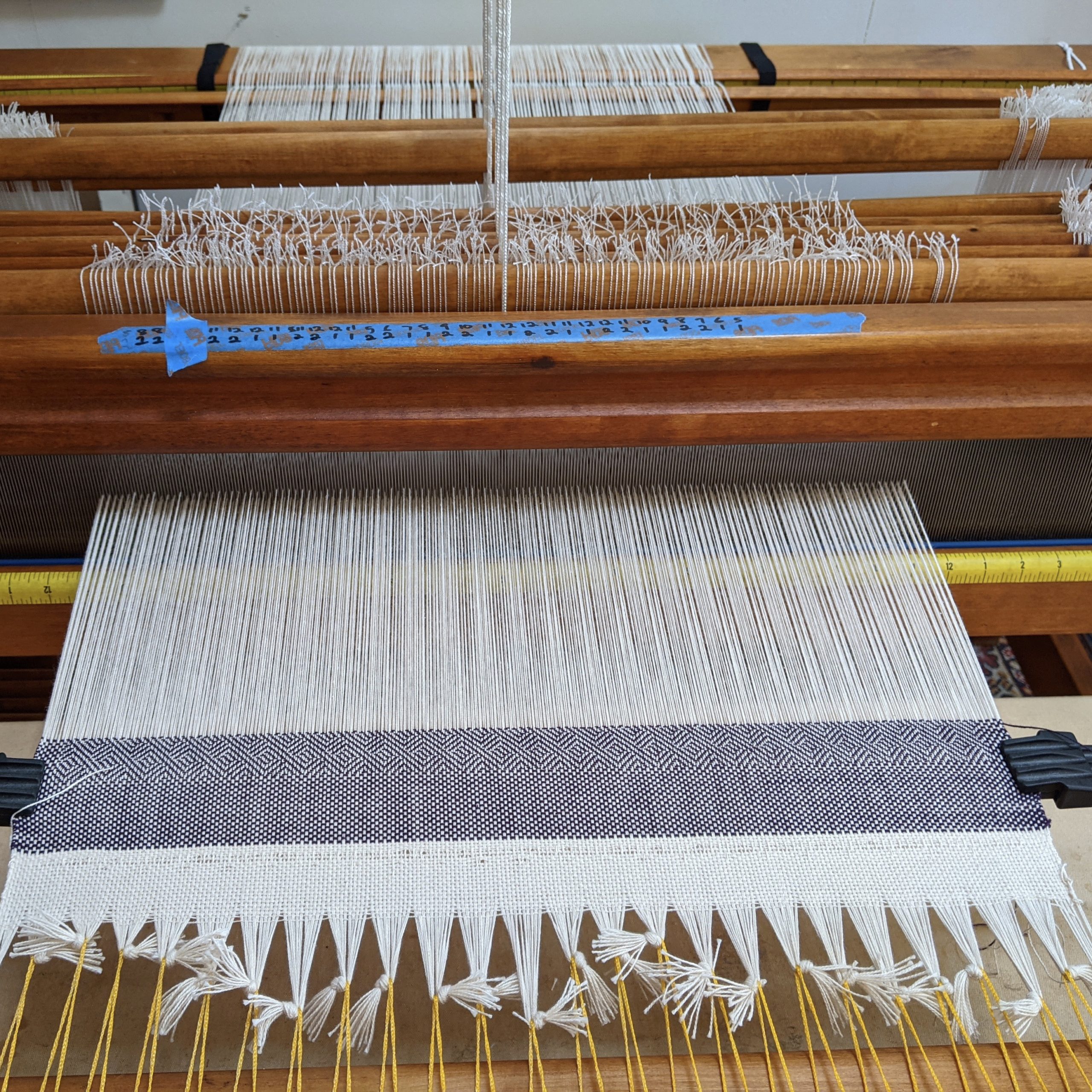
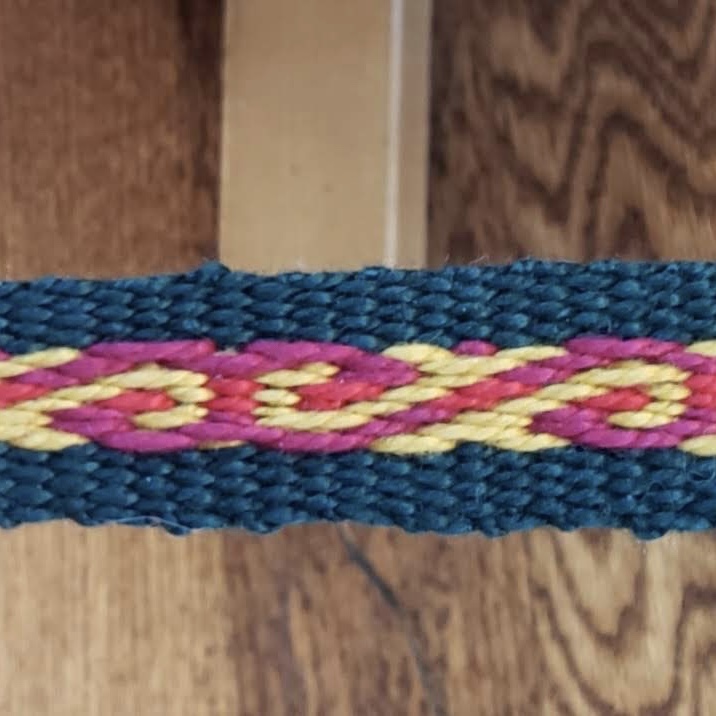
I made this band in the recent  Andean Pebble Weave workshop taught by Laverne Waddington; it’s 3/2 cotton in whatever colors I had in stash.


Betsy B:

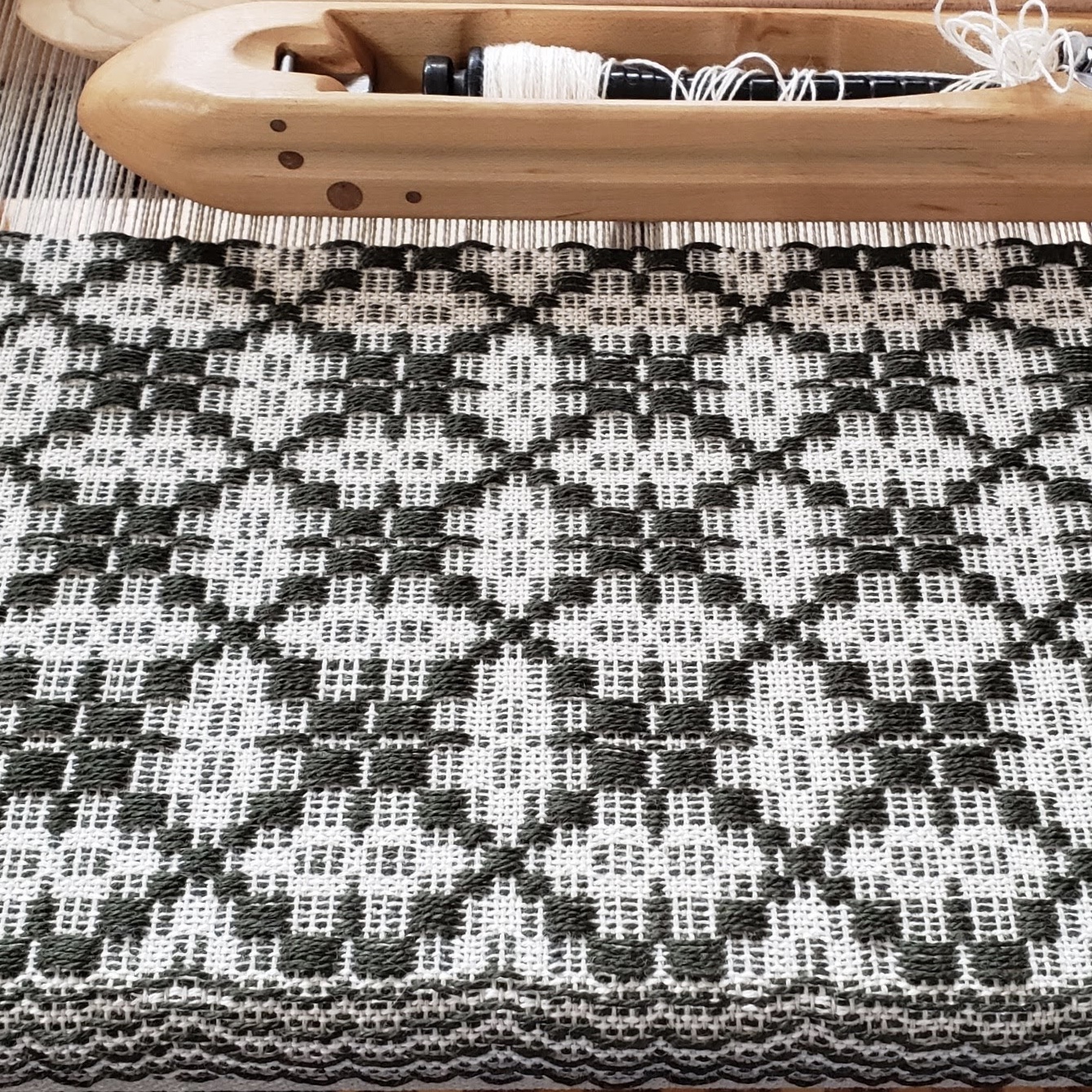
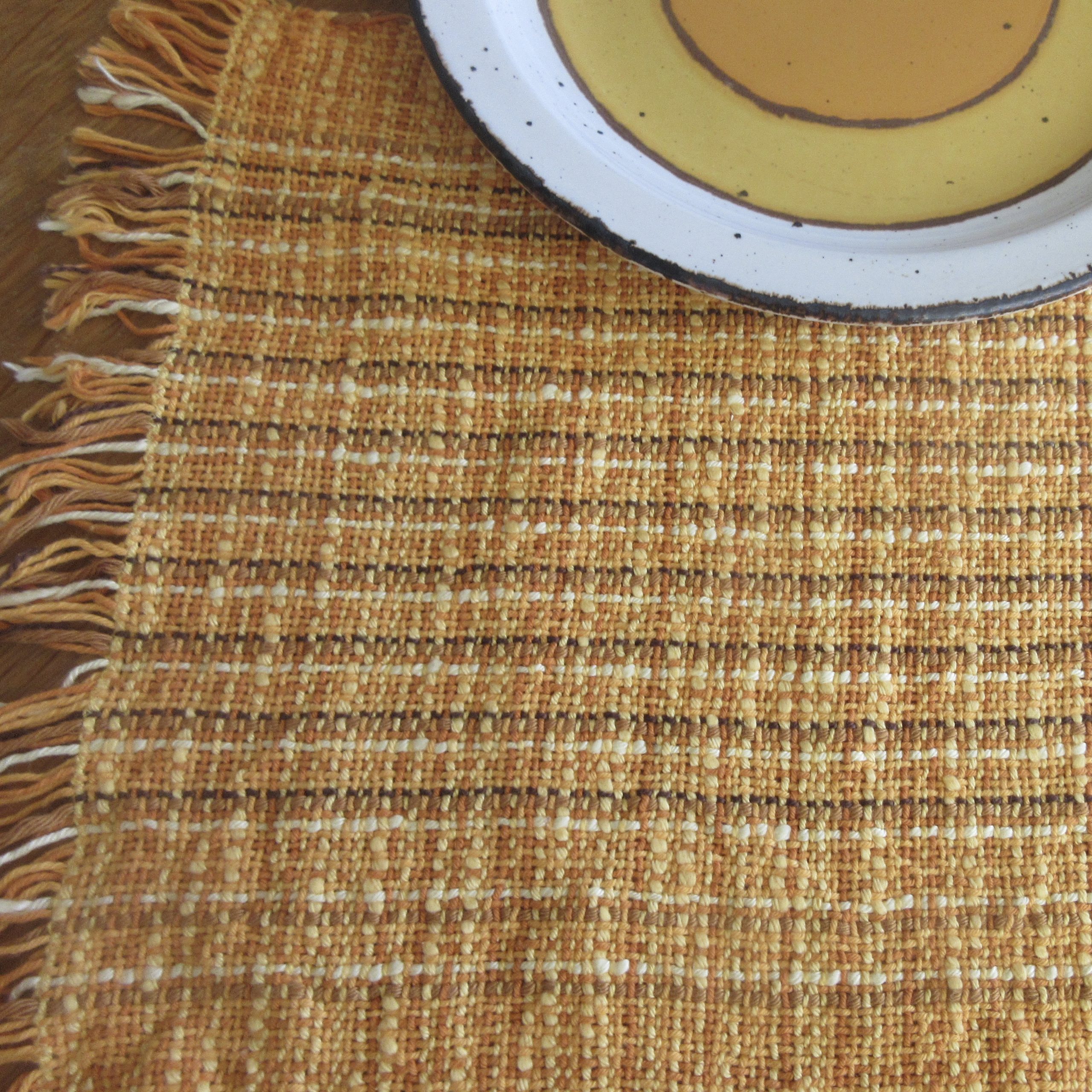
My 18-year placemats! They were on my loom for 18 years (long story) and were designed to go with the dishes pictured here. They are now off the loom!

May 20 – Jennifer Moore

Mathemagical Design – Geometry in Textiles

Mathemagical Design Logo - Rainbow and Black woven designSince ancient times, human beings have observed the world around them and found recurring patterns in nature. The Golden Proportion, the Fibonacci Series, symmetry movements, tessellations and fractals are some of the mathematical ideas that have found their way into art and architecture for thousands of years. In this slide show we will see examples of how these ideas have been used throughout history, various cultures, and particularly in contemporary fiber art.

From the first time that Jennifer sat down at a loom, she was drawn to the orderly universe of colored threads and the rhythmic repetition in the process of weaving. Because of her background in piano and pipe organ, she felt an immediate affinity with this new stringed instrument whose patterns flowed from her hands in the form of color and design rather than sound.

Jennifer has developed new methods of setting up and weaving doubleweave and made it accessible and understandable for all weavers. Her techniques and systems for working in doubleweave can also be found in my book The Weaver’s Studio: Doubleweave and in her online courses.

Show and Tell, March 2021

Gloria: 

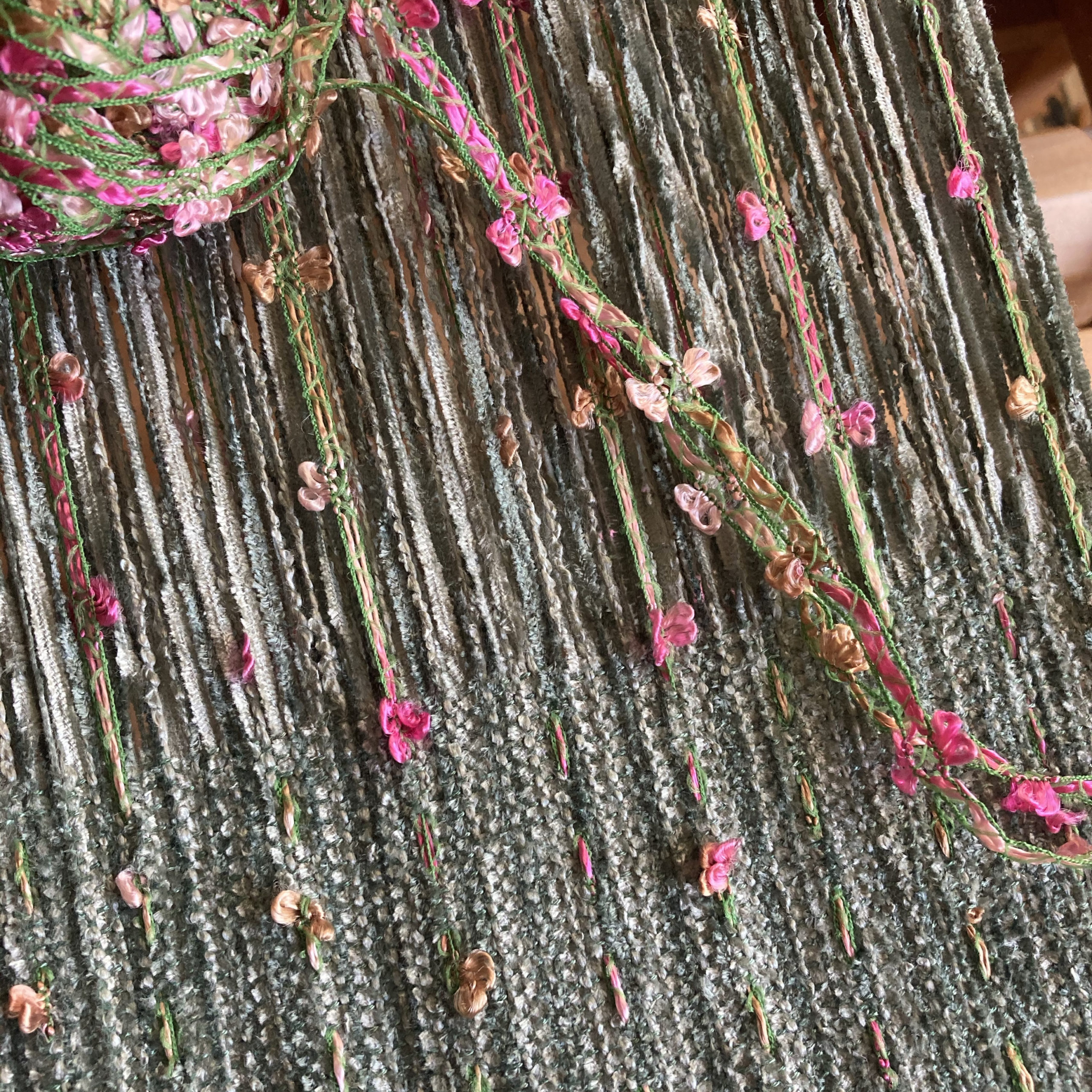
Here’s what’s on the loom right now. After all our discussions about supplementary warp and my need to work from the stash I decided to break  into a single ball of precious novelty yarn and threaded it to float above some muted greens—rayon chenille and boucle with a tencel weft.


Kathy S:

Supplemental warp done in 4 shafts.  5/2 bamboo for warp and weft .


March 18 – Robyn Spady

Totally Twill – The Basics

Parallell Twills Sample by Robyn Spady: red weft with orange warpTwills are one of the most versatile weave structures and the possibilities are amazing! The breadth of weaving twills can be a bit daunting, but so much fun! In this program, Robyn will cover the basics from straight draw and point twills and then move on to broken, undulating, M&W, Dornick, plaited, and turned twills.

Robyn Spady was introduced to handweaving as a baby with her handwoven baby blanket woven by her great-grandmother.  Inspired by her blankie, she learned to weave at a young age and has been weaving for over 50 years.  She completed HGA’s Certificate of Excellence in Handweaving (COE-W) in 2004 with the specialized study Loom-controlled Stitched Double Cloth.    Robyn is fascinated by the infinite possibilities of crossing threads and loves coming up with new ideas to create fabric and transform it into something new and exciting. She is committed to turning the weaving world on to double-faced fabrics, four-shaft weaves, uncommon and advanced weave structures, and passementerie techniques.

In 2016, Robyn launched Heddlecraft®, a digital magazine for handweavers. She believed there was a void in educational resources for the intermediate-to-advanced weaver (and adventure-seeking beginners).

February 18 – Ruby Leslie

Sampling is Not a Dirty Word!

Ruby entrapped in warpAre you a member of that illustrious “full-size sample” club, feeling guilty that you should have sampled first…but there wasn’t enough time, yarn, or money available, and you were sure your weaving software would figure out everything for you? Listen up! The aim of sampling is to acquire information, not cause guilt or pain! Stop treating sampling as a dreaded disease – sampling IS weaving and can significantly improve your textiles.

An inveterate sampler, Ruby has always tried to extract as much information as possible from each warp. After years of being a closet sampler, she wants to dismantle the negative ideas that the word “sampling” invokes and turn it into an easy habit to embrace. Sampling is more than weaving or not weaving a sample at the loom before embarking on a project. It is a design tool – an easily acquired way of thinking about how to weave and create cloth. There are techniques and strategies for how to extract a maximum amount of information from a surprisingly small investment of time, money and/or yarn.

Ruby Leslie maintains a full-time weaving and teaching studio in northern Vermont, where she designs her own line of handwovens as Ruby Charuby Weavings. Boundless enthusiasm for sampling and experimenting, especially with color and its interaction with structure, has guided Ruby’s creative endeavors from the beginning of her weaving career 30 years ago. Handwoven magazine’s invitation to become a contributing member of their ‘Color Forecast’ series, creating swatches on a regular basis, was the impetus for Ruby to streamline her design process. This fueled her desire to share her insights about how to successfully integrate color, structure and yarn in weaving without having to dye yarn or rely on recipes. Ruby has taught above the Arctic Circle in northern Norway and Greenland, as well as at Convergence, regional conferences and guilds throughout the US. She was one of three weaver/designer teams invited by the Handweavers Guild of America to create a collaborative runway ensemble for the second Design Fashion Challenge at Convergence 2010 in Albuquerque, NM.

The rhythms of her looms inspired her children to produce the music video Getya Loom Goin’  for their “Ma, the Weava.”

Show and Tell, Feb 2021

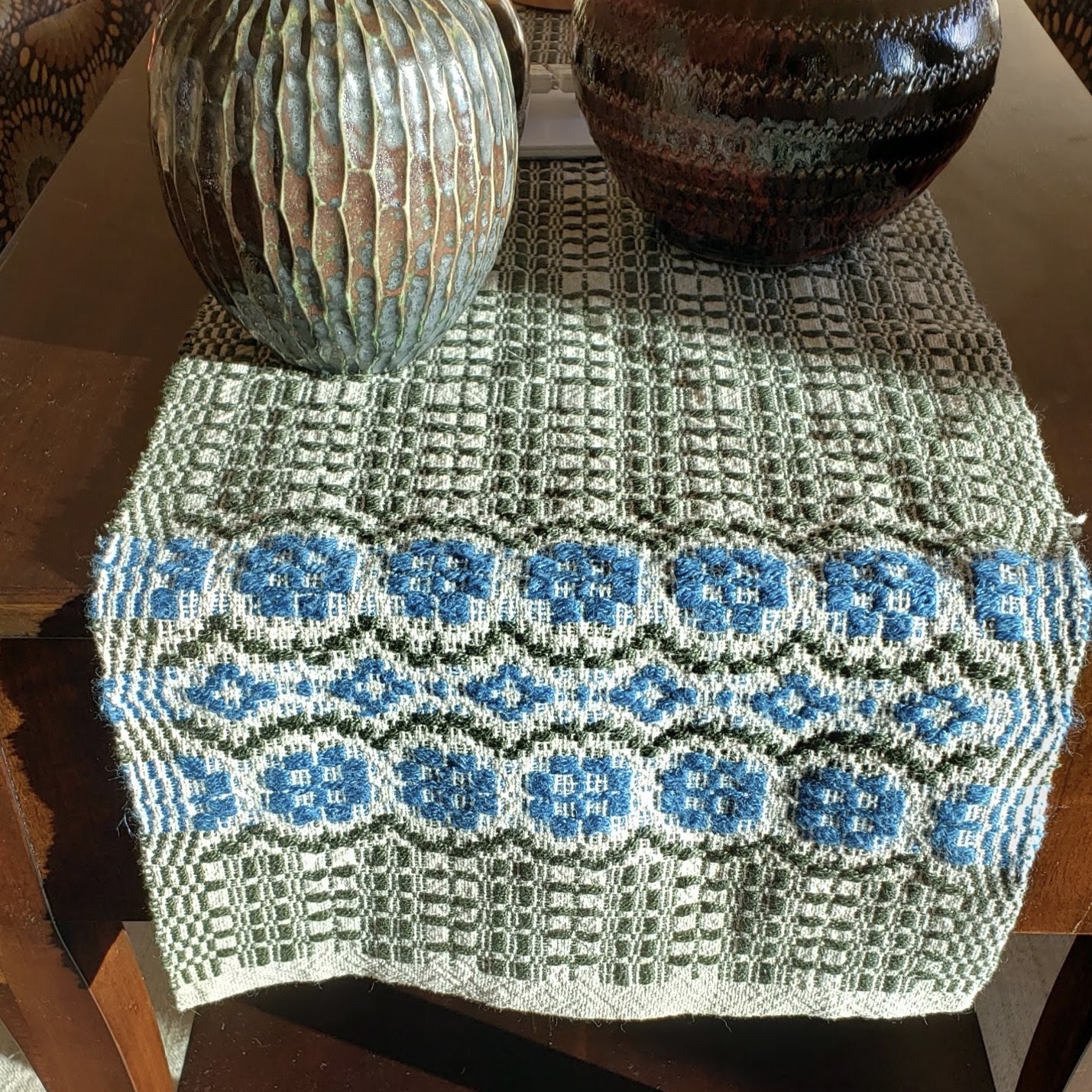
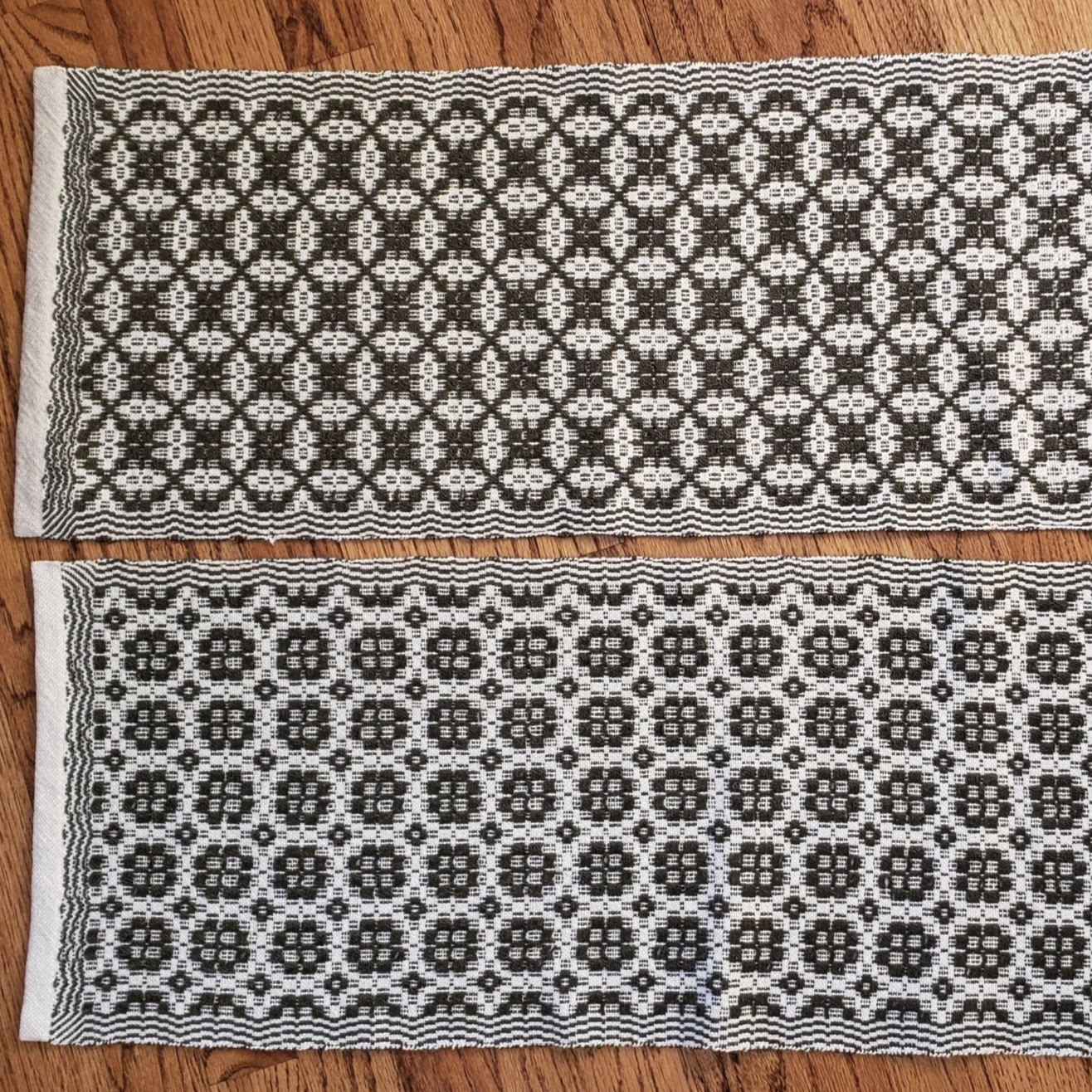
Ange: Overshot Runners

My first Overshot projects! Three runners from Janet Dawson’s Overshot class.


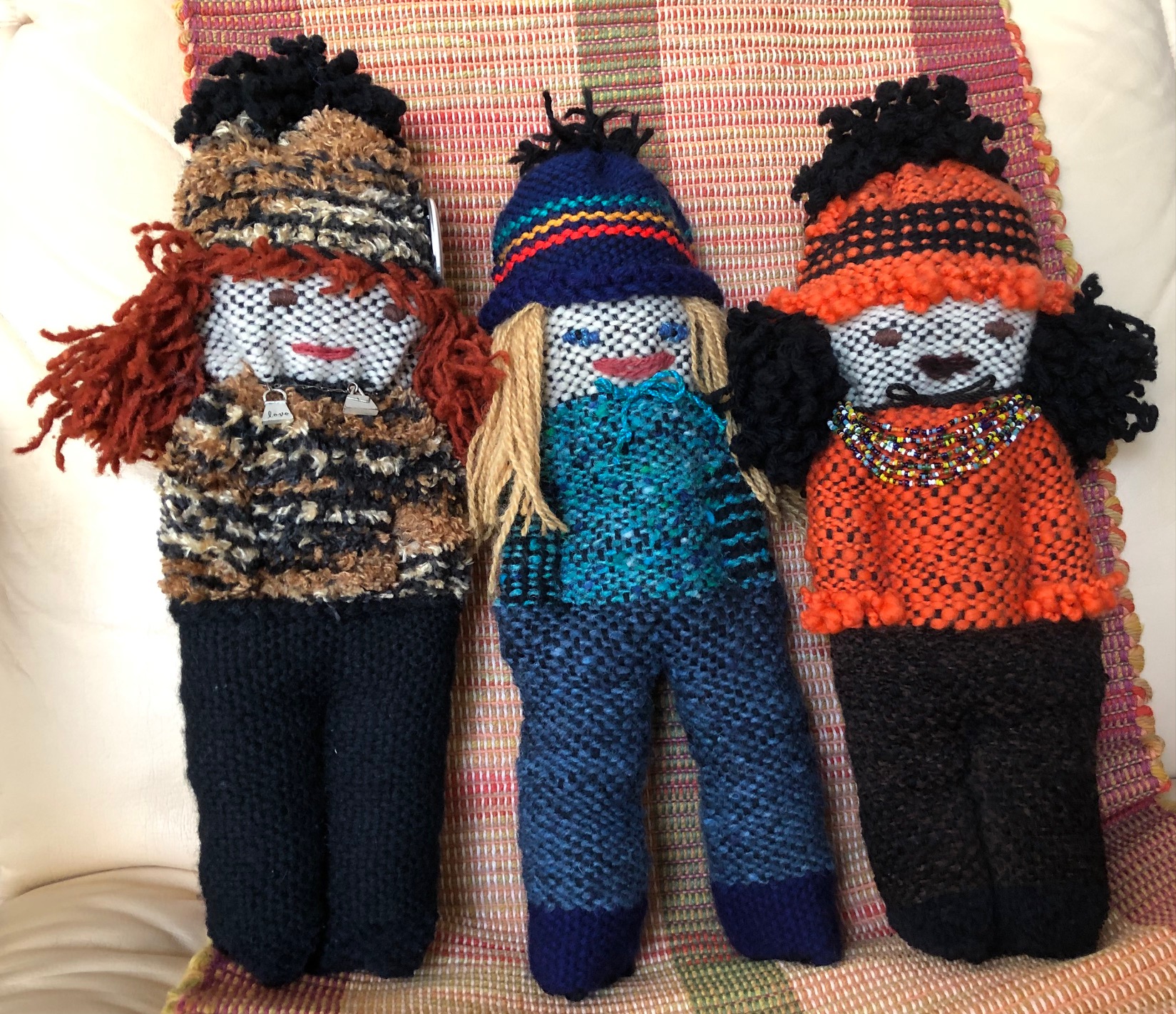
Gudrun:  The Gang is Back — Woven Dolls

“The Gang” was first described  in Weaver’s No 5, 1989. Members of the Gang have been seen at times, here are some from Mary Anderson’s collection
(https://wovenbyhand.wordpress.com/2020/07/17/mary-anderson-weavings/#jp-carousel-148) and (https://wovenbyhand.wordpress.com/2020/07/17/mary-anderson-weavings/#jp-carousel-143)

The weaving is a 4H doubleweave woven in the form of tubes. The shuttle goes either all the way across or is pulled out in the middle or sides to form legs and arms. The dolls quickly develop personality through their proportions, clothing, and embellishments. They do surprise you.


John:  Woven Towels

I’m taking an online weaving course by Joanne Hall, a well-known weaving teacher who works for Glimakra. It’s called Countermarch at Home, teaching people who are new to countermarch looms how to get the best results from their loom. I just started weaving a set of towels (for the exchange). The draft for the towel is the one that I created a few months ago by decoding a towel that Gudrun got from a friend many years ago. The class is great. My technique with my countermarch loom has improved quite a bit. Joanne is teaching a course in draw loom weaving in February.


Kaye and Sand: 


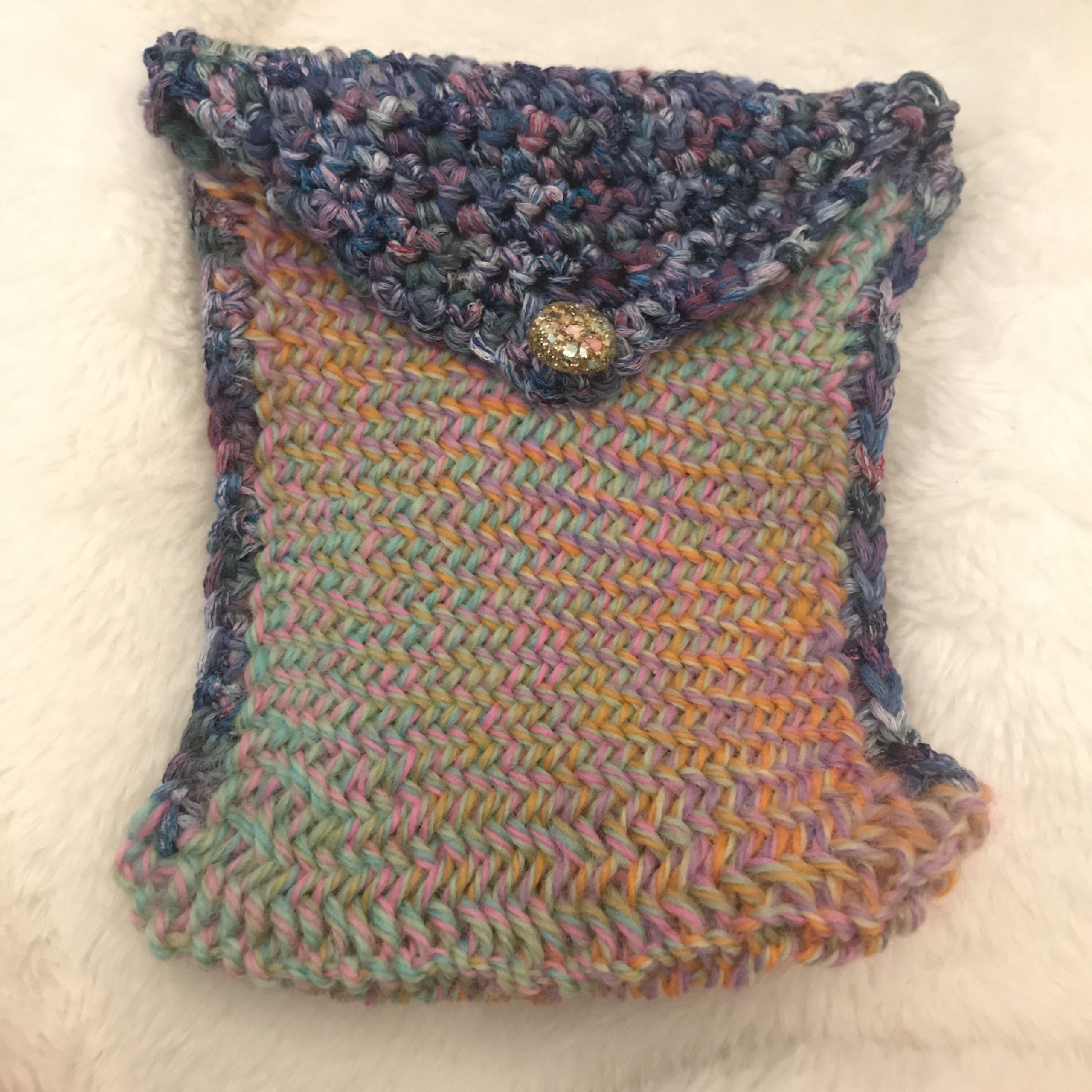
Marjorie:  Sprang Braided Pouch

This project is a 2-2 Sprang braided twill phone pouch.  I don’t know what the yarn is specifically for the body but that it’s wool. The other yarn is Tahki Tandem. The button is from Buttons! By Linda Sicard.


January 21 – Laverne Waddington

A program of images and video by Laverne Waddington on

AN INTRODUCTION TO WOVEN STRUCTURES USED IN SOUTH AMERICAN TEXTILES.

Simple looms do not necessarily mean simple textiles. Weavers in South America use rustic looms to create complex cloth employing a wide variety of techniques using complementary-warp structures and both supplementary warps and weft. Even plain-weave textiles are not in any way ‘’plain’’ when incorporating ikat or finished with intricate knotted fringes, colorful joining stitches and tubular edgings.

In this program Laverne will walk you through some of the various woven structures she has encountered while learning to weave in South America, share stories about her experiences learning them and show examples of how she has used these in her own work on the backstrap loom.

Laverne Waddington has been learning to weave on simple looms with indigenous teachers in South America since 1996. In her home in Santa Cruz, Bolivia, she draws on ethnic design influences from around the world to create pieces on a backstrap loom using the various techniques and structures she has studied in South and Central America as well as with backstrap weavers from Vietnam and Myanmar.

Since 2010, she has published eight instructional manuals on the various woven structures and finishing techniques that she has studied and produced a dvd on Operating a Backstrap Loom.

Her articles on backstrap weaving and indigenous textiles have appeared in Handwoven magazine. Shuttle, Spindle & Dyepot and Spin Off as well as in the published proceedings of the 2012 and 2016 Braid Society conferences.

She has shared her skills and experiences with many visitors to Bolivia over the years and now reaches a global audience with her weaving tutorials and travel tales on her blog. She provides online advice and support to weavers through forums such as Ravelry and teaches and speaks at guilds and textile conferences around the world.
Show and Tell, Jan 2021

Ange:  Twill Blanket & Overshot

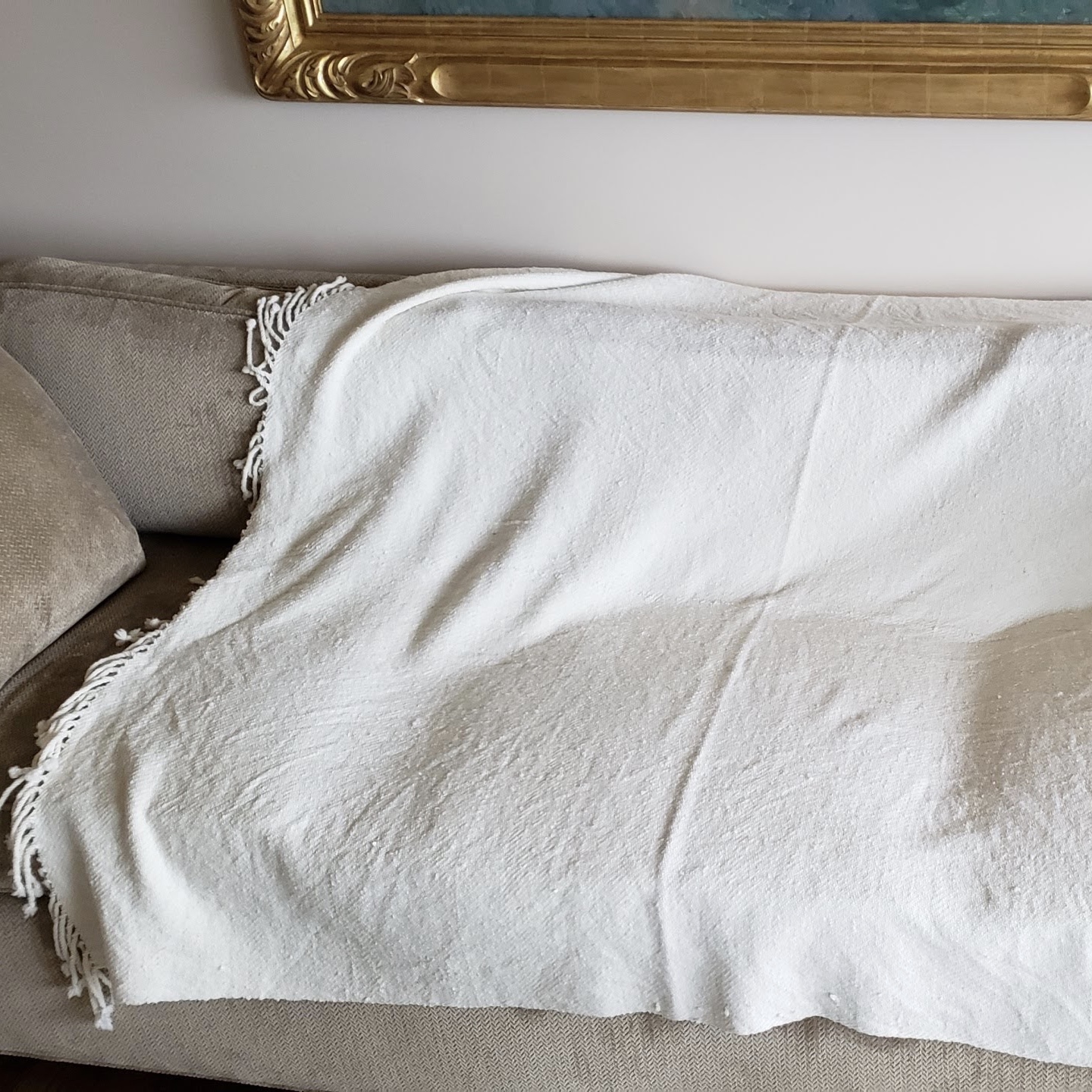
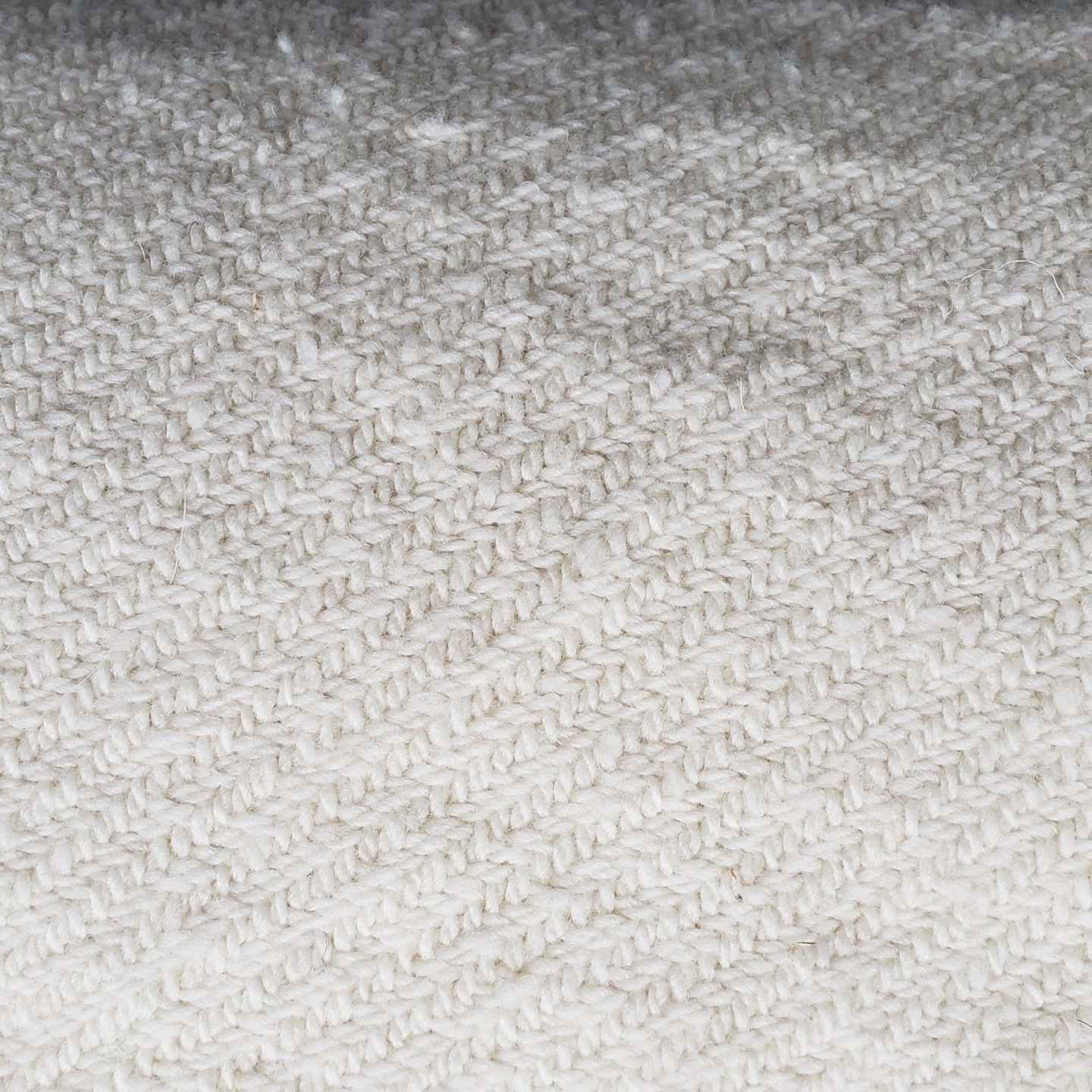
55 x 62 finished, not including fringe. It’s Timm Ranch wool from Meridian Jacobs, 10 EPI in a straight twill. I got about 25% shrinkage when I wet finished so it was ginormous on the loom but it went from a gauzy fabric on the loom to a beautifully soft and cohesive fabric off the loom. It’s natural white warp and white weft so hard to see any pattern on the photos… I attached one of it on the couch for size and another closeup of the twill.
I had two problems that I’ll note here…. One was the yarn was pretty lively twist wise so it wanted to kink up on me; I didn’t watch for that closely enough on the bottom layer so ended up with some parts where the weft doubles back on itself a bit. I fixed a bunch of them before wet finishing but left a few to see how they would look and now wish I’d fixed them. The second issue was that I was so afraid of pulling too tight at the fold that I didn’t pull tight enough so some of the threads there are a little loose; most of that came out in the wet finishing but not enough. Stripes would probably have hidden it 🙂


8/2 unmercerized cotton warp sett at 16 EPI and ground weft in pale green grey and 5/2 mercerized cotton pattern weft. I’m making it as part of Janet Dawson’s online overshot class.


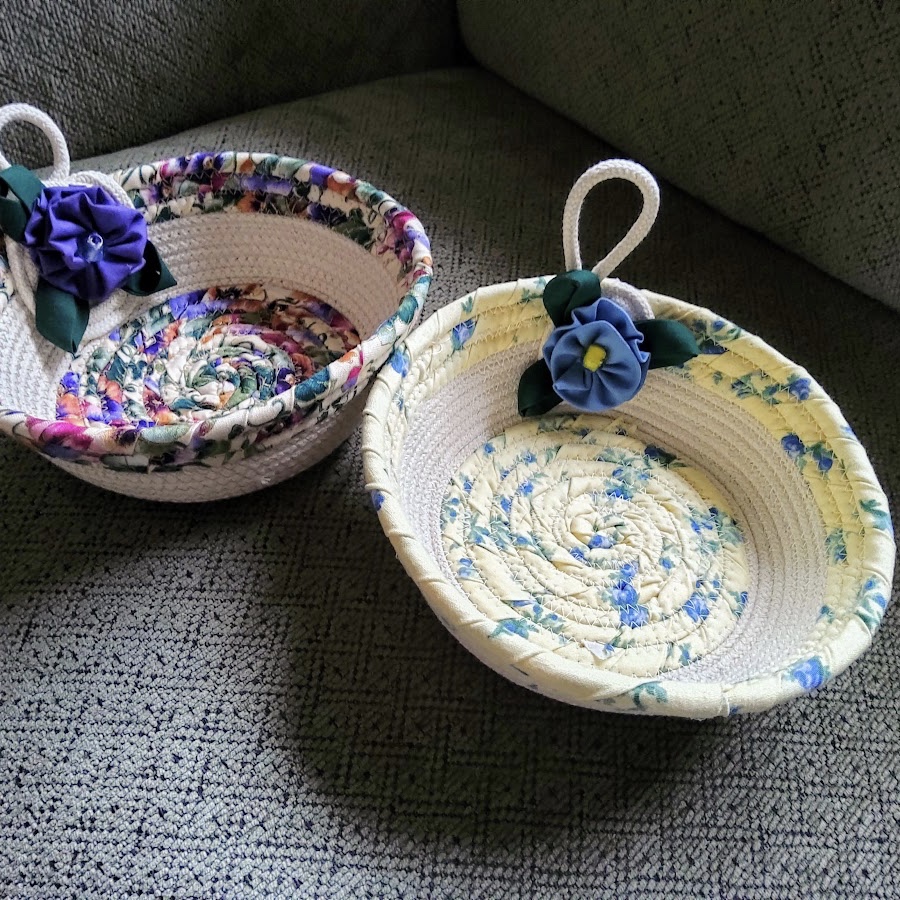
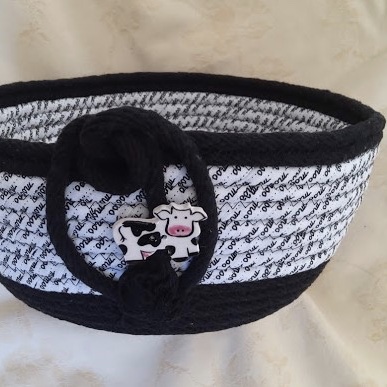
Cathy DiBenedetto:  Coiled Rope Baskets
I was inspired to learn about these coiled rope baskets when I saw one
that was shared on the website in May. Although that one was held
together be weaving, mine are sewn on the sewing machine. I have done
many while sheltering in place this past year.I use clothesline covered with strips of fabric. I fold over the top edge of the strip so it eliminates the raw edge. I think it makes a
nicer looking basket. It’s a great way to use leftover yardage or fat
quarters. I’ve also experimented with Macrame cording. It works well but
the basket is not as sturdy. My sewing machine appreciates the less
dense macrame cording though. Much easier to sew through!  The fun part
is creating different patterns with colors and prints. Also doing a
variety of finishing with flowers or tassels, beads and buttons.


Show and Tell, Dec 2020

Sharolene:  Vest

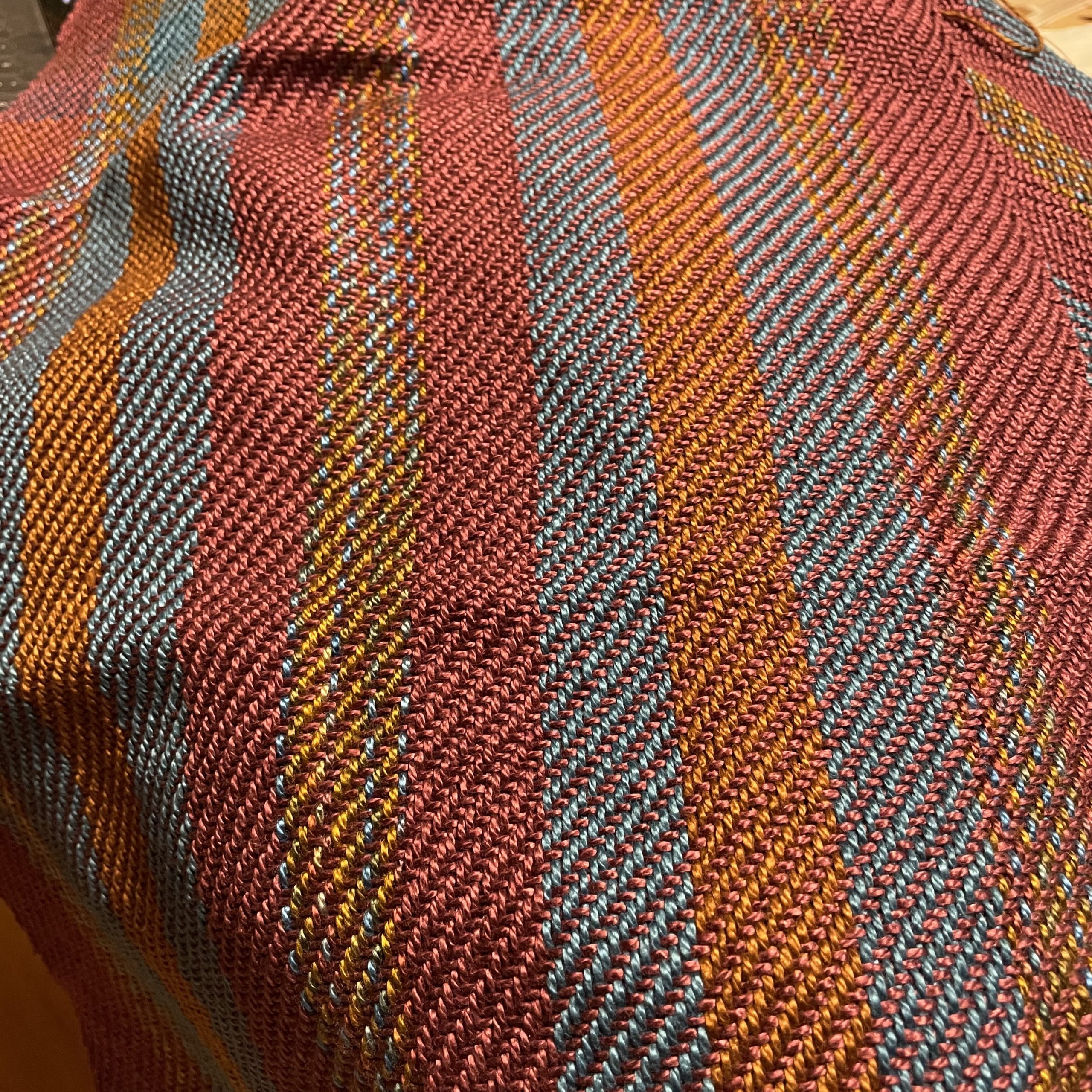
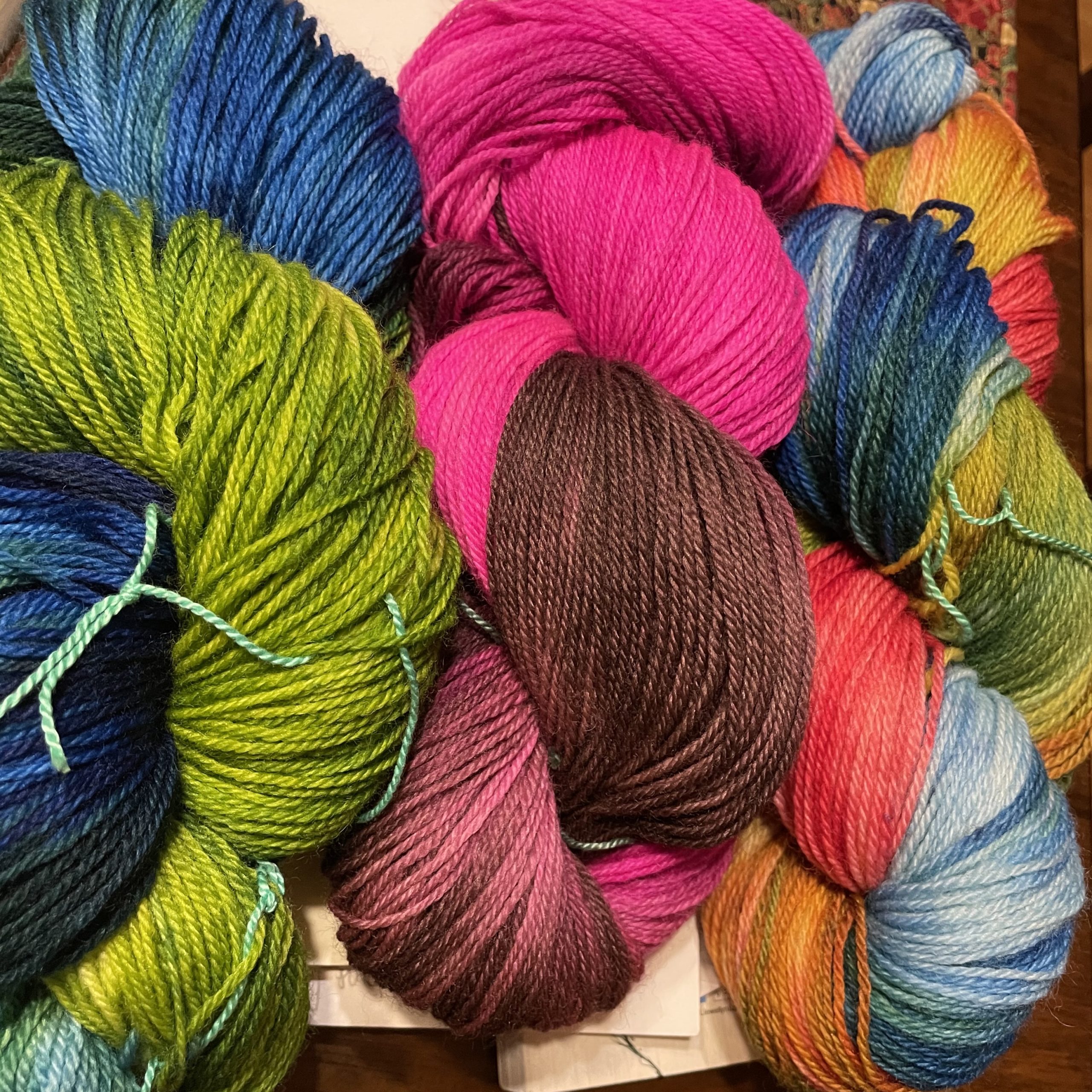
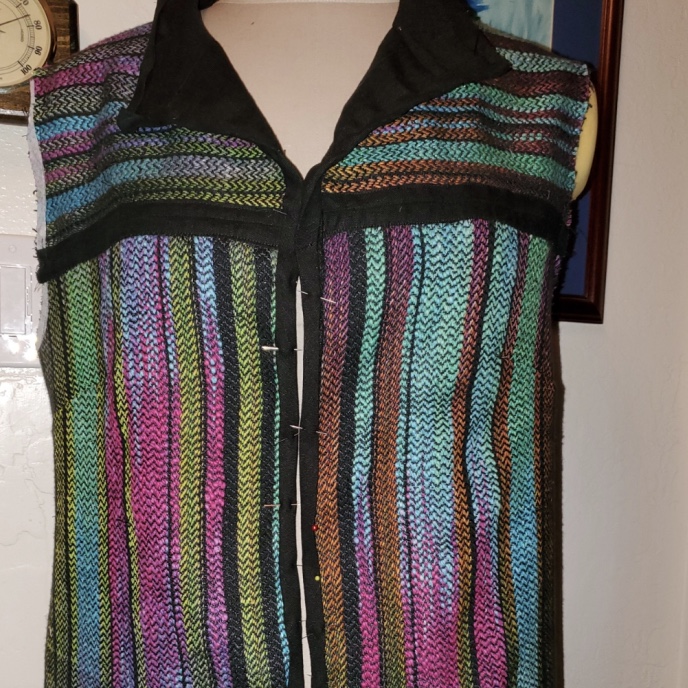
Daryl Lancaster designed vest. I used my hand woven fabric that I made with Kathryn Weber’s hand painted warps. Yarn is 100% cotton from 8/2 hand painted and 5/2 black. Weave structure is turned taquete. I am in the last stages of putting it together now. I still have to put on the trim and the zipper and a good press and I’ll be done.


Teddie:  Placemats and Table Runner

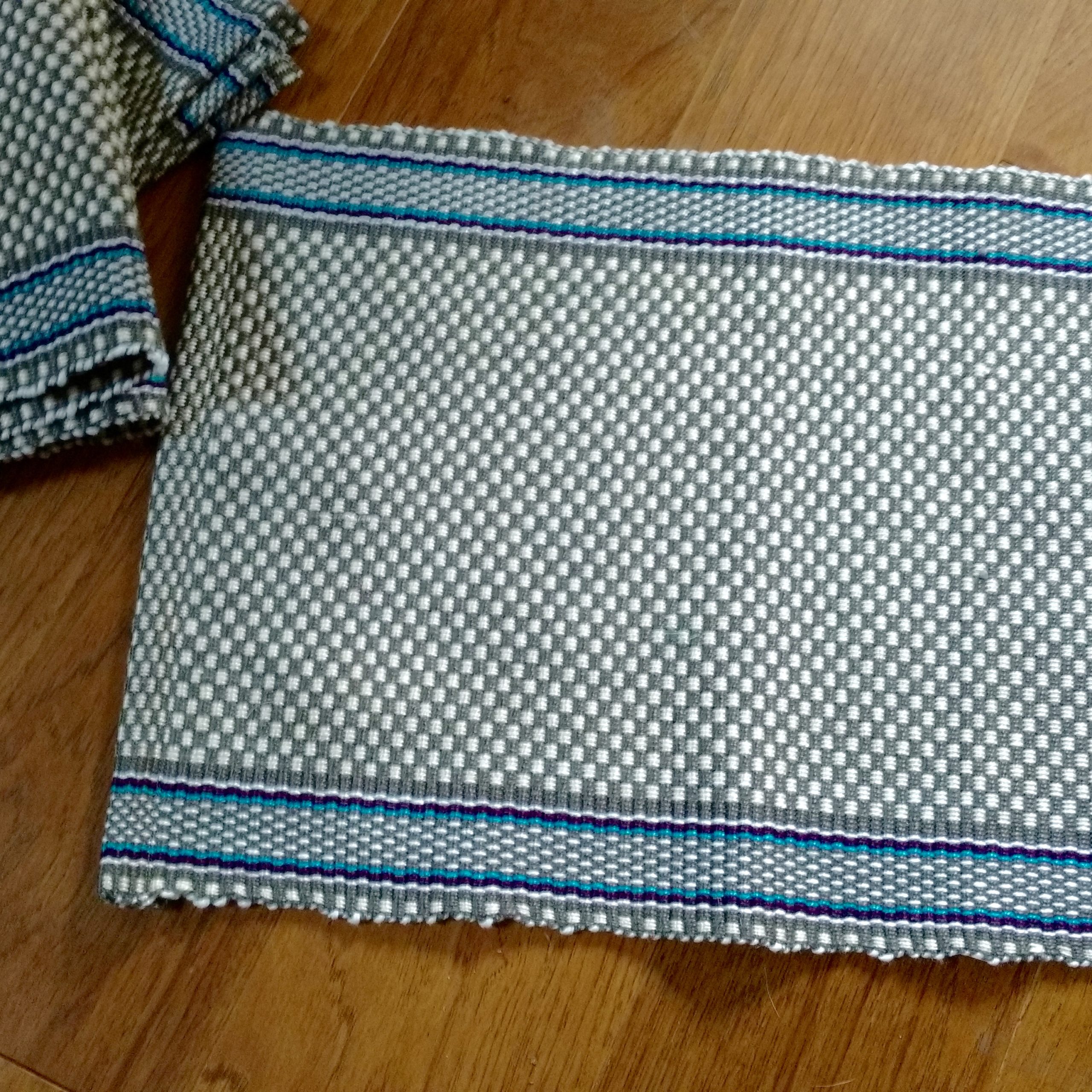
Four place mats and a table runner in rep weave. The pattern is from
Handwoven Sept/Oct 2005.