Show and Tell, Nov 2020

Johanna:

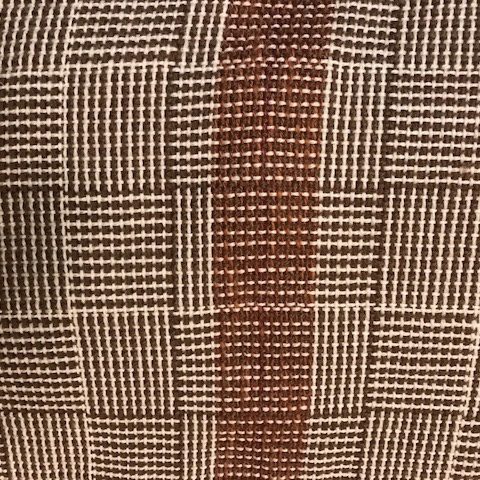
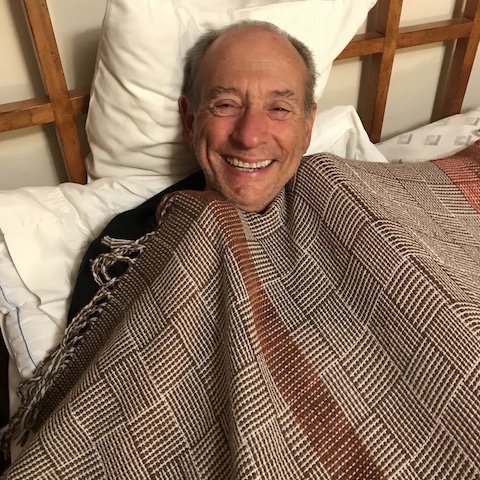
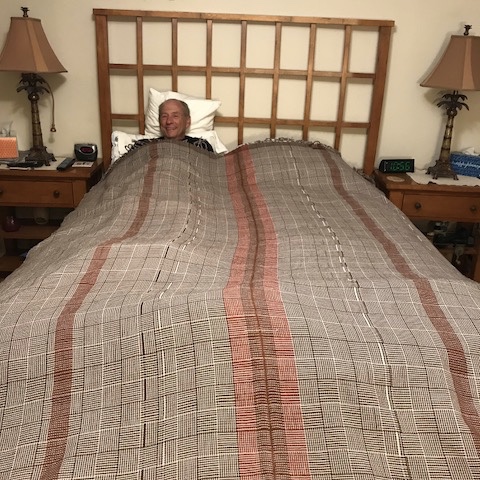
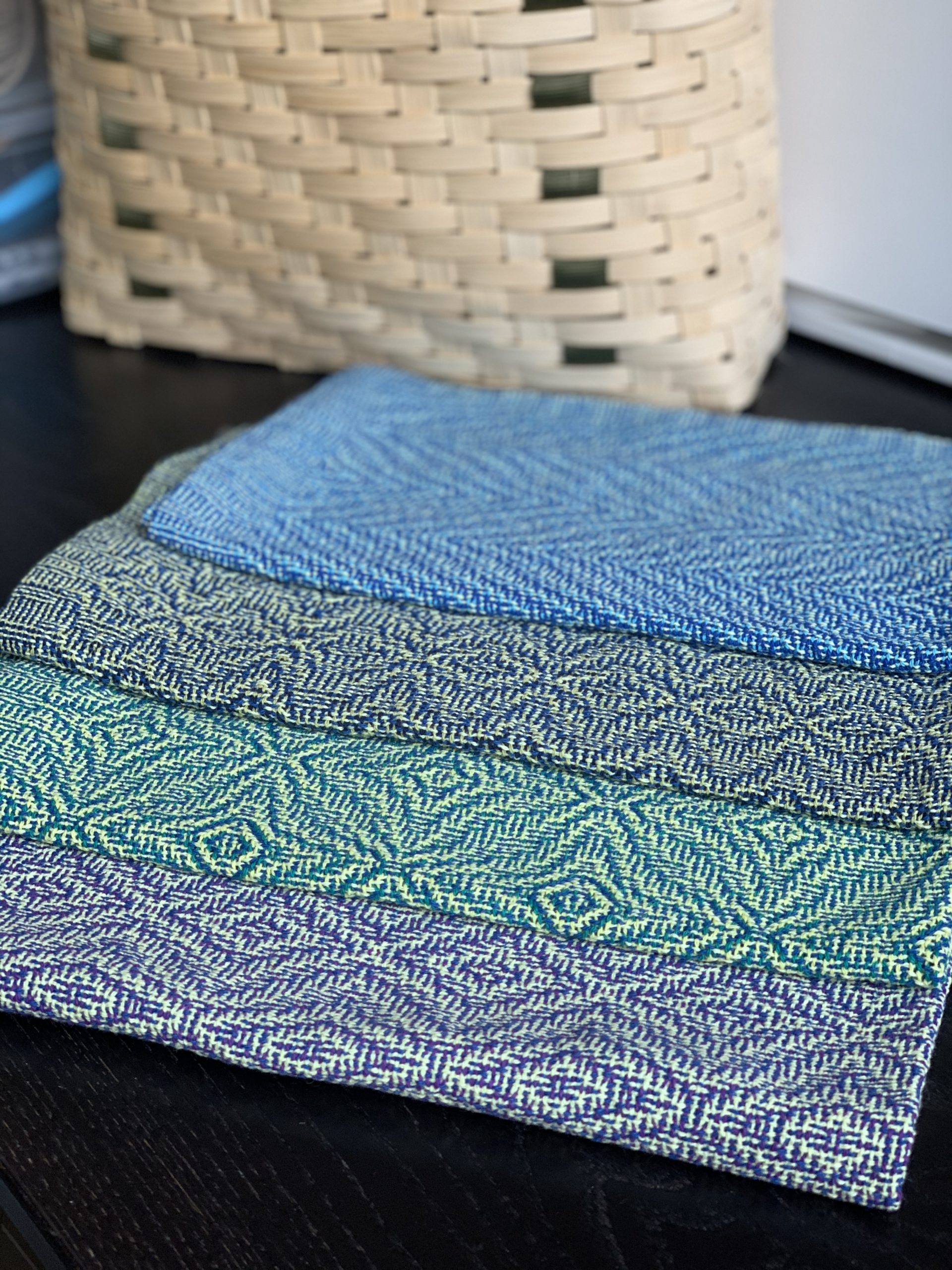
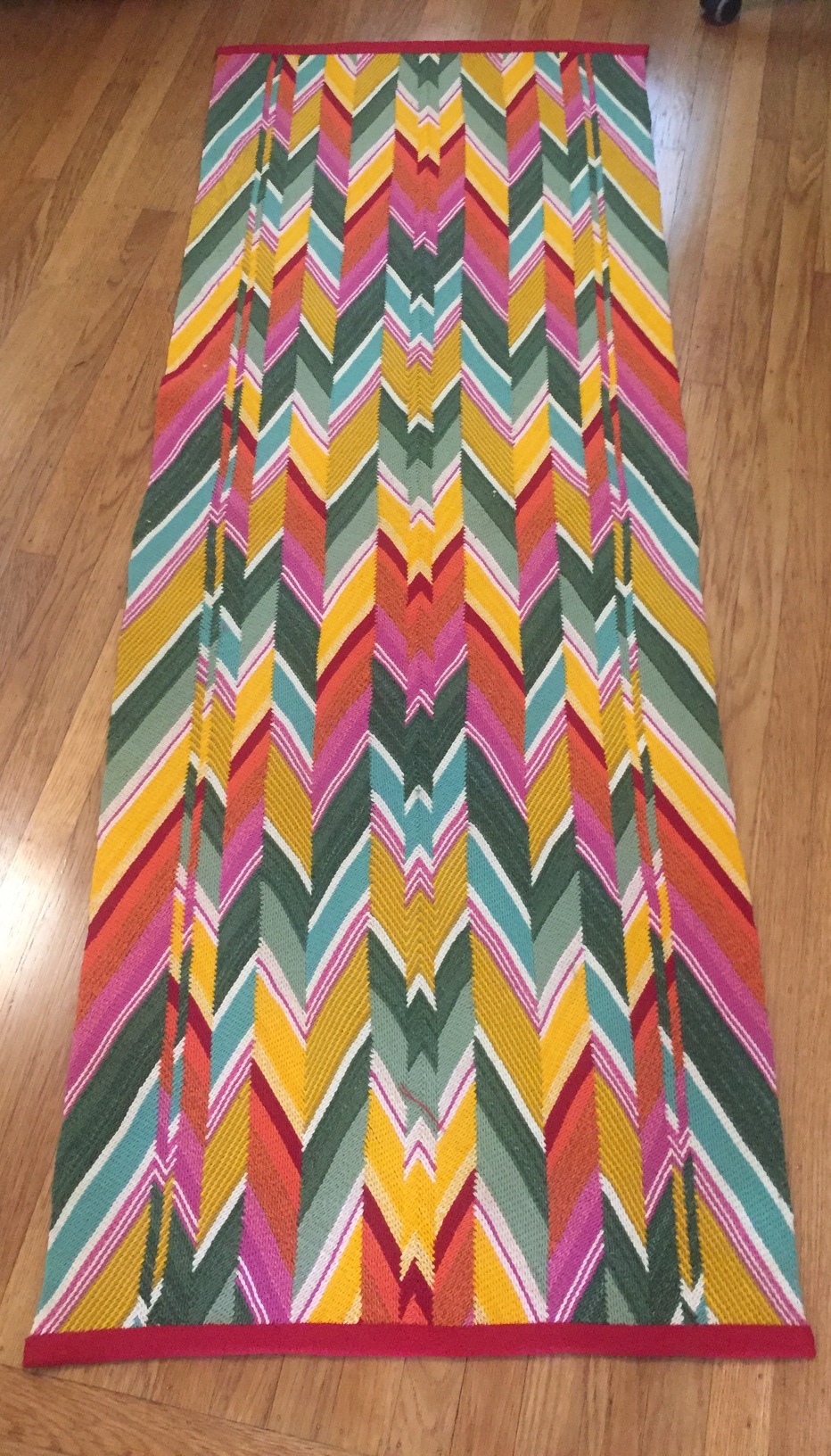
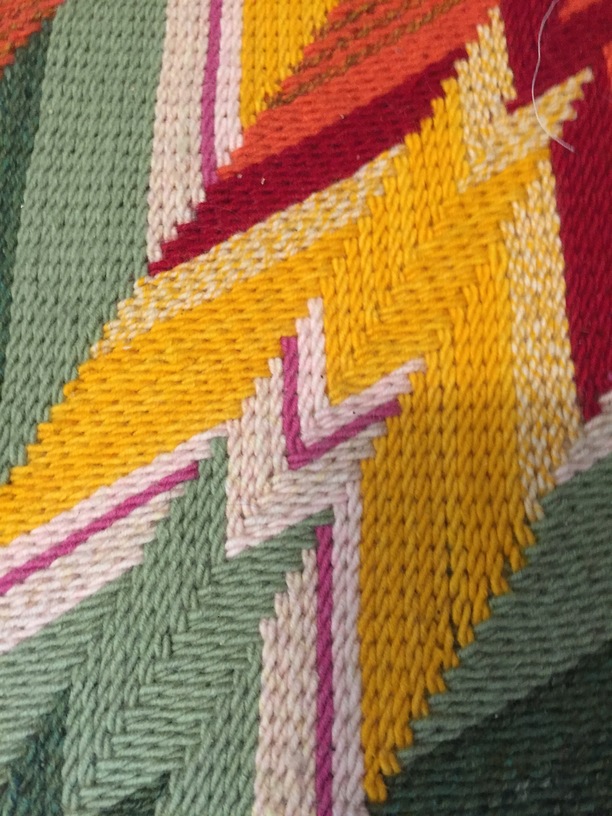
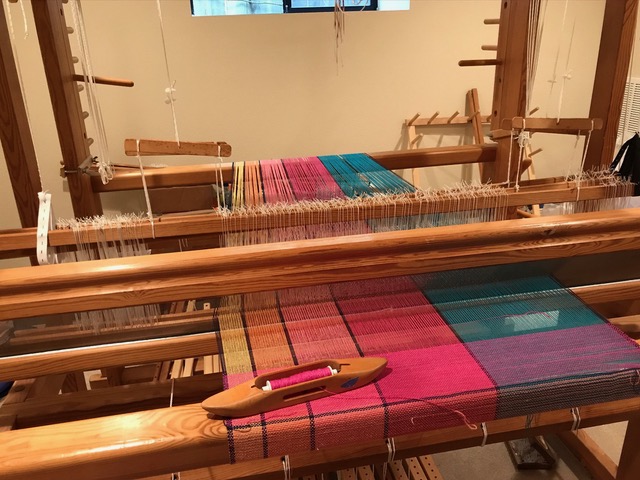
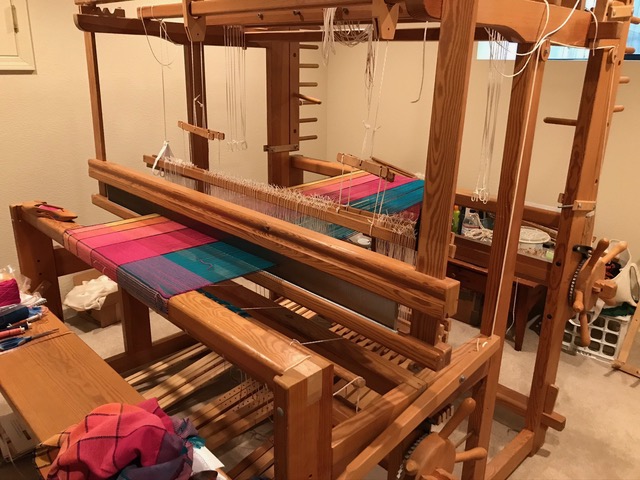
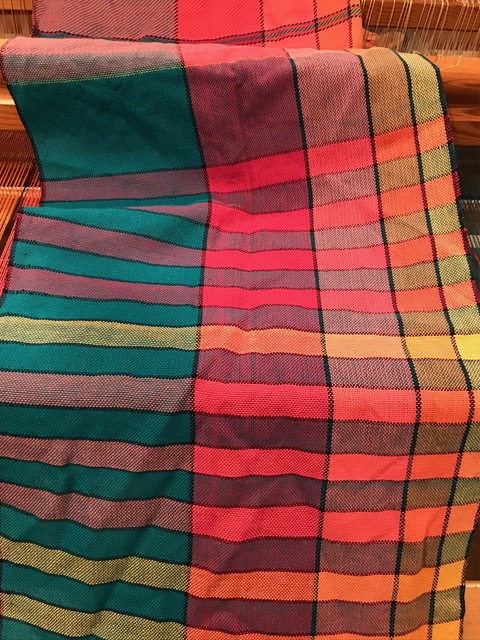
Double width log cabin blanket from Jennifer Moore’s book p. 77-78.  It is woven with Shetland wool purchased from Eugene Textiles and is incredibly soft.  I altered the design a bit but kept it the same width on the loom of 40 inches, and wove 87 inches in length.  There is a total of 800 threads and is sett at 20 epi. I used a floor mirror to the side of my loom to check the side to make sure it remained open as I wove and this helped some.  I am pleased with how it turned out and will now work on finishing the twisted fringe and do a wet finish to give it more fullness and softness.


Gail:

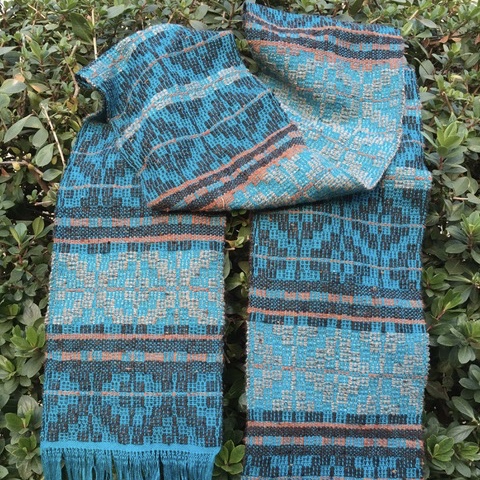
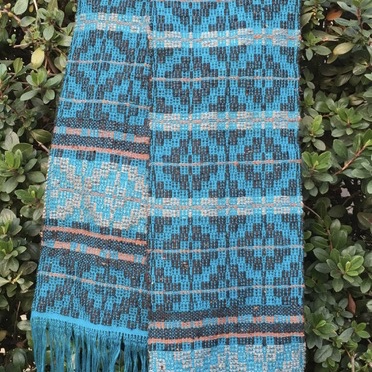
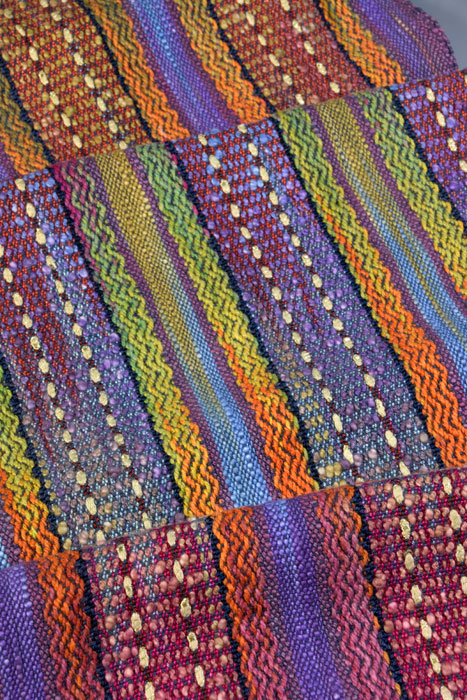
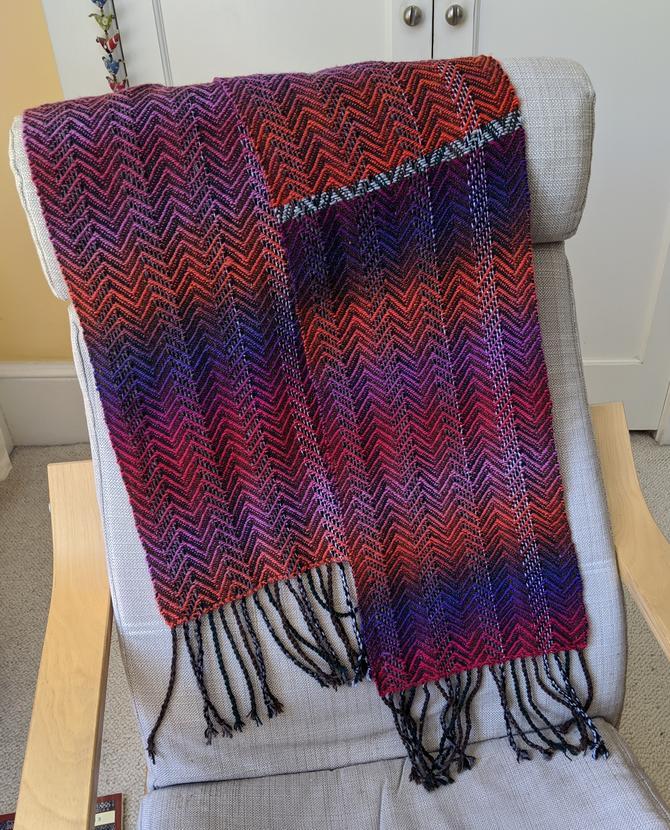
Crackle Scarf, 7.5” x 71” on the loom, fringe twists and wet finishing still to be done.
8/2 tencel, warp and ground weft. Pattern wefts: shantung silk yaspee (dark brown) and a silk/wool blend (orange and tan). Also some picks in a metallic yarn for a little sparkle.


Betsy B:

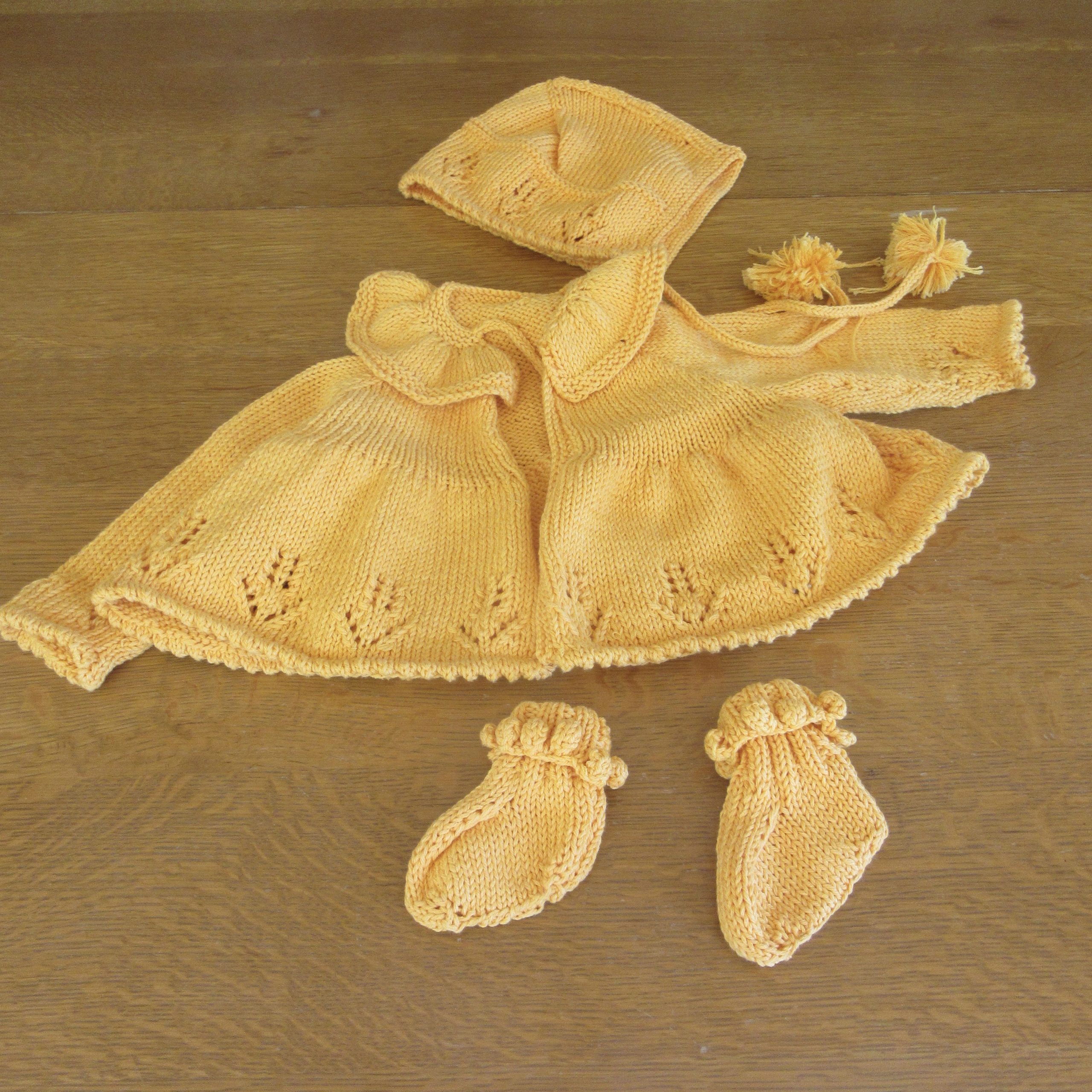
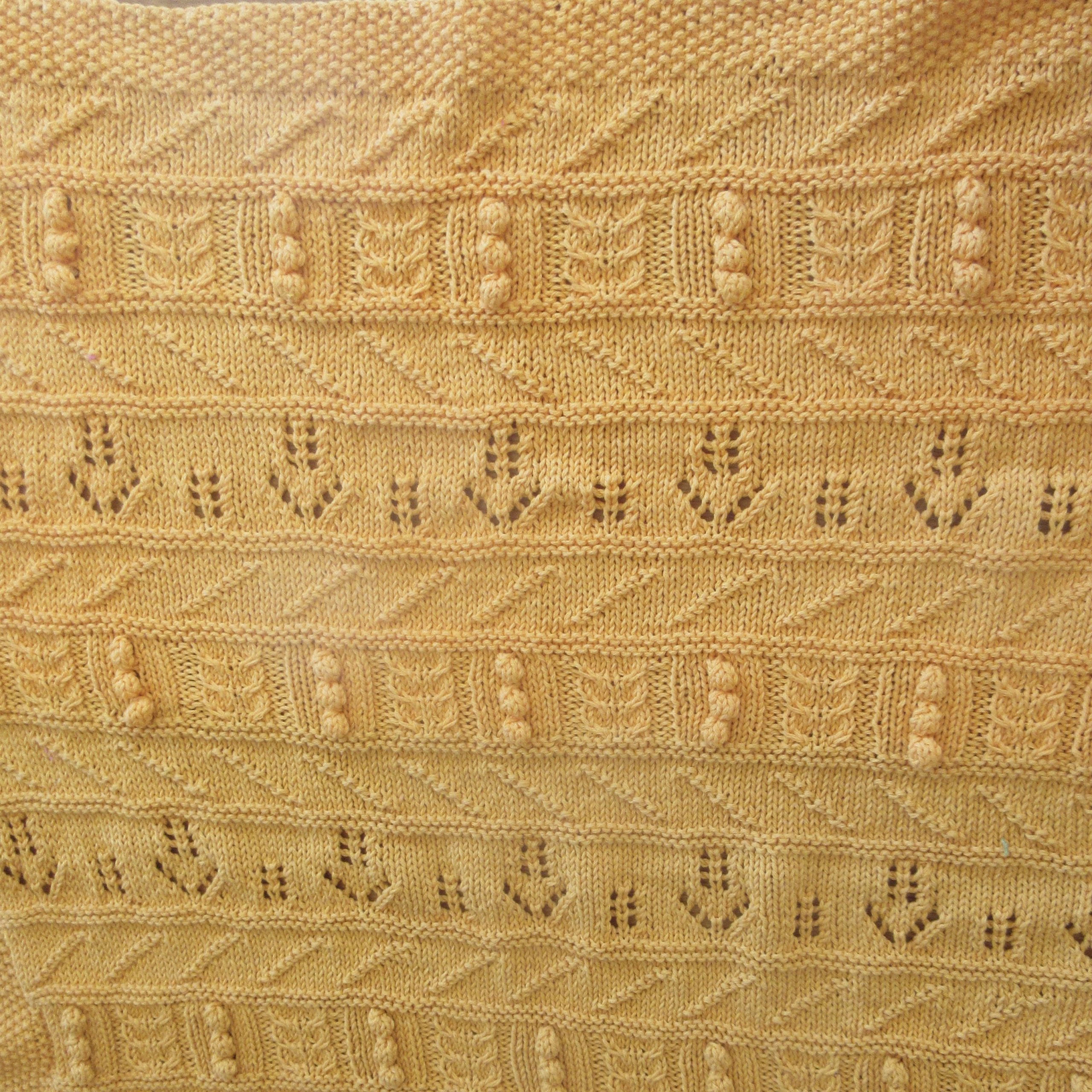
Blanket, cardigan, hat and booties that I knit for my first grandchild.

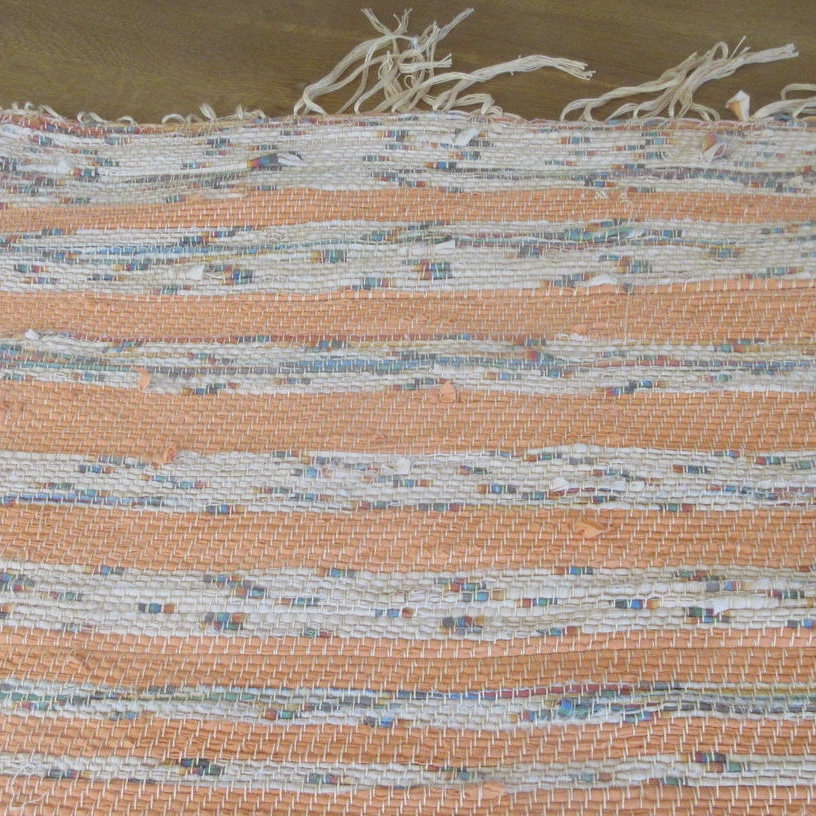
Rag rug woven with cotton strips.


November 19, 2020 – Laura Fry

The November Black Sheep Handweavers Guild program will feature Laura Fry as she discusses her evolution as a weaver. Laura is certified as one of Canada’s Master Weavers. She is the author of Magic in the Water and The Intentional Weaver: How to Weave Better.

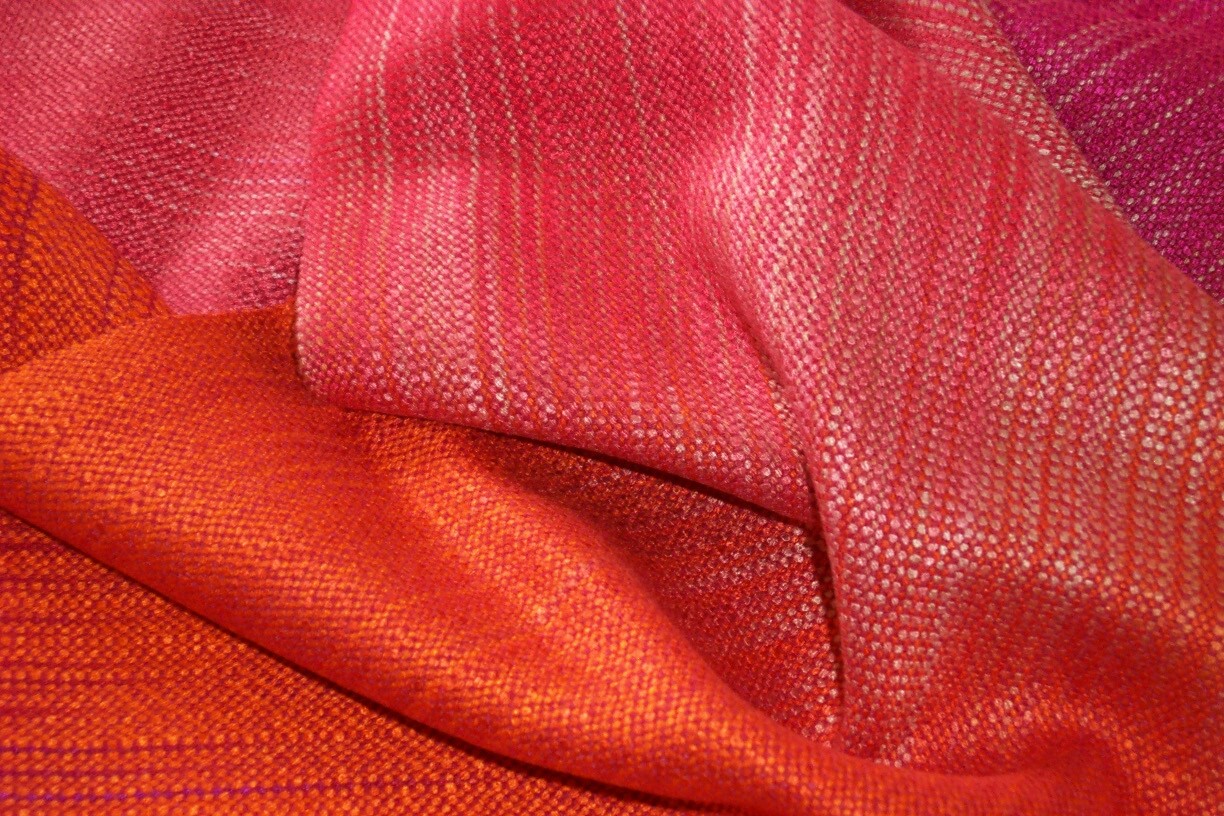
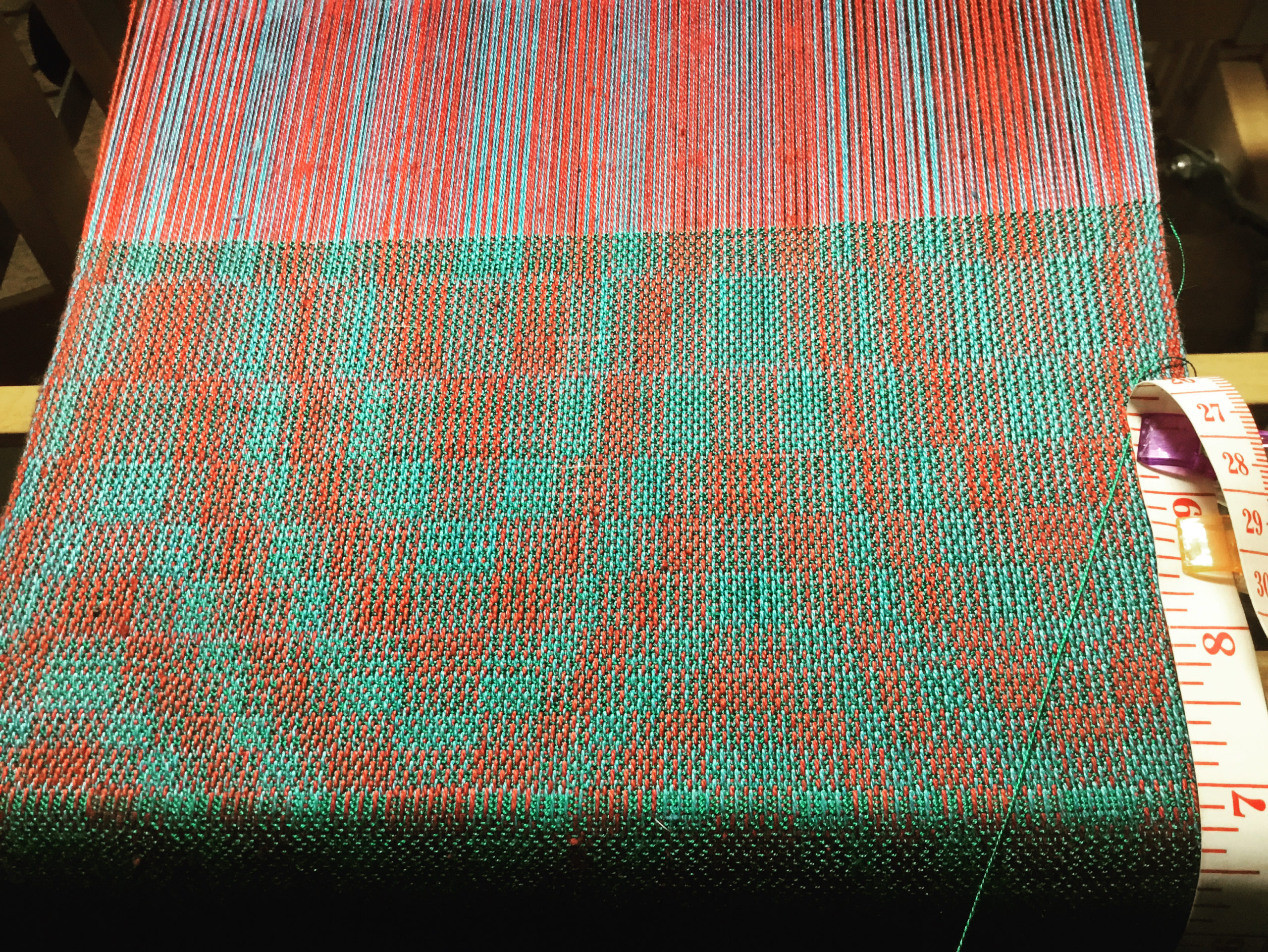
Laura Fry. Orange painted warp fabric

Laura Fry has been weaving for 45 years, 44 of those as a production weaver. She shut down her business in December of 2019 and ‘retired’ from making and selling textiles as her primary focus.

She has taught, written about and researched about weaving for all of those years and continues to learn – both from her own mistakes and the journey of others who explore this fascinating craft.

A few years ago she became an adjunct teacher for the Olds College master weaving program, which eventually led her to set down as much as she could about what she knew about making textiles. This became The Intentional Weaver, her second self-published book.

For the past year she has concentrated on weaving down her yarn stash. And barely made a dent in it! But she persists.

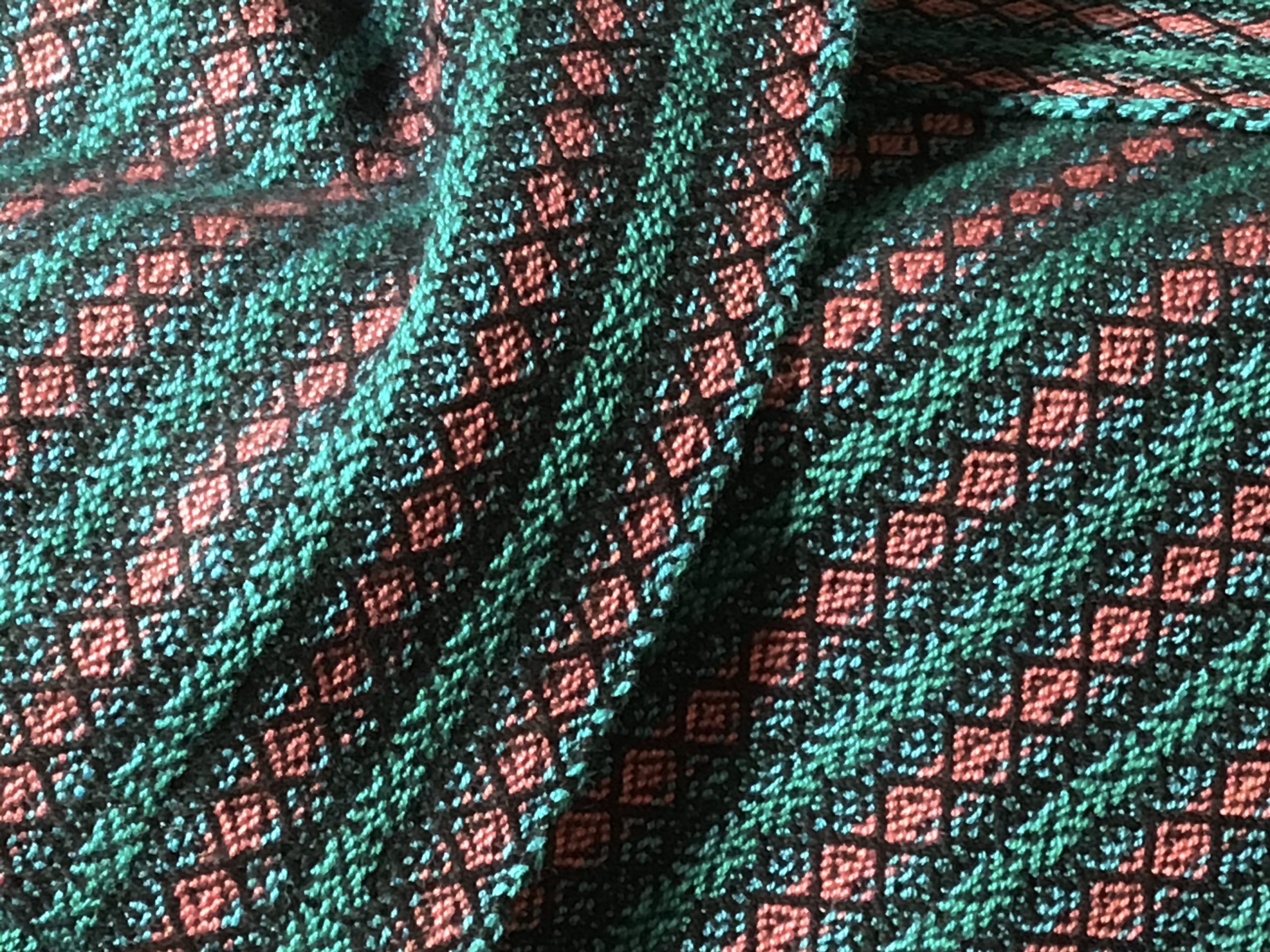
Laura Fry. Close up of finished towel with gree, blue, and salmon as warp, black as weft in a birds eye twill.

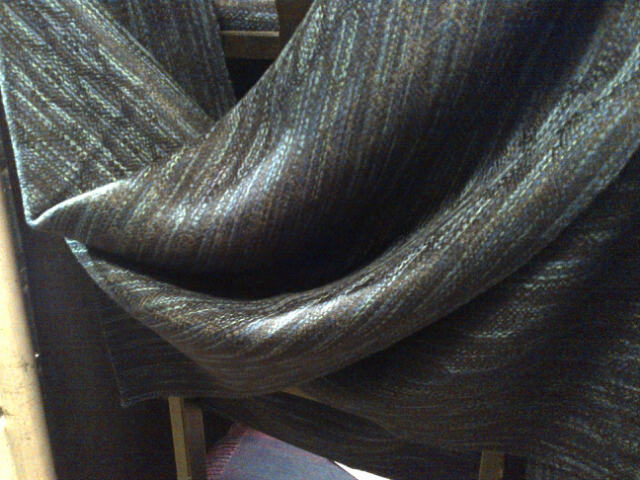
Laura Fry. Monochromatic grey, black, taupe fabric with beautiful drape

Show and Tell, Oct 2020

Gudrun:  Hucklace Scarf

20/2 Perle Cotton with some iridescence, Sett 30 EPI


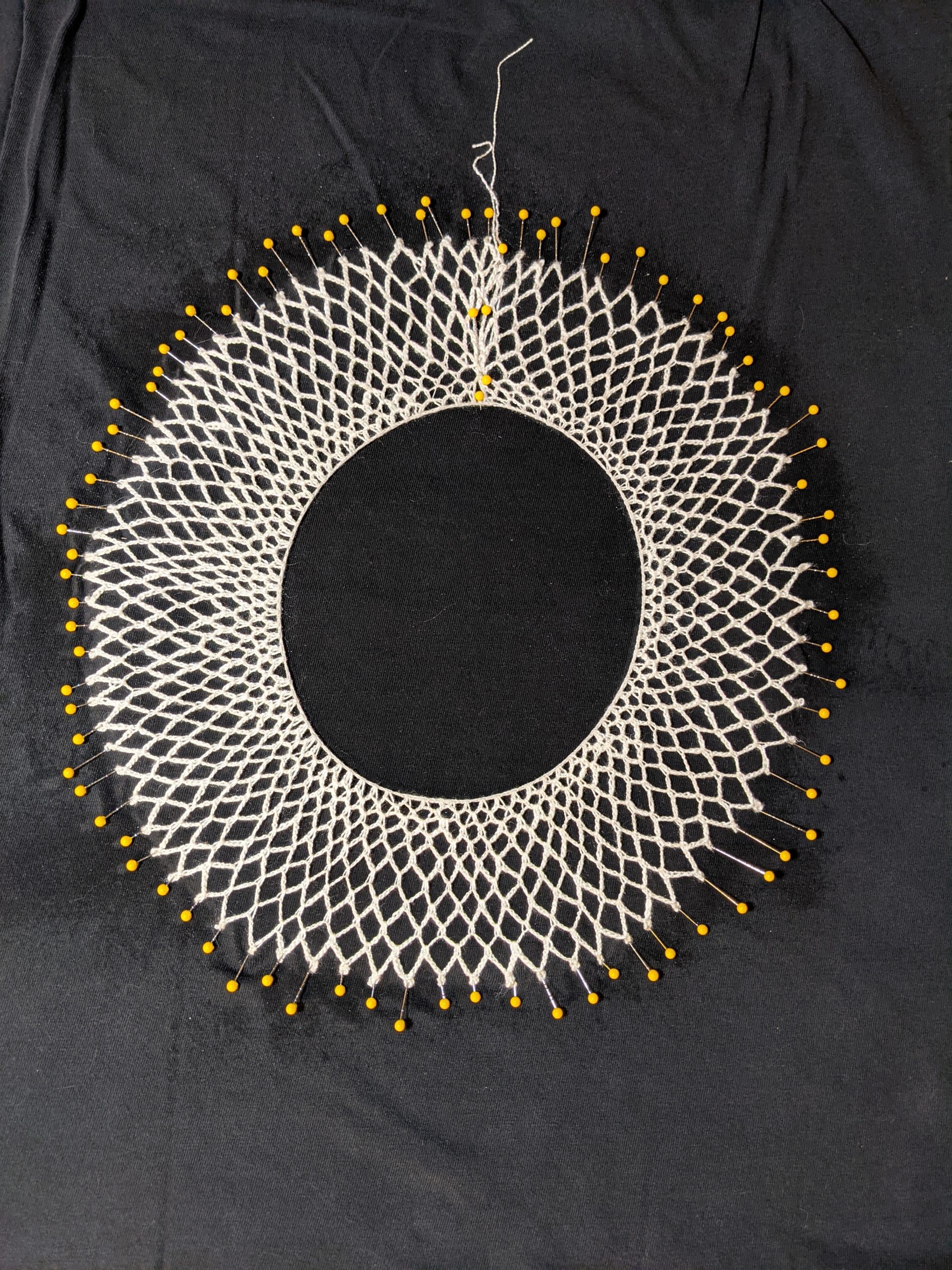
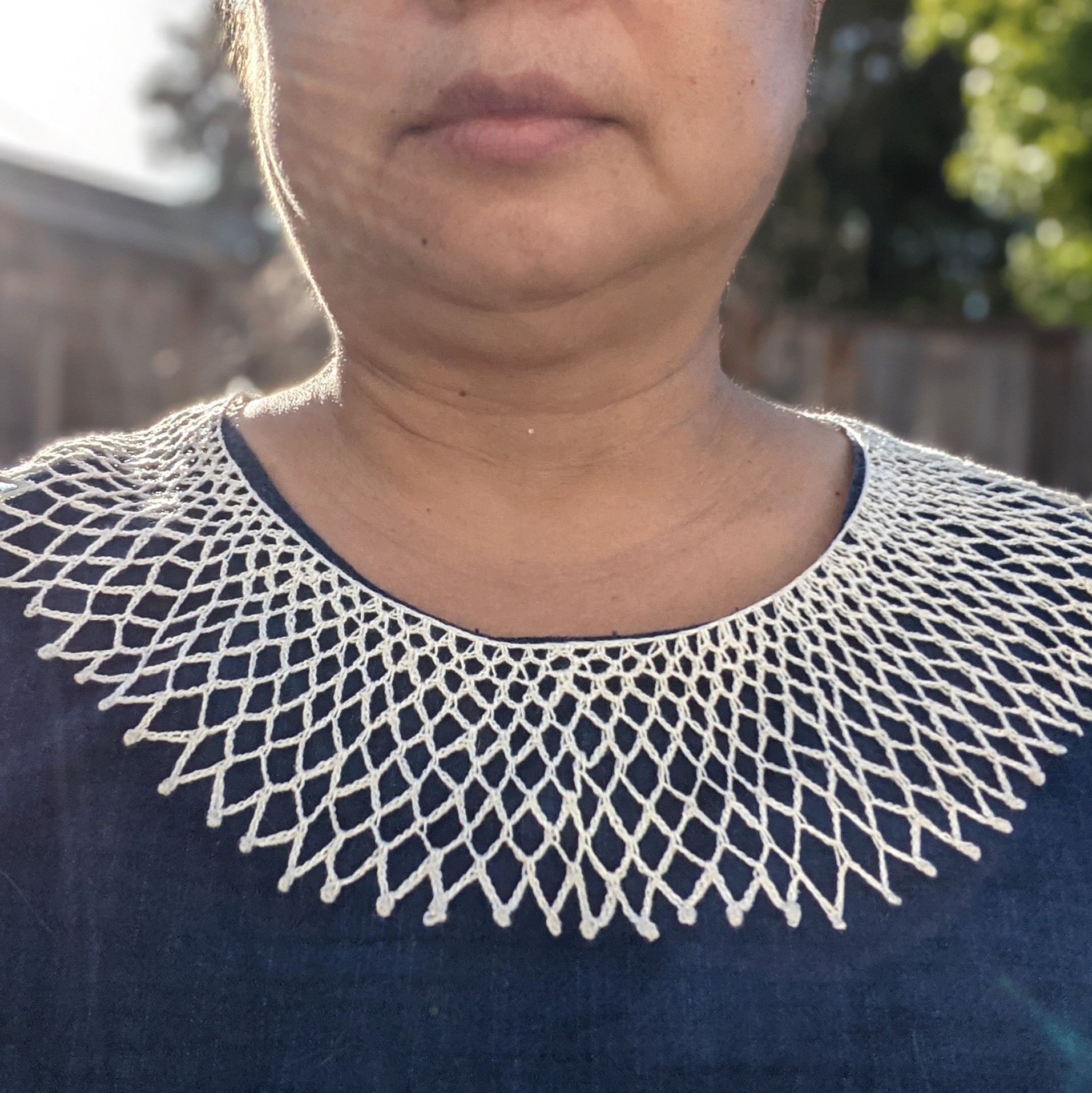
Ann: Lace Collar

Crocheted collar using handspun lace weight Bombyx yarn. Singles were spun S and plied Z in an effort to keep the yarn crisp through the hooking action. The collar weighs a mere 7 grams and measures 12″ across.


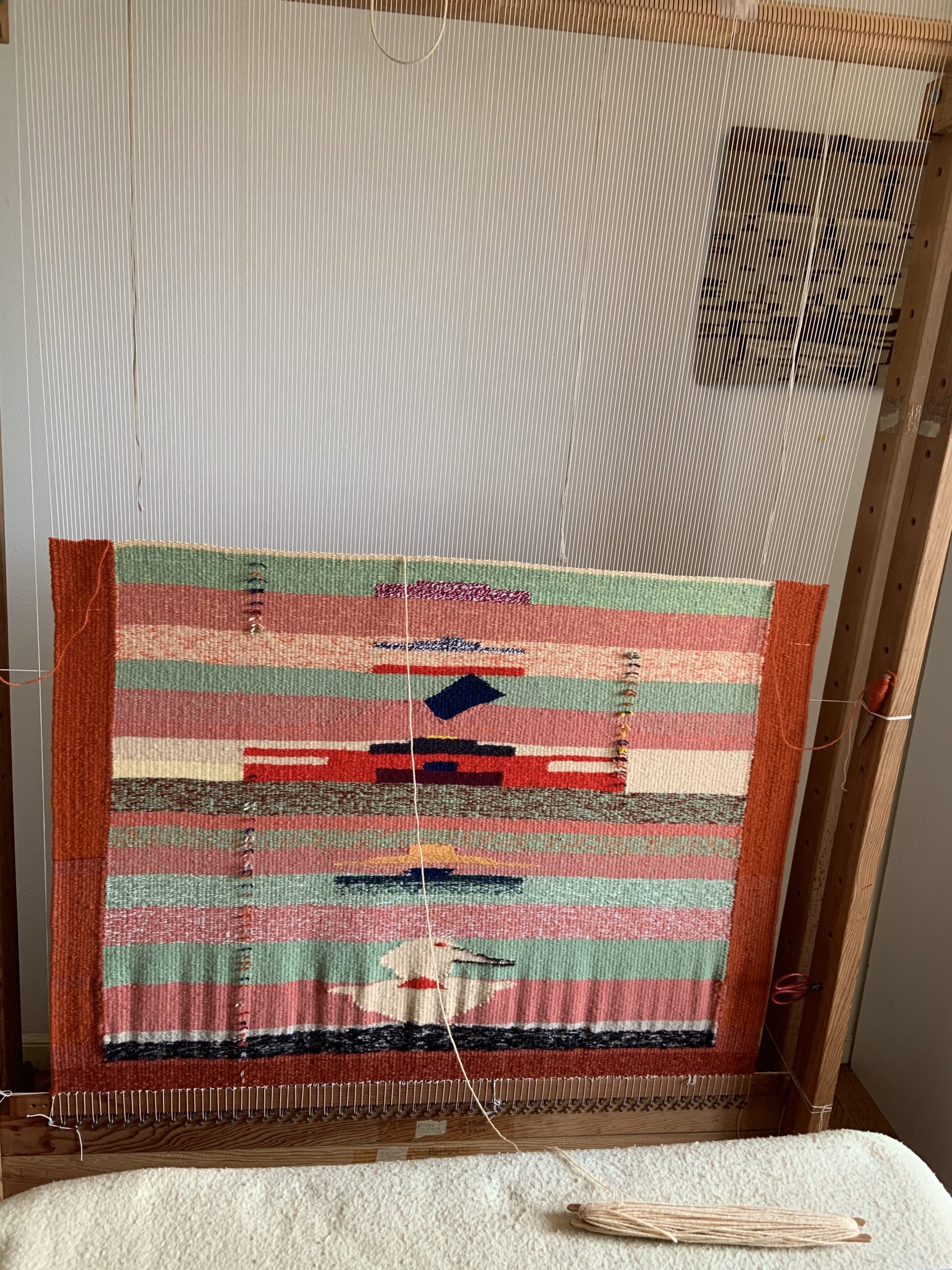
Damon: Floor Rug in progress

Finished  Dimensions:  46” x 70”.
Warp: 12/9 Egyptian Cotton
Weft:  primarily wool of varied weights, some heavy sewing thread in a few places

Loom: vertical tapestry loom


Joan: 

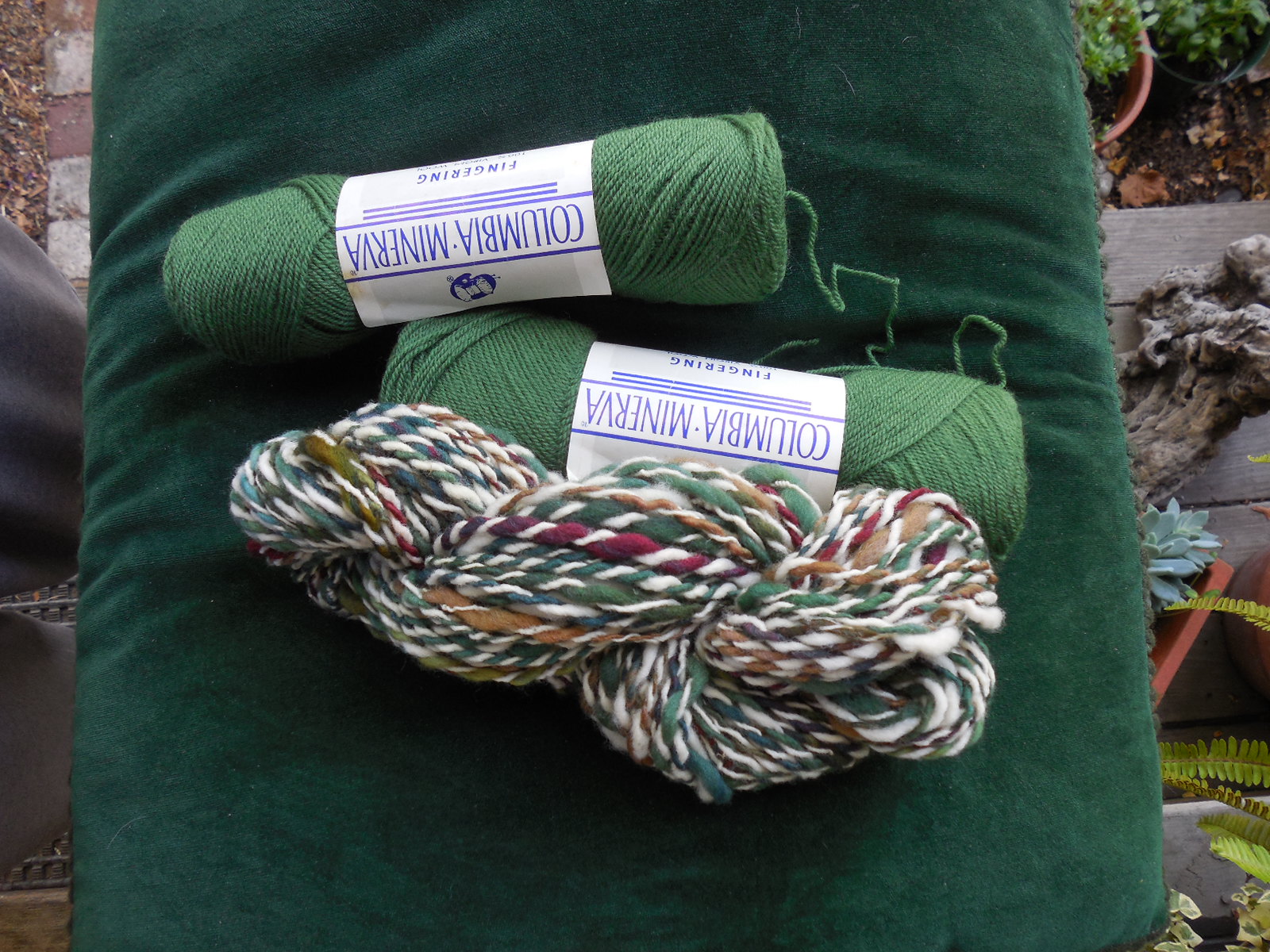
I’ve been practicing a little on my spinning wheel. I spun and plyed some off-white wool with colored wool (roving purchased already dyed). I’ll use it to make something with the pretty green wool I got from John H.

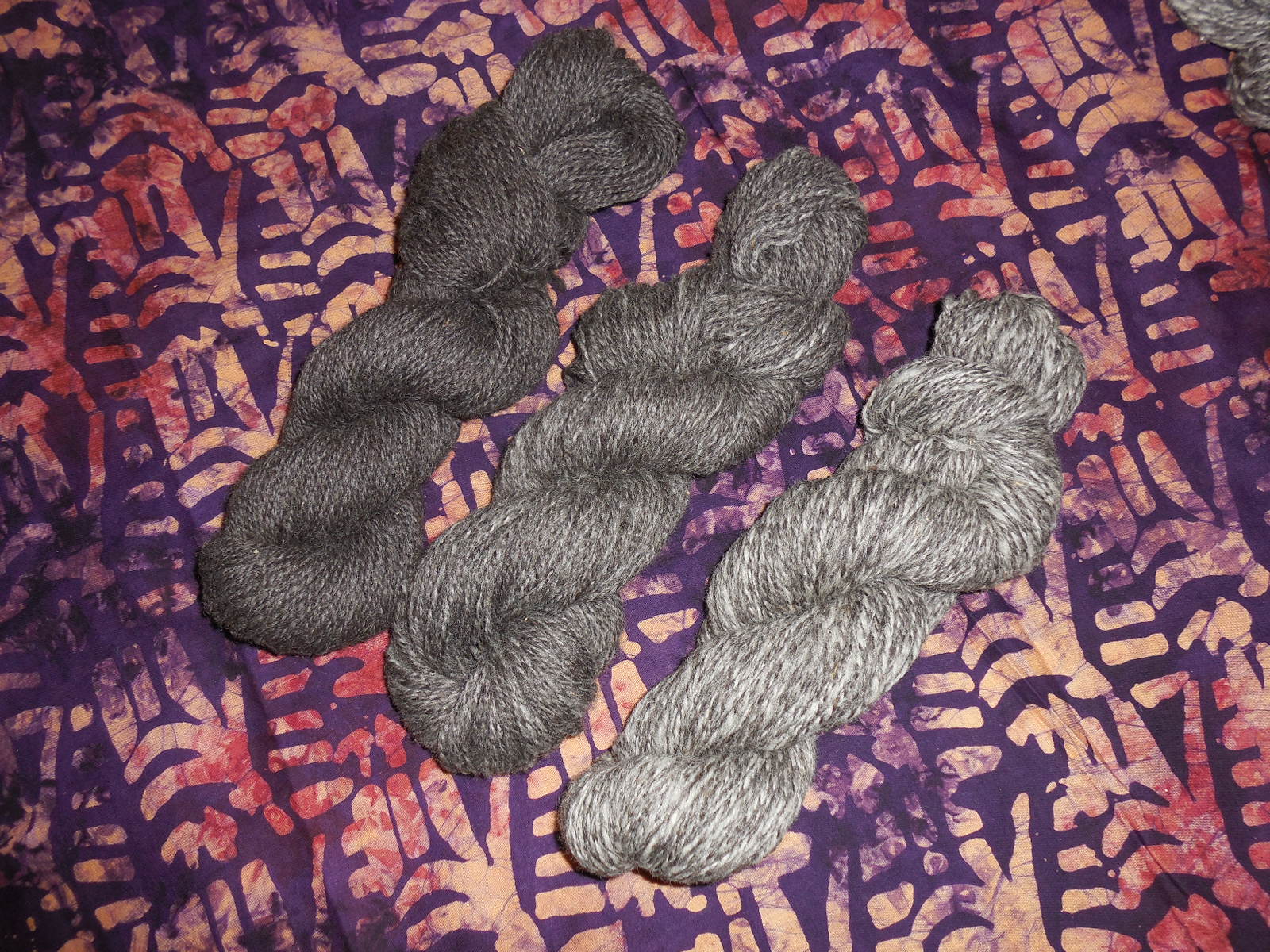
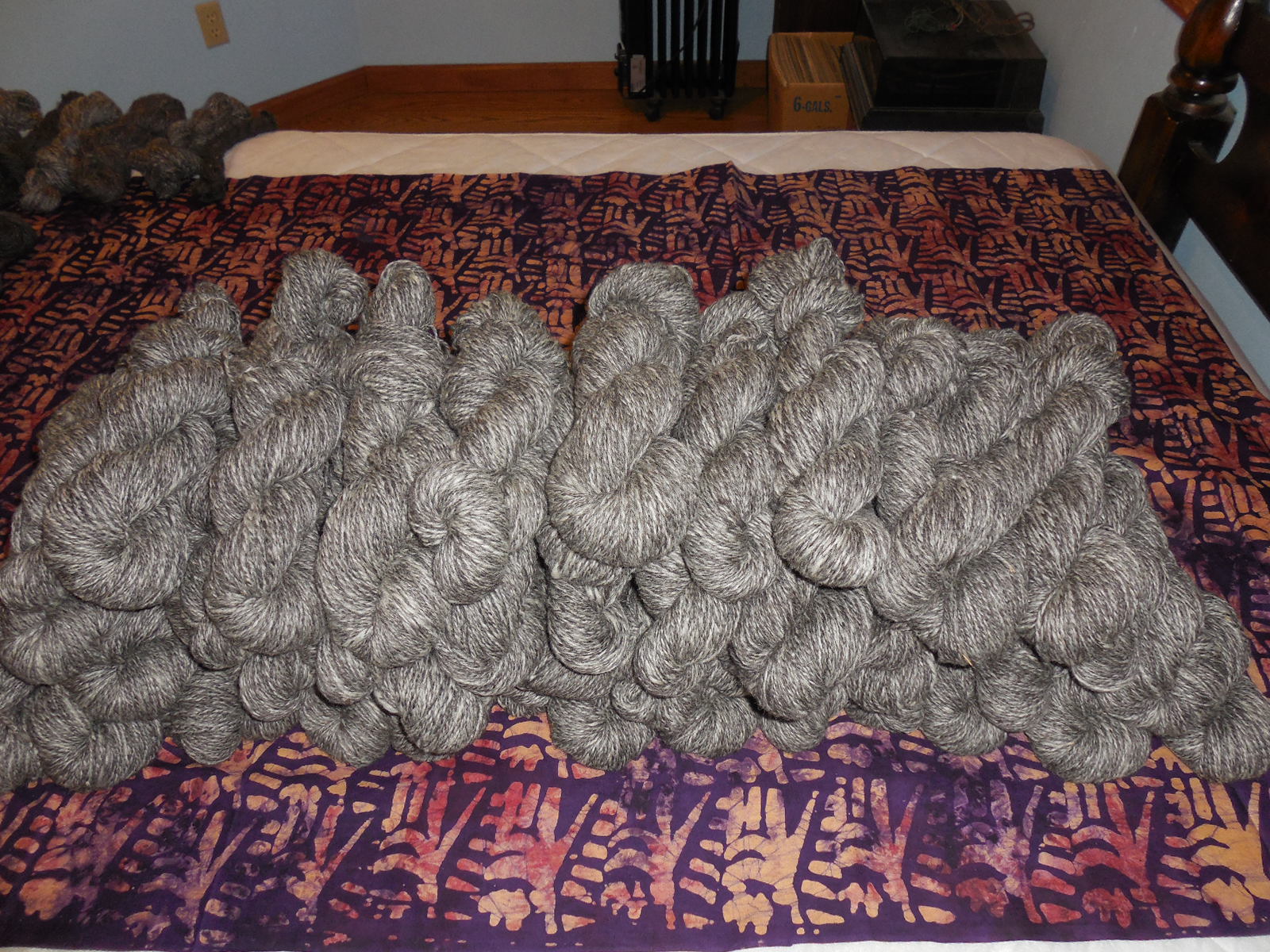
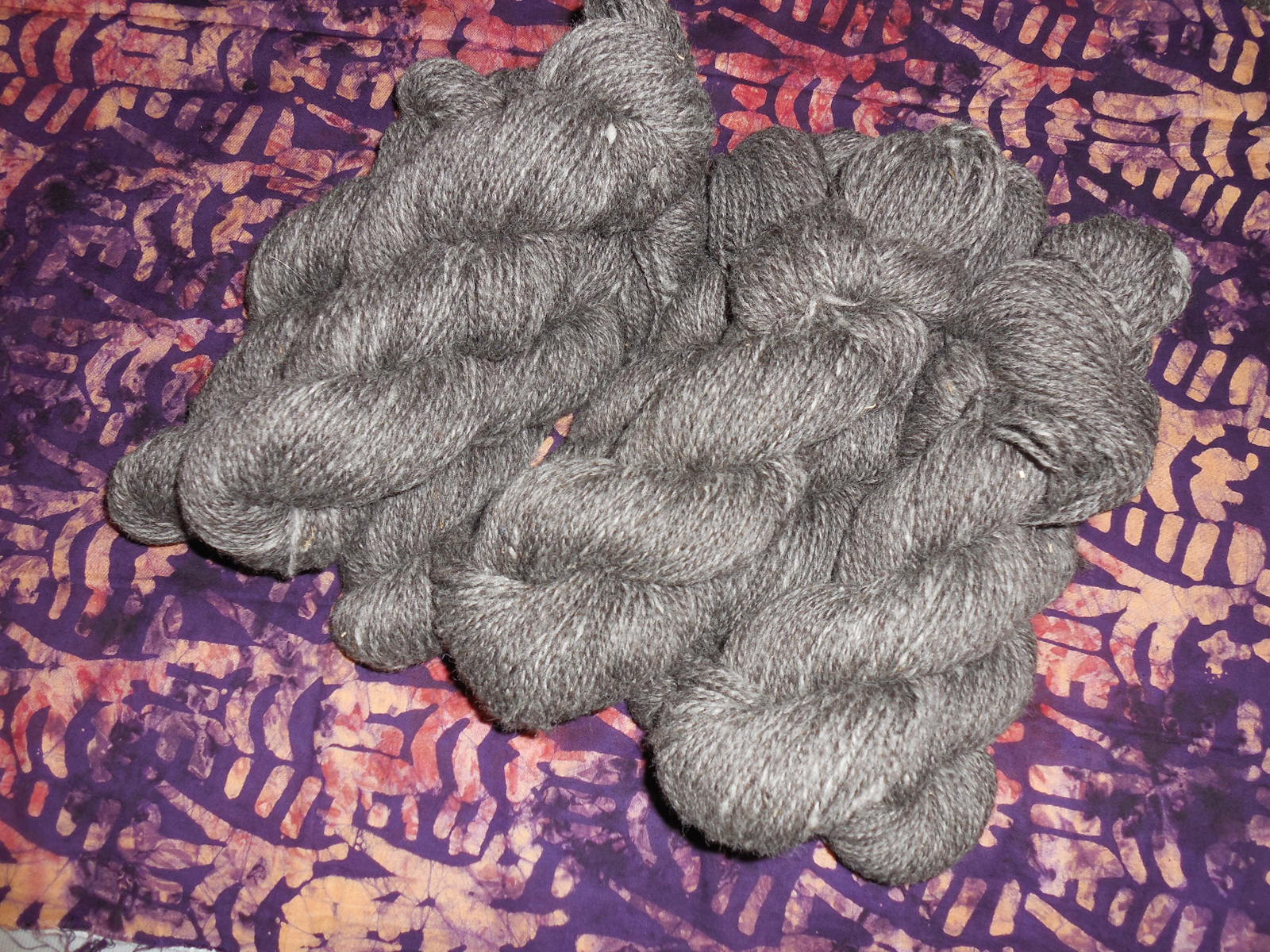
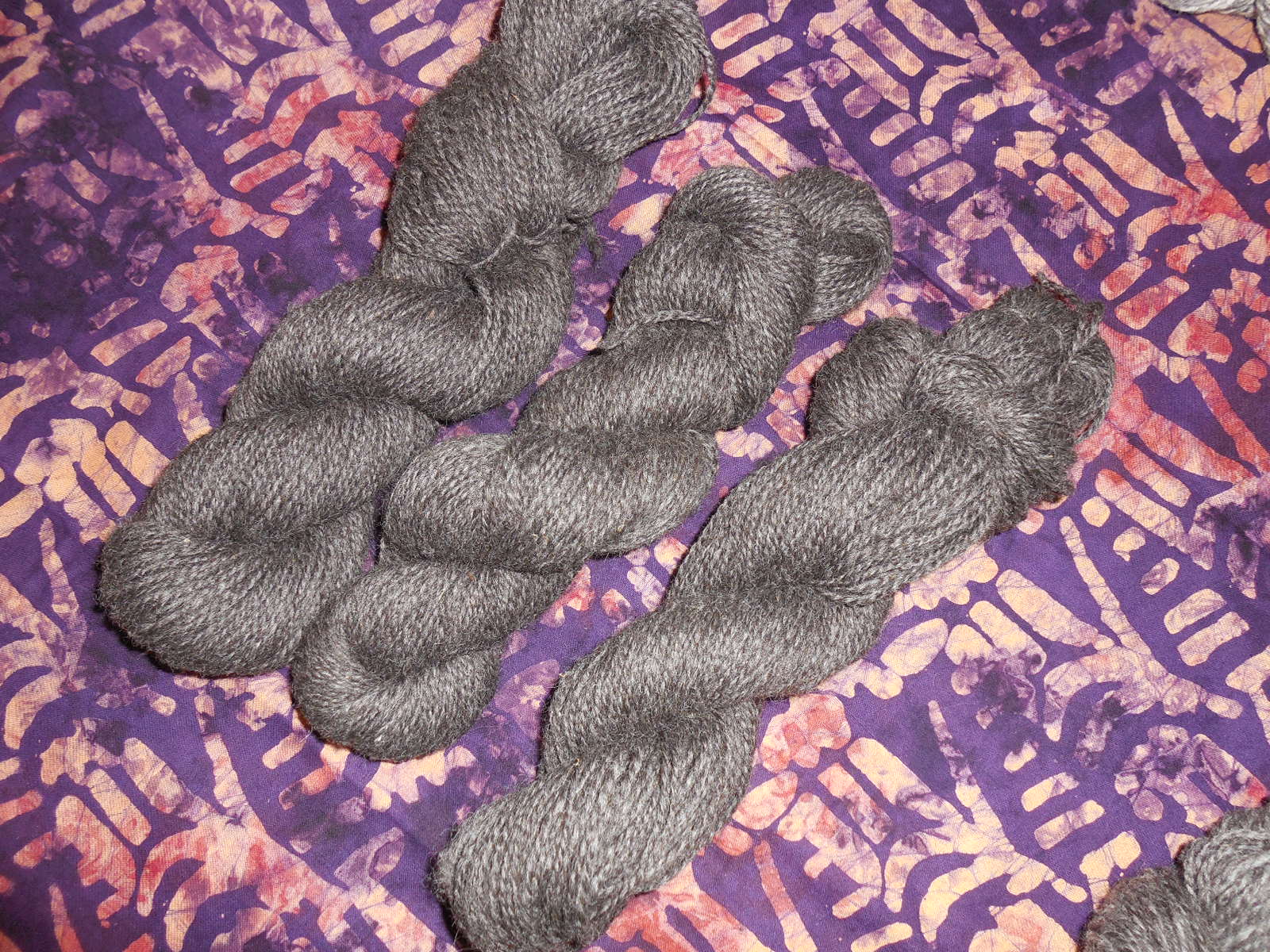
The other pictures are of Deer Hollow Farm wool I recently received back from Valley Oak Wool & Fiber Mill. This year I tried a blend of Finn fleece (dark brown) and off-white from a Romney cross sheep. It was fun to twist up all of the skeins – 68 this year.

The pictures are: a sample of the three types of yarn; a few skeins of Finn sheep breed only – dark brown; several dark brown with a little white blended in; lots of skeins with a balanced blend of dark brown and white. Contact Joan if you are interested in purchasing any yarn.


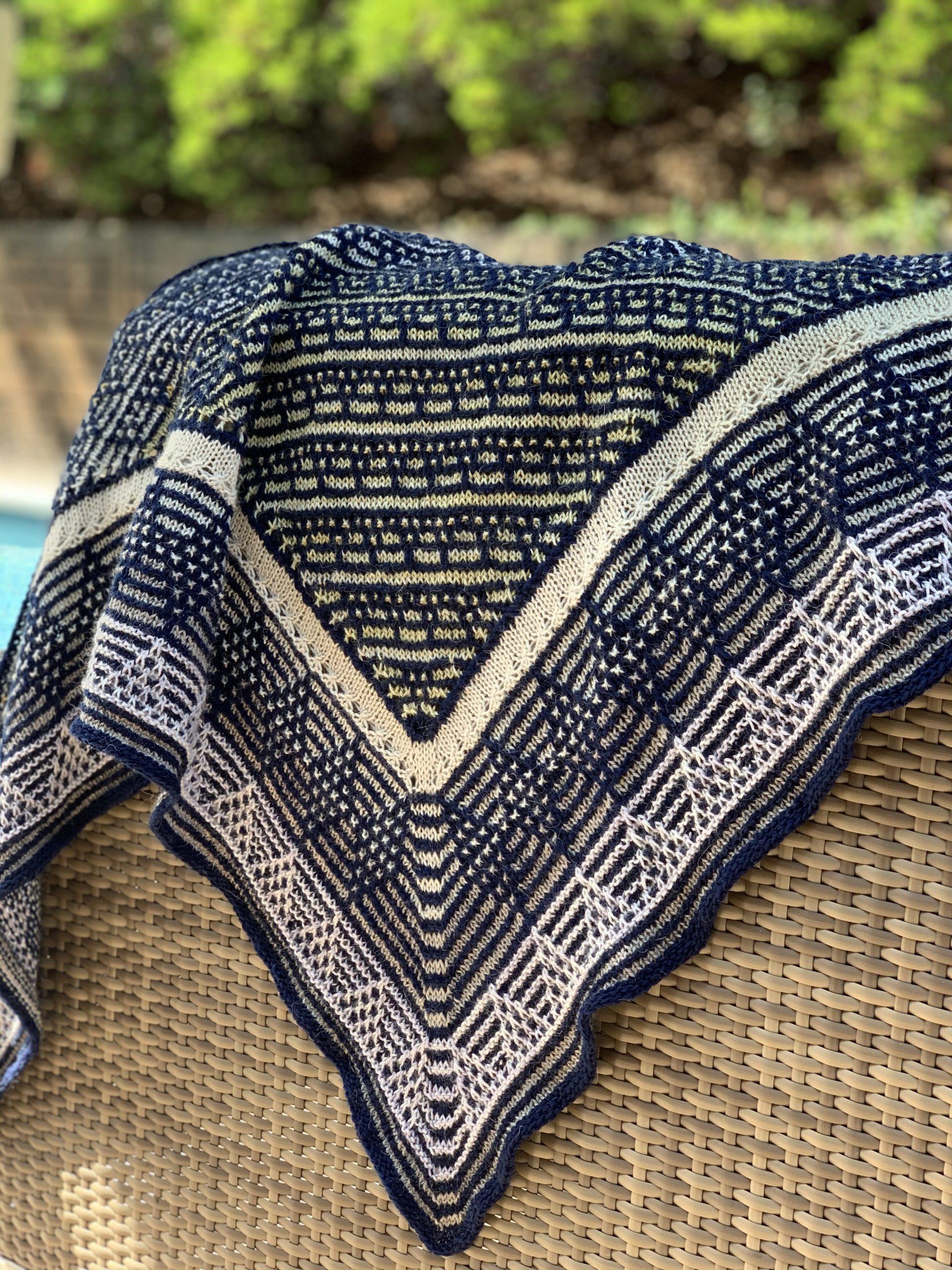
Terry:  Recent completed projects include a knit shawl and woven Shadow Weave kitchen towels.

October 15, 2020 – Daryl Lancaster

October Black Sheep Handweavers Guild program will feature Daryl Lancaster, a handweaver and fiber artist known for her award winning handwoven fabric and garments. Daryl will lecture on how to combine warps and structure for a one of a kind fabric. This will be a Powerpoint presentation. While the focus of the presentation will be on 8 shaft looms, the theory can easily applied to 4 shafts, or more than 8 shafts, if you are inclined.

The lecture will start with some basics on weaving yardage, what to weave and how to sett it. The most important part though, is finding out what you’ve got, and how to make it work for you. Learn how to know what’s on the cone, or in the skein, and see how far it will go! The focus here is on 8 shafts. With 8 shafts you can magically combine structures and different yarns and create some inspiring and truly unique fabrics. Lots of drafts and lots of examples.

Daryl Lancaster, a hand-weaver and fiber artist known for her awardwinning hand-woven fabric and garments, has been constructing garments for more than 50 years. She gives lectures and workshops to guilds, conferences, and craft centers all over the United States. The former Features Editor for Handwoven Magazine, she has written more than 100 articles and digital content, frequently contributes to various weaving and sewing publications and writes regularly for Threads Magazine. Daryl maintains a blog at www.weaversew.com/wordblog Find her at www.Daryllancaster.com.

September 17, 2020 – Carol James on Sprang

The September Black Sheep Guild program will feature Carol James, expert in sprang and the would-have-been keynote speaker from CNCH 2020. She’ll talk about the fascinating structure that is sprang. There will be a live demonstration and examples of the tremendous variety of clothing and other items that can be made with the versatile technique. She’ll include examples from history and modern applications.


Carol James has been playing with strings for a long time; she learned to embroider and to crochet before she entered kindergarten. Since the 1980s she has been exploring a wide, flat, braiding technique known in North America as fingerweaving. In the mid 1990s she was introduced to sprang. She is now a world-recognized teacher. She has spent the past 20 years rediscovering textile forms that had been considered lost, resurrecting these ancient techniques and making them accessible to everyone through her publications, books and workshops. Carol believes that textile creation is part of our human heritage. Textile is an amalgamation of threads interconnecting with each other, just as humans work together in order to create the fabric of society. The method used to create fabric in disparate communities around the world is often quite similar. This is a common language of humans: the construction of fabric. Woven together we are stronger.

Carol James’s website may be found at
http://www.spranglady.com/

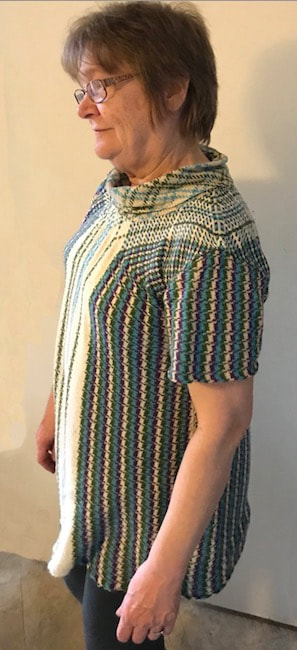
Carol writes about the image on the right: “I made myself a new sprang shirt, using a 5/2 mercerized cotton from Lunatic Fringe, leftovers from other projects. Inspired by the stitch pattern in a Ukrainian belt, I made vertical stripes in the body. I inserted a weft along the shoulder where front and back meet, it gives stability to the  shoulder, bearing the weight of the sleeve.” More information about this piece is on the blog at Carol’s website.

Show and Tell, Sep 2020

Kathy S:  Work in progress

Turned Taquete project done in silk 20/2 warp and 60/2 weft.

Jodi: New work off my loom

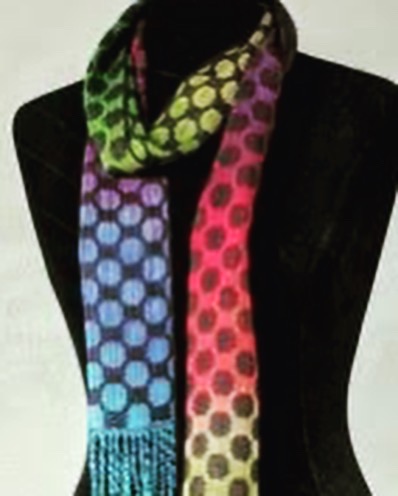
8/2 Tencel. The color is hand-dyed by me, except the purple gradients which were from Kathrin Weber.


Ulla:  Dear friend Gisela Evitt remembered,  weavings of her beautiful stash

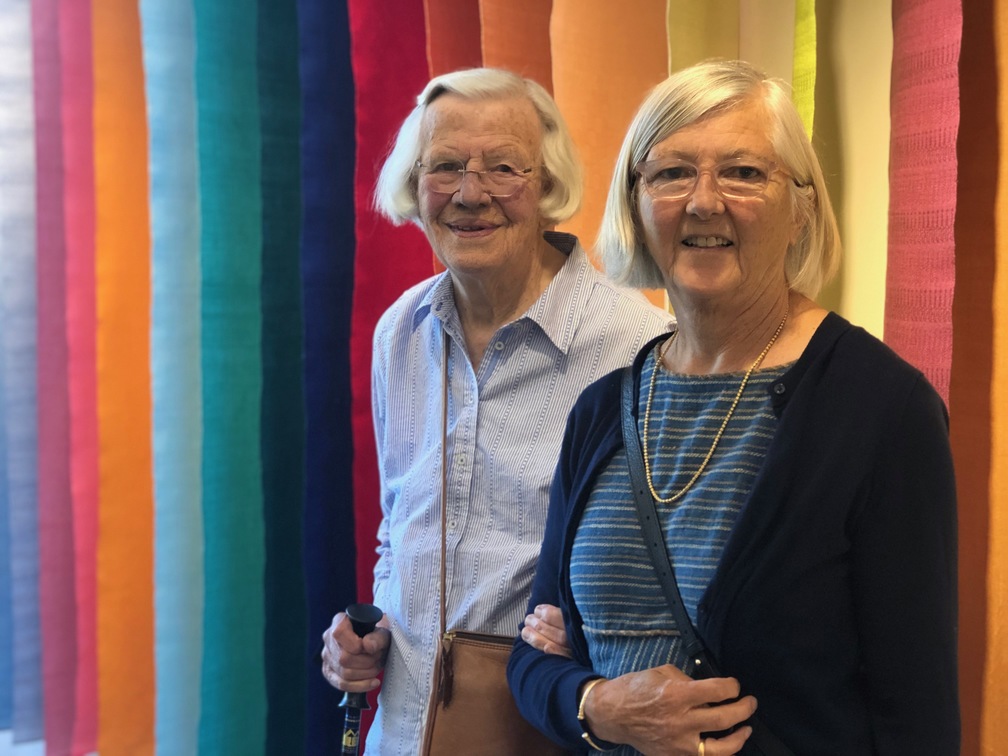
My dear friend Gisela Evitt died in July.  She was one of the founders of Trampornas Guild and a contributor to Fabrication.  Gisela stopped weaving (but not spinning and knitting) when her husband Bill died in 2009.  She has slowly been passing her stash of yarns to me and I now almost exclusively use it in my work.  We are standing in front of “Gisela’s Linen”, an installation of 23 panels showing the different colors of a 50/2 Knott’s linen she gave me.

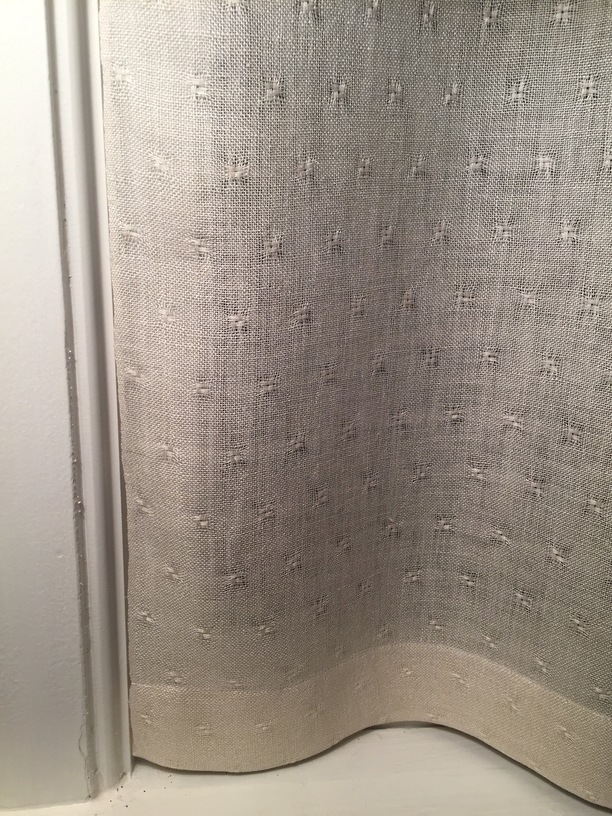
Last week was a week for finishing projects.  I had a long warp of linen curtains for our corner bay windows on the loom for a couple of months.  48″ wide, 24 epi and 50/2 linen from Gisela’s stash of Knox linen.  This linen comes in small spools with about 900 yards per spool. The curtains were to let in the light and provide us with privacy.  I wanted the fabric to be quite plain but with some small point of interest.  I saw John’s place mats in 6 shaft spot weave and loved the meeting of “hands” the spots suggested to me.


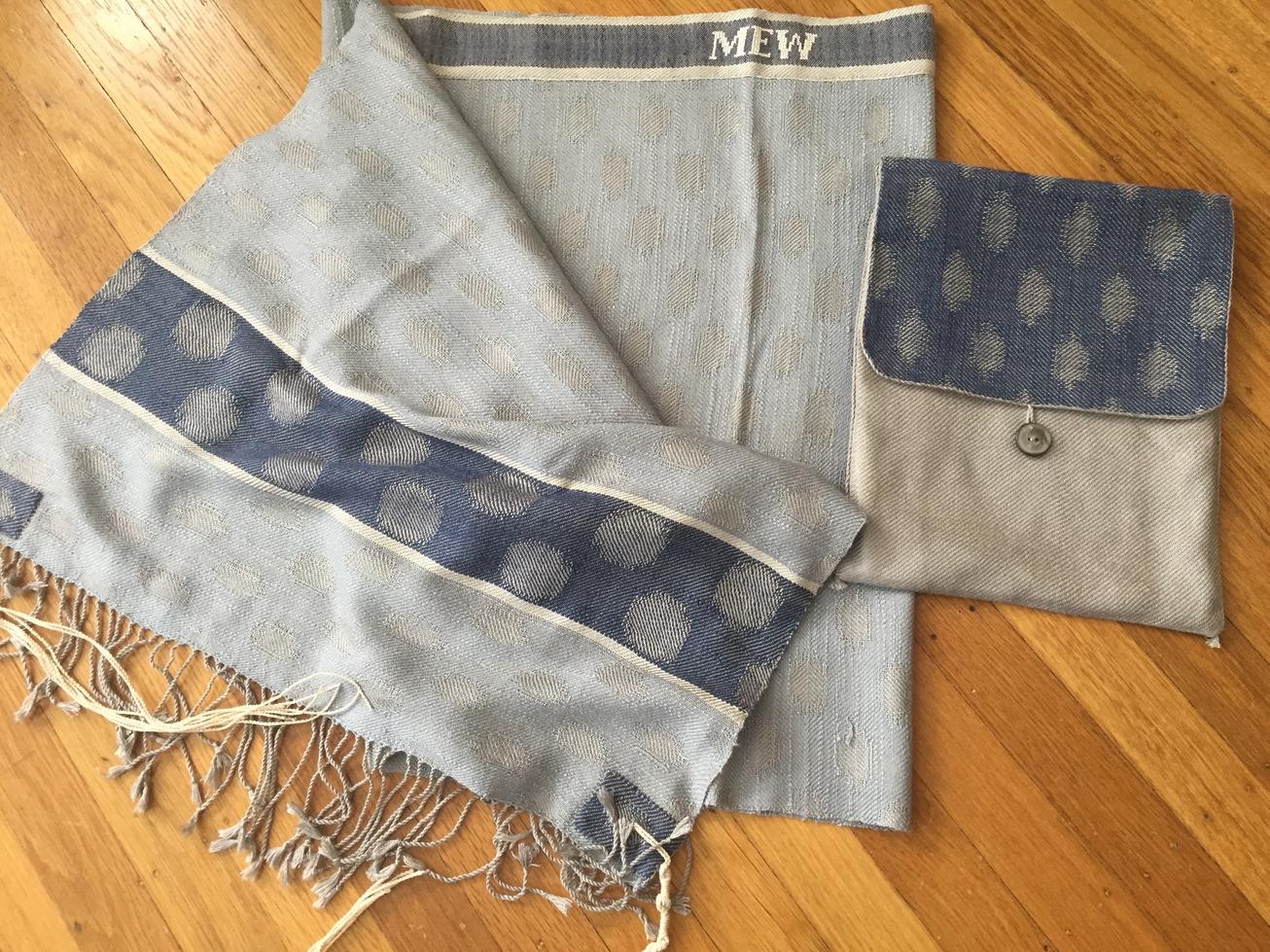
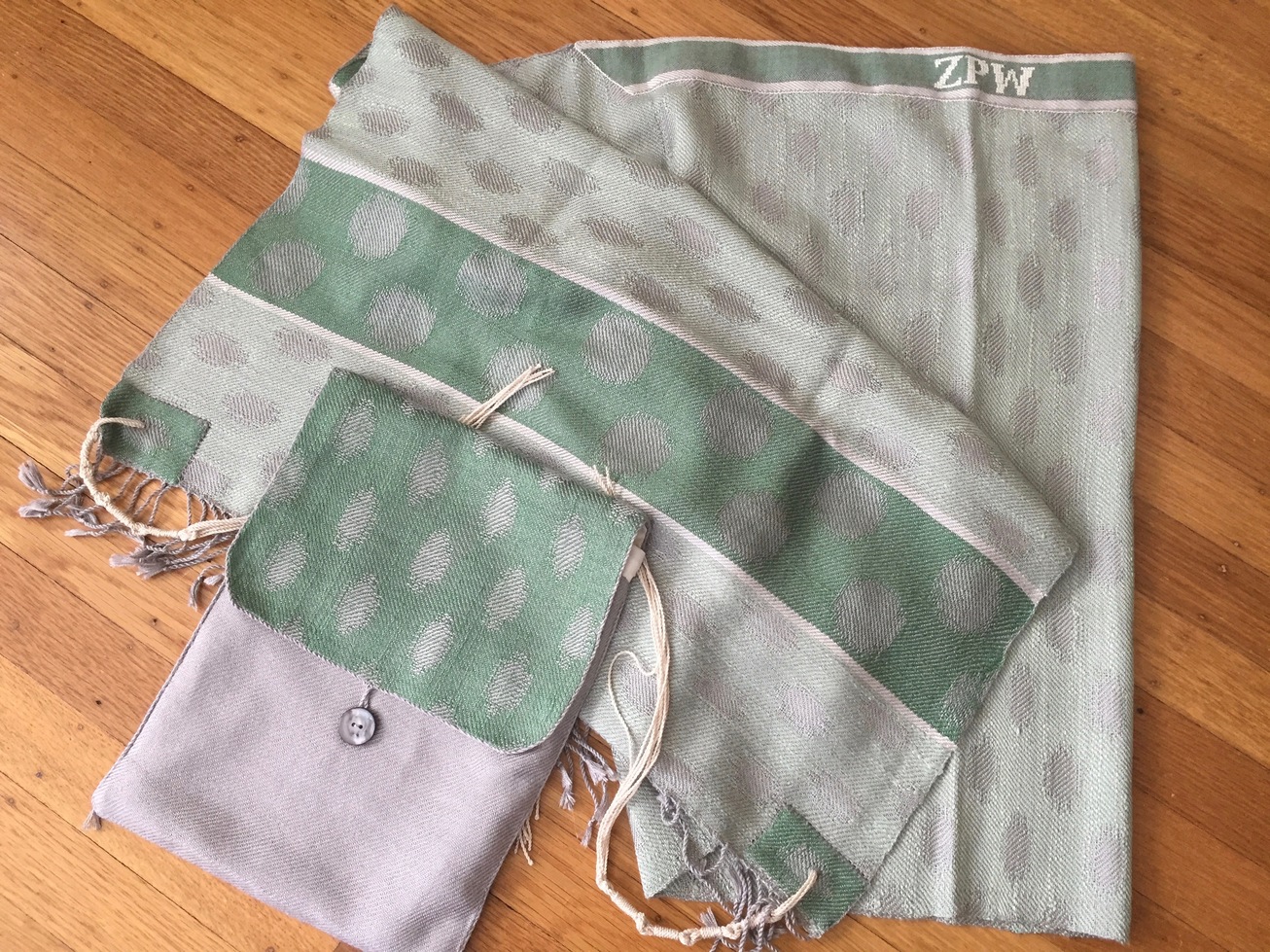
The other project I finished was two Tallits for family twins who are to Bar Mitzvah in October. The boys are identical twins and have since birth been identified by the color blue and green.  The Tallits are in silk (from Gisela), a grey warp and I dyed the weft.  My daughter who loves to cross-stitch sewed the initials for the two boys.


And here is August.
I have been working on Ply-Split Twining since I took a class with Linda Hendrickson last fall.  I like the SCOT Single-Course Oblique Twining and have been wanting to make rugs in that technique.  This rug is 27″x 84″ and made from 274 cords.  The cords are wool, 40 strands of Maypole 2ply,  a very old yarn, not in production any more.  I had two boxes of it, given to me by Gisela Evitt and Kathryn Coleman in many colors.  I used up a lot of them in this rug.  The rug is thick and springy and will never wear out – I think


Show and Tell, Aug 2020

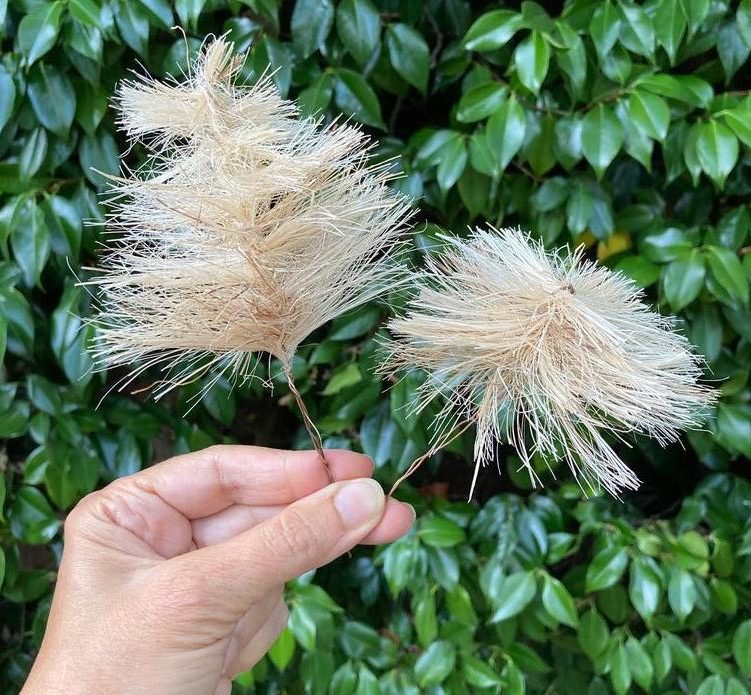
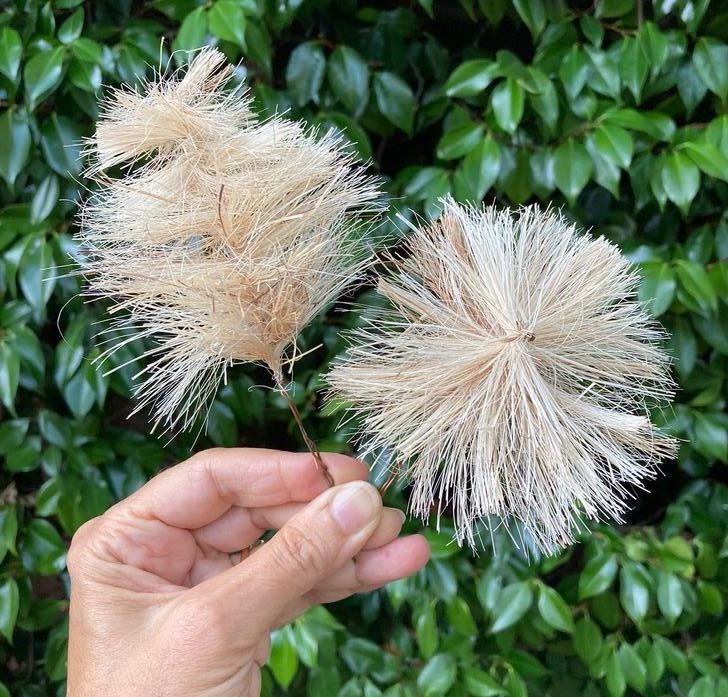
Betsy: Experiments using Abaca fiber.

I tried using the Abaca fiber from you to make bottle brush crafts… a tree and flower… I need to work on the technique… but it may give you some ideas.

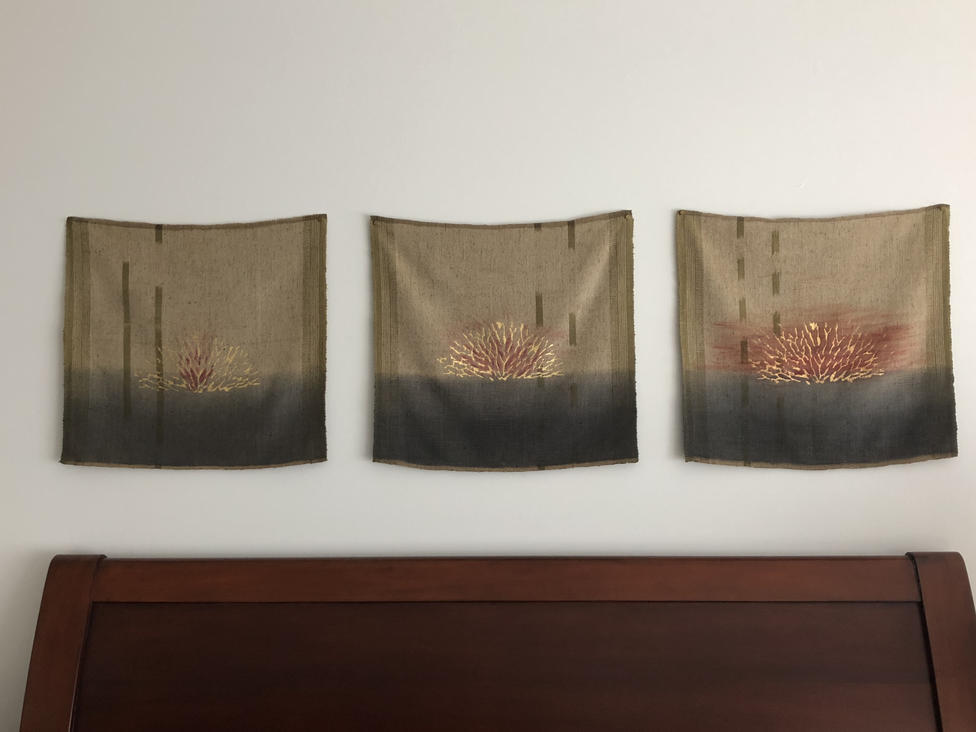
Barbara:  Burning Bush: Conflagration but not Consumed.

Rediscovered and finally finished, here are  three handwoven ikat silk squares with gold leaf (or gold textile paint?) shibori motif. Only one of them had the painted flames. I matched the paint and did the other two to create a series called Burning Bush: Conflagration but not Consumed. Hung with tiny magnets painted to disappear. Hung above the bed in my new studio.

Show and Tell, July 2020

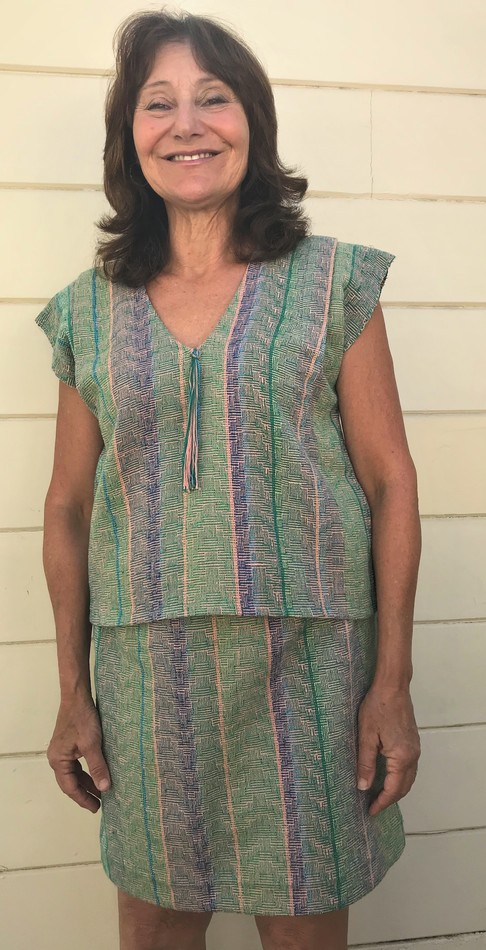
Johanna: Color and Weave/Shadow Weave shirt and skirt.


Here is my Color and Weave/Shadow Weave shirt and skirt I originally created in 1991 with the guidance of Cyrena Wilson (Guild member). It is a pattern from Margaret and Thomas Windeknecht, p. 149 of their Color and Weave Book. While I first made it into a dress, I never did wear it, so I had it re-created into a shirt and skirt just today and do hope to get more use out of it.


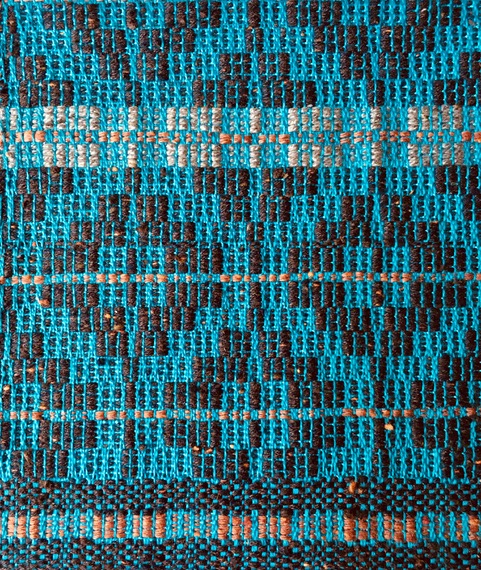
Gail:  4-shaft Crackle scarf in process.

The warp is 8/2 tencel and the pattern wefts are Shantung silk and silk/wool blends in brown, taupe and orange. Since I don’t have enough of any one of the three colors for the whole scarf, I’ve had to get creative about color division. I worked up a diagram in Adobe Illustrator that has helped me try ideas out. I plan to feature a border design at each end of the scarf and possibly one at the center as well. The diamond draft is from a 1957 “Practical Weaving Suggestions” article by Rupert Peters. Click here for the article.


Sandy: finished rep rug in time for her son’s birthday.


Ange: Woven jacket with knitted sleeves

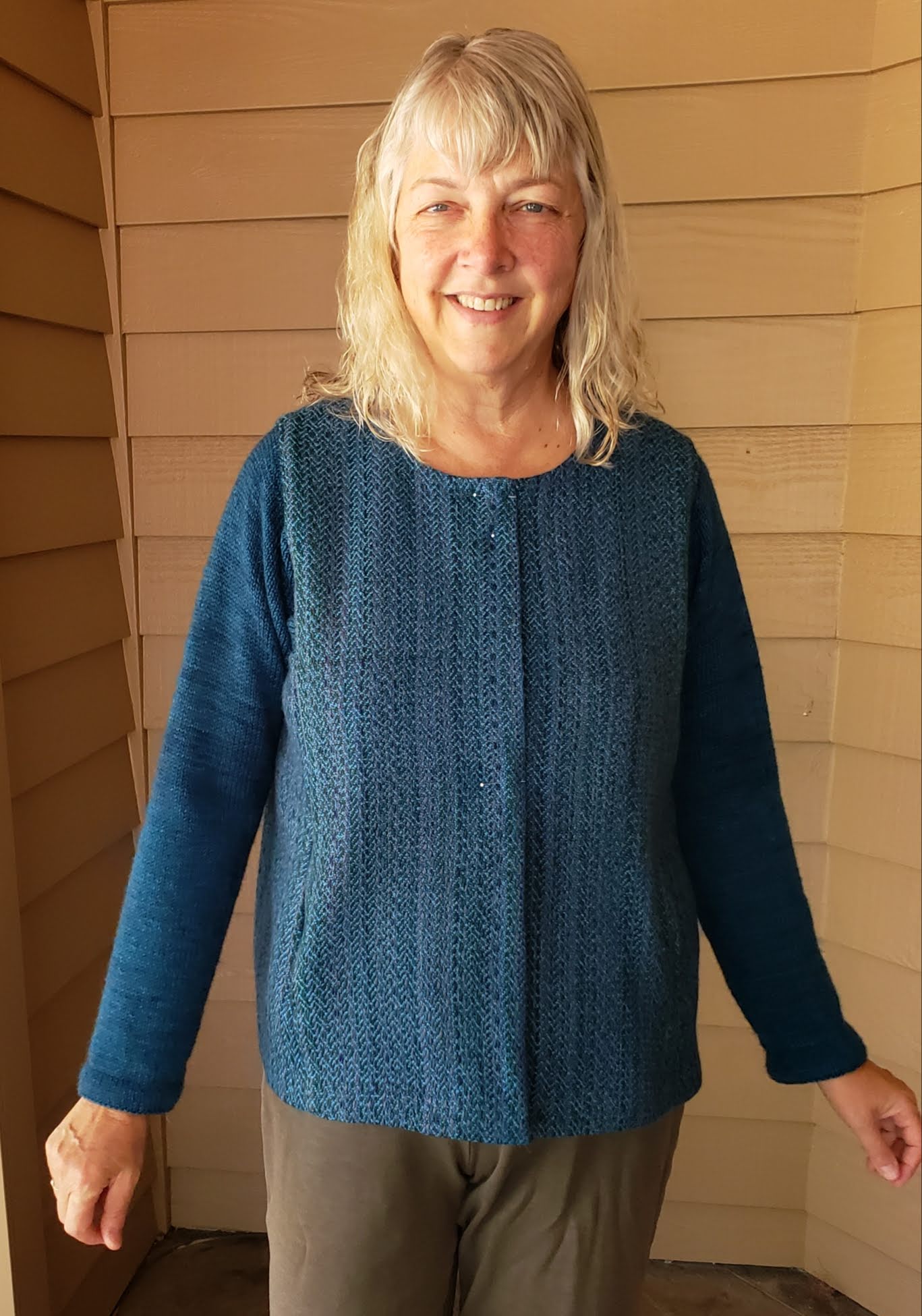
Vest warp is all of my blue and green sock yarn oddballs and leftovers; weft is Zephyr, woven in a plaited twill. Sleeves are knitted from DK weight MCN.


John:  Sashiko-ori and the 12-shaft Countermarch loom in action

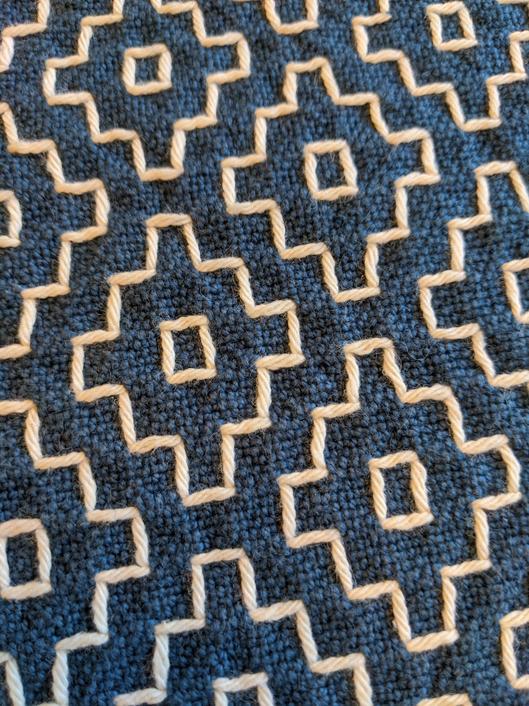
I successfully wove sashiko stitch. It turns out there is a name for this: sashiko-ori. I will try again with some changes to see if I can get better at it.


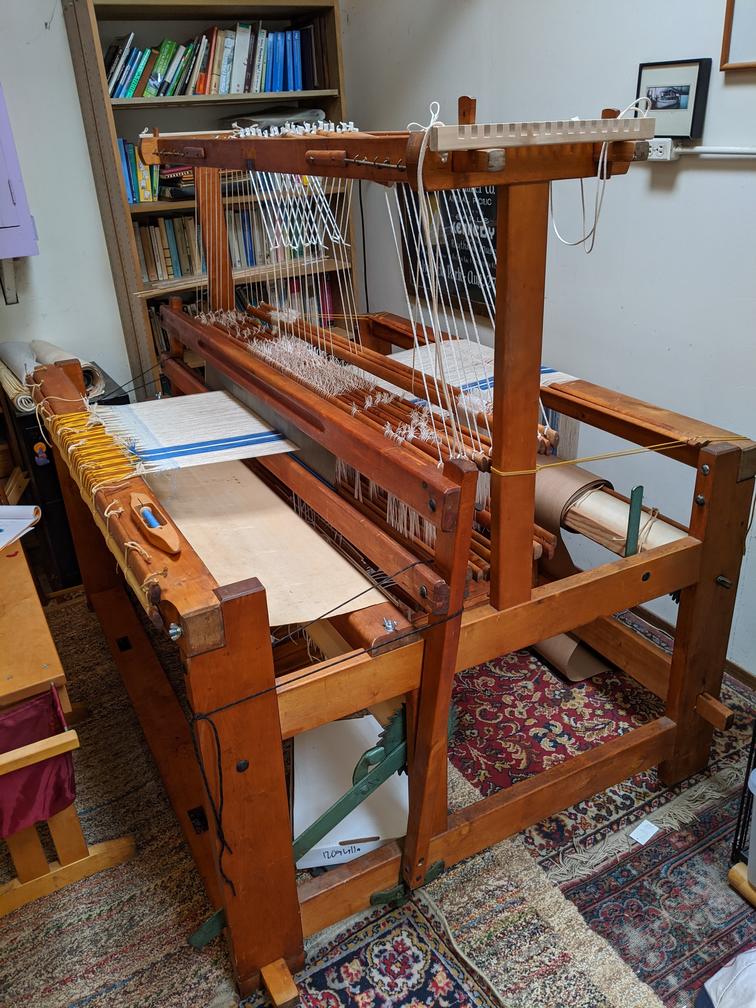
I assembled my 12-shaft countermarch loom and it seems to work well. I still need to tweak the tie-up to get a clean shed.

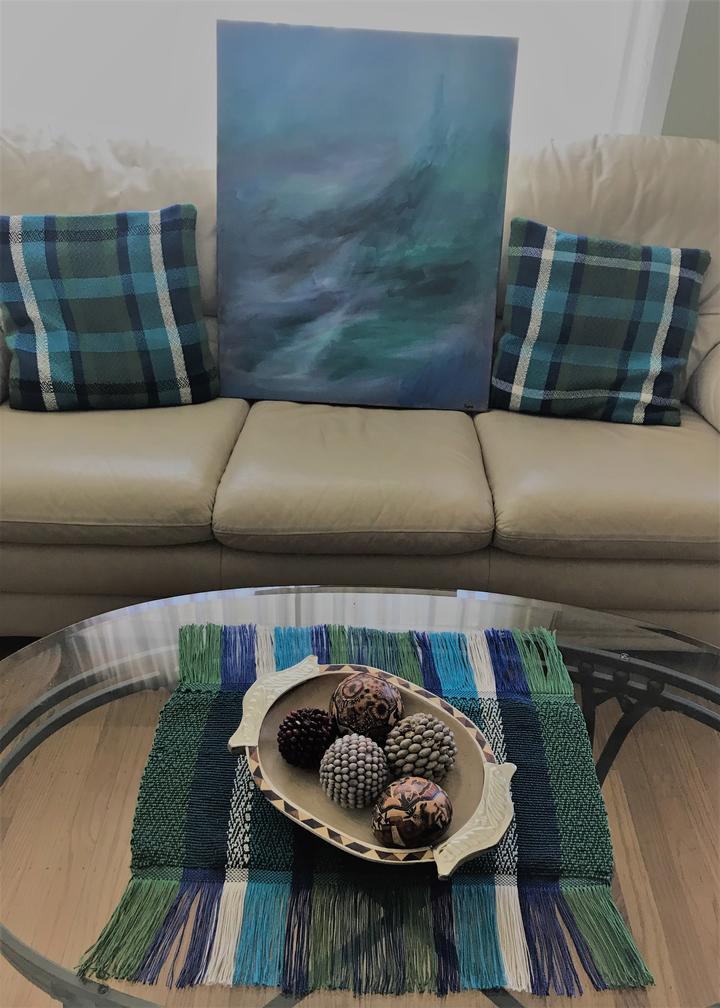
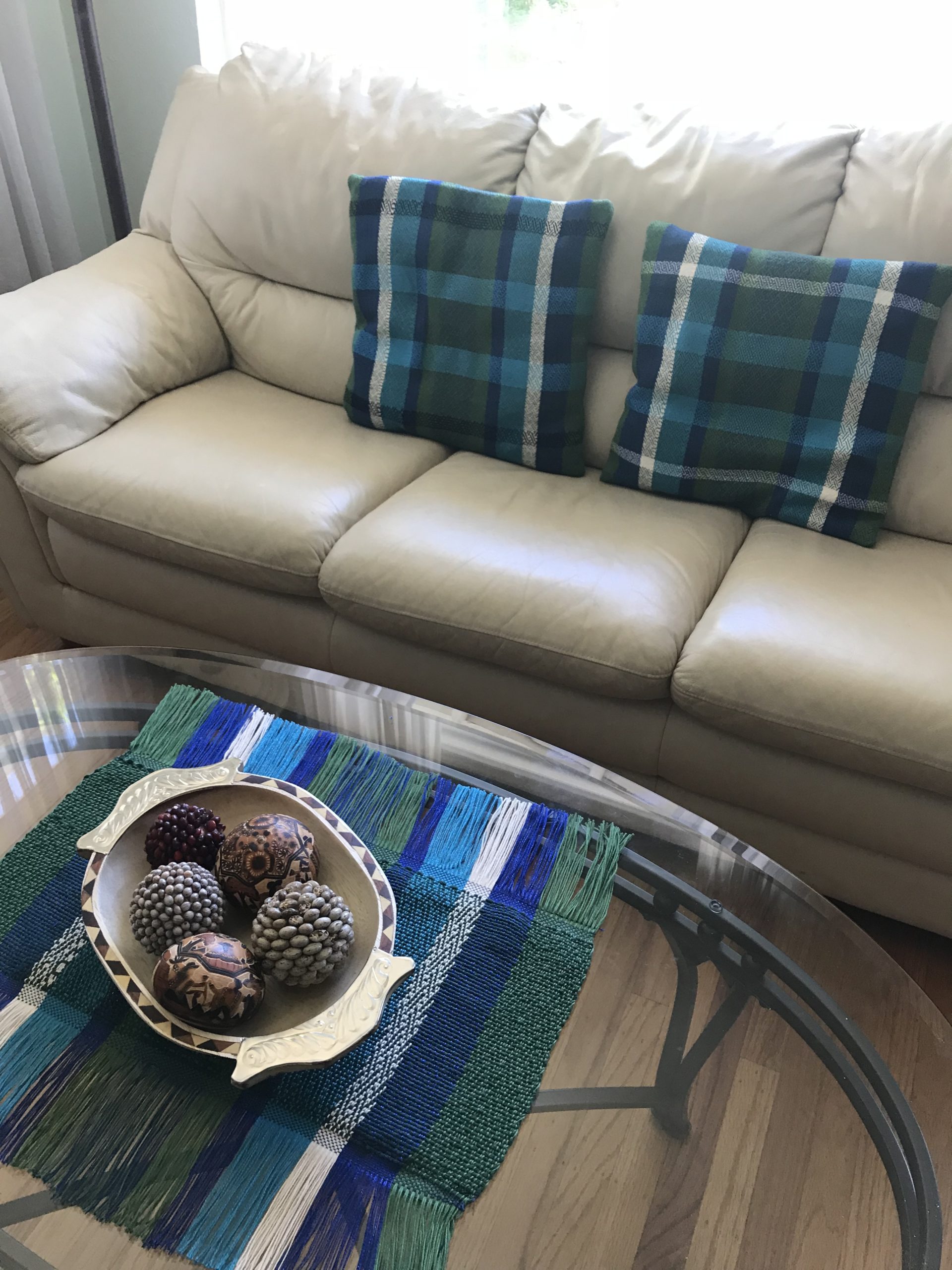
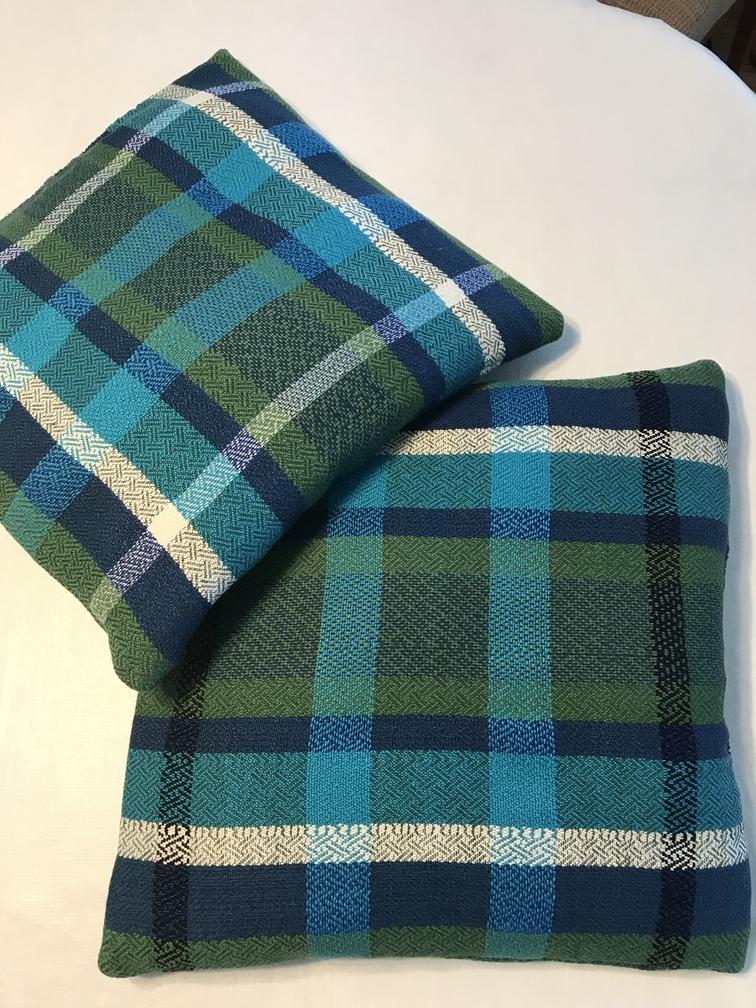
Johanna: Pillows matching a painting


These pillows were created on my 8 harness loom and it is a Strickler Plaited Twill pattern all in cotton. The pillows were made for my couch in the living room where the painting my girl friend made for me is displayed nearby.


Anonymous: Mystery warp, mostly 20/2 cotton, some linen

Betsy: Jacket and Vest

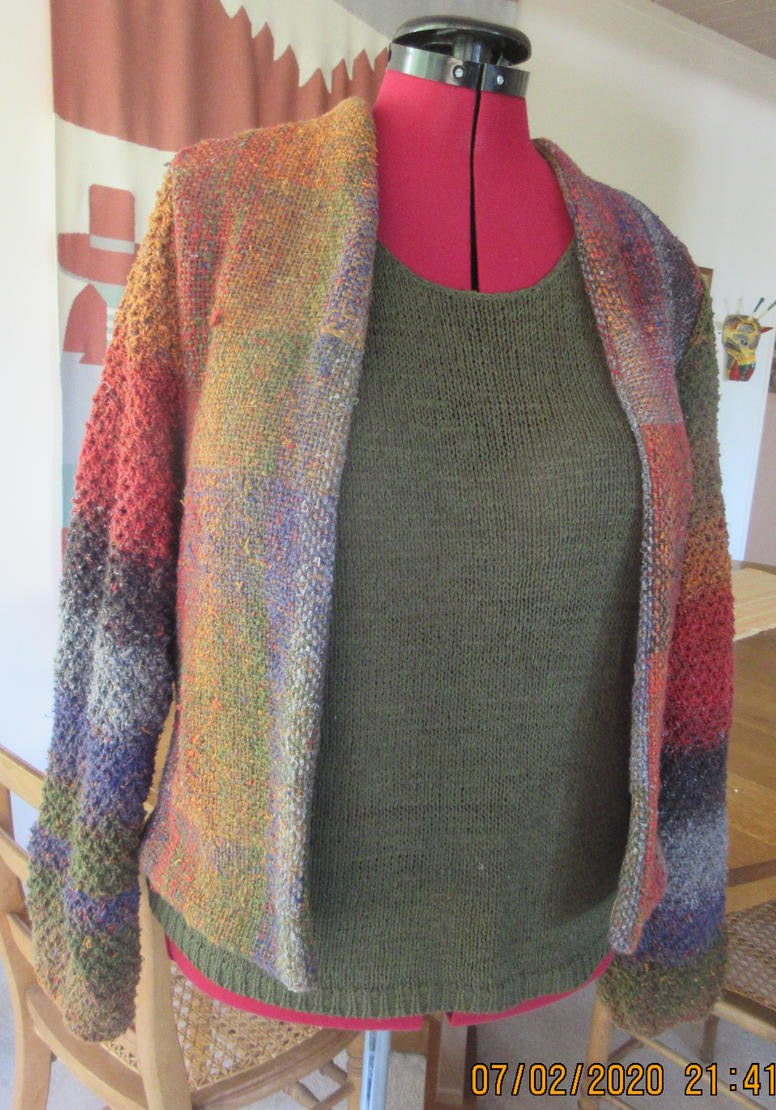
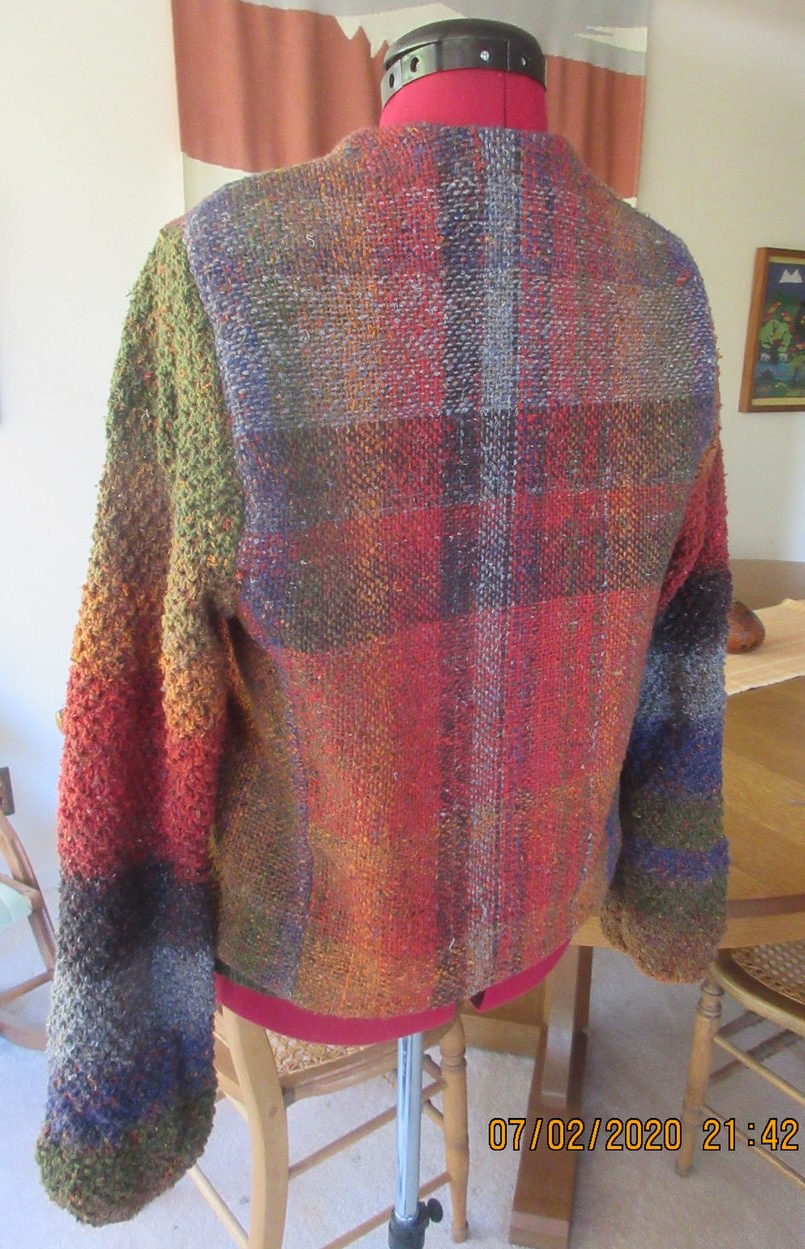
What you see is a “jacket” made from some weaving and knitting I must have picked up at an estate sale. (Or maybe someone in the guild did it. I have no idea where I picked it up.) The assembly – and colors – are mine; the knitting and weaving belong to someone else. The body is plain weave, probably done on a rigid heddle (about 20″ wide), and the colors make a wonderful plaid. The sleeves are moss (seed?) stitch, and when this yarn is knitted, it comes out as stripes.


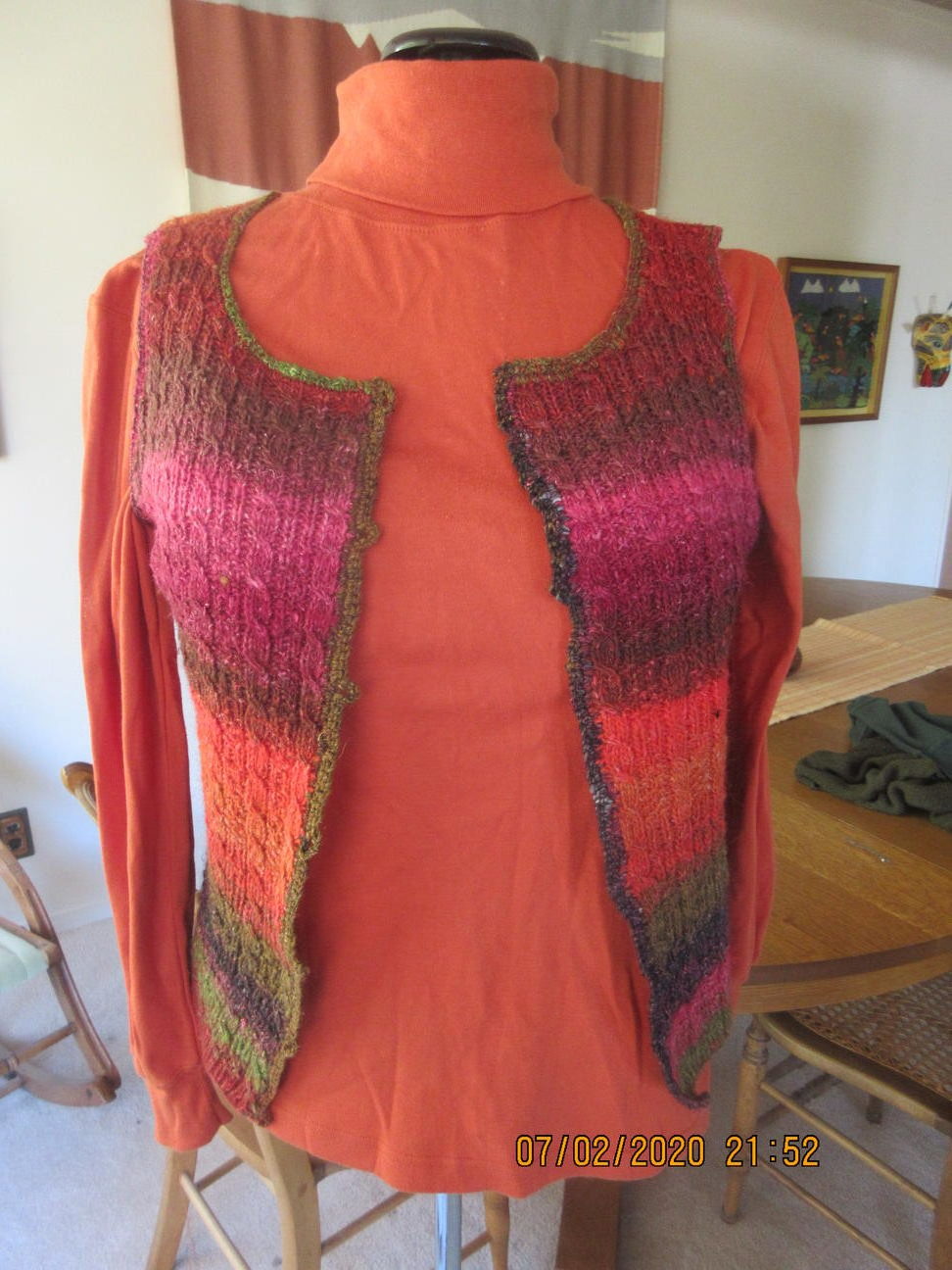
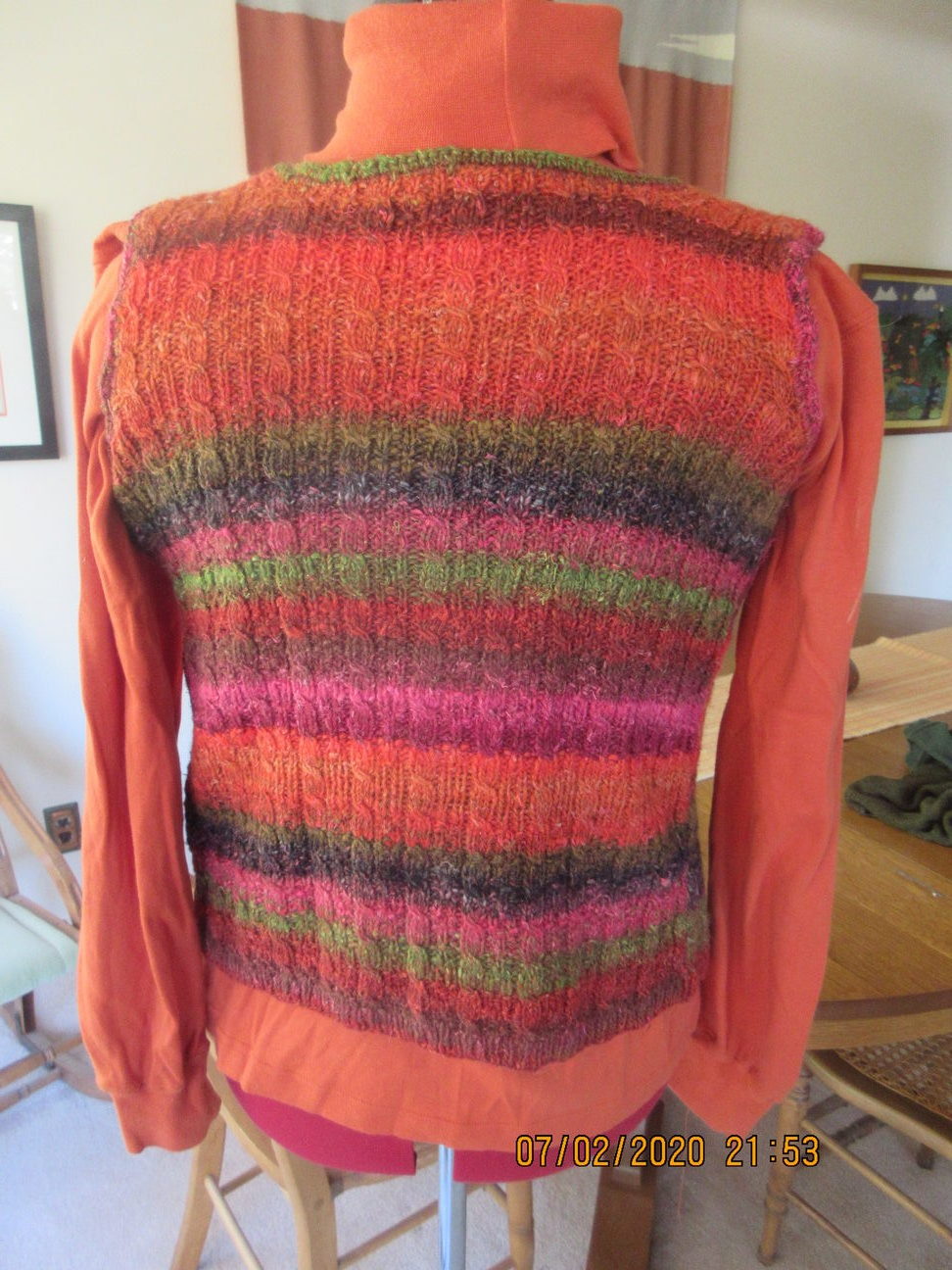
Here is my third “sweater” knitted during shelter in place. It is a vest made with Noro yarn picked up at Fengari in Half Moon Bay. I believe it is Noro’s pattern, too, although it may be Fengari’s.


Mug Exchange – A Black Sheep Tradition

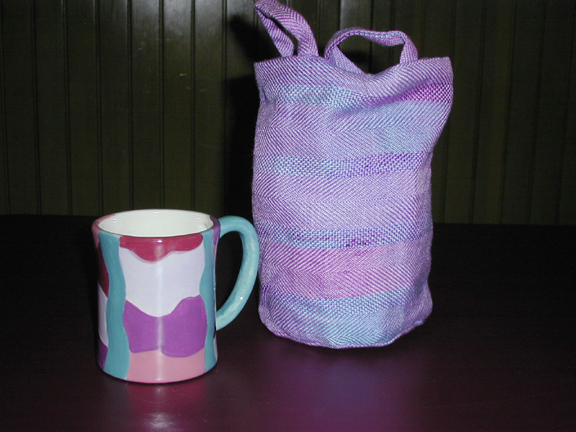
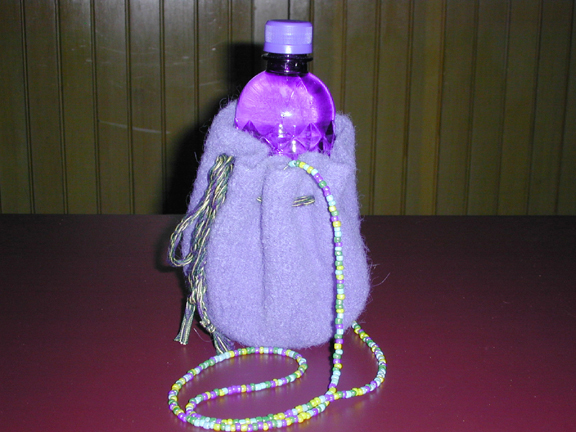
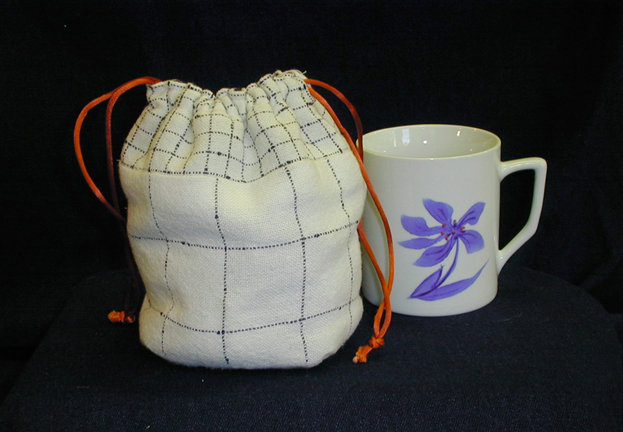
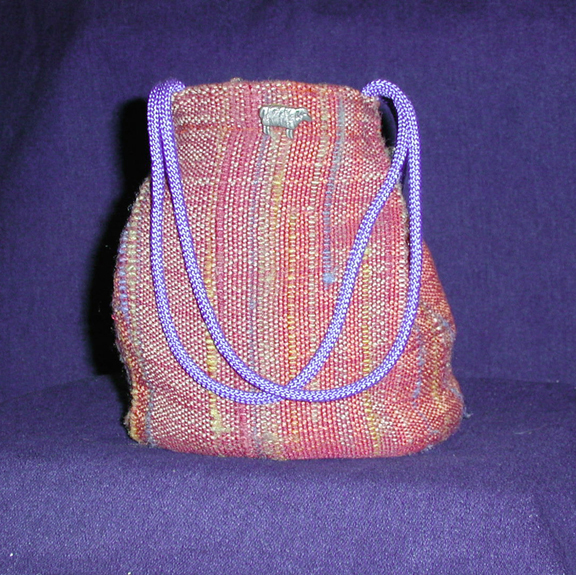
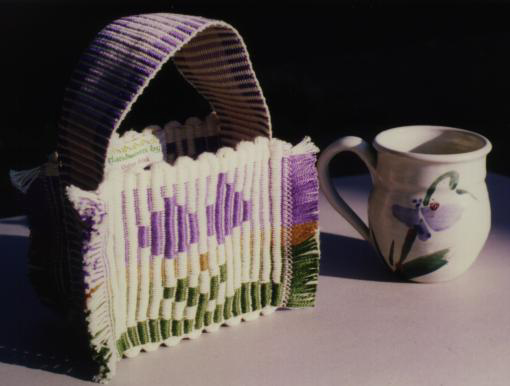
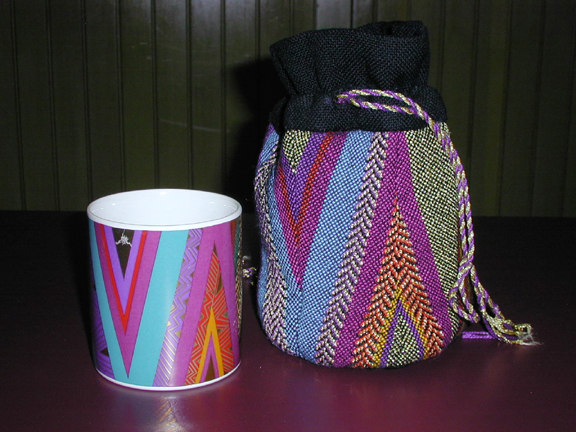
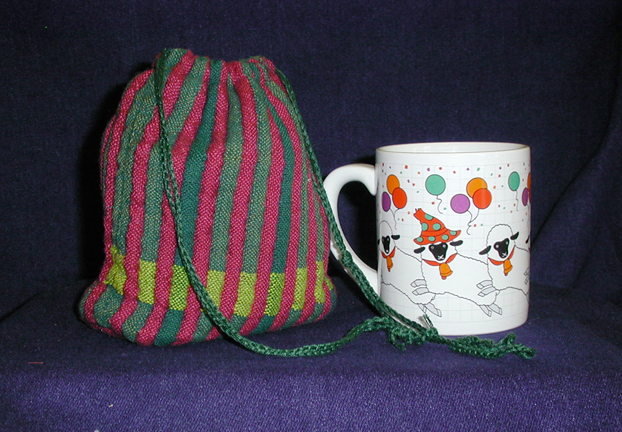
Black Sheep has the tradition of caring for the environment. One small thing we can all do is to bring a mug to the guild meeting and avoid using a disposable cup. For many years in the past, members exchanged mugs and created mug carriers. Some people got very creative and matched the design with the given mug. To give you ideas here are some pictures.


Show and Tell, June 2020

John:   Loom and scarf

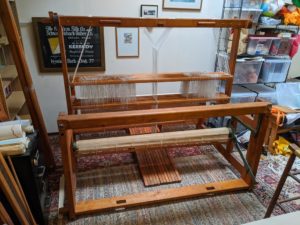
I found this 12-shaft countermarch loom a couple of months ago on Craigslist and only just recently cleared out enough space to set it up. I just need more texsolv cord for the tie-up. Eventually I will expand it to 16 shafts and maybe make a DIY electronic dobby.
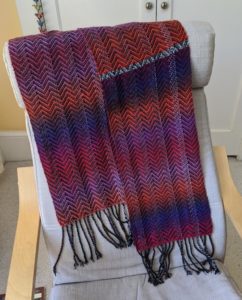
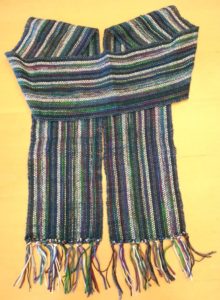
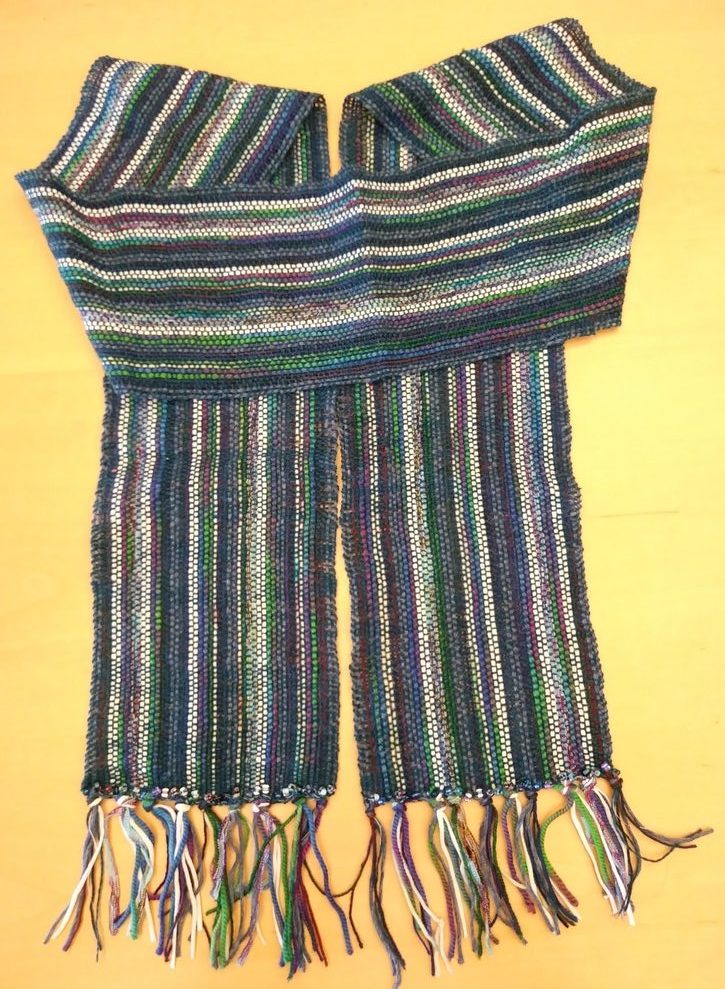
I’m taking Tien’s stash scarf online class.

The threading is similar to the broken twill threading in Carol Strickler’s book “8-Shaft Patterns” but not quite like anything in her book. It started out as a four-shaft broken twill, but spread out to eight shafts. I’m using the tie-up from Tien’s class. So the pattern is a mashup.

The weft is Crystal Palace Mini Mochi and the warp is various fingering weight wool yarns.


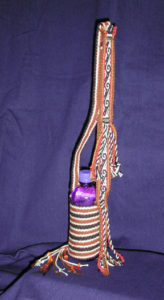
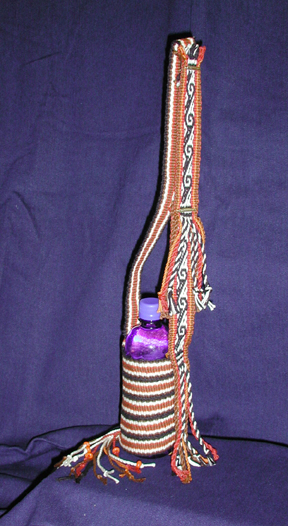
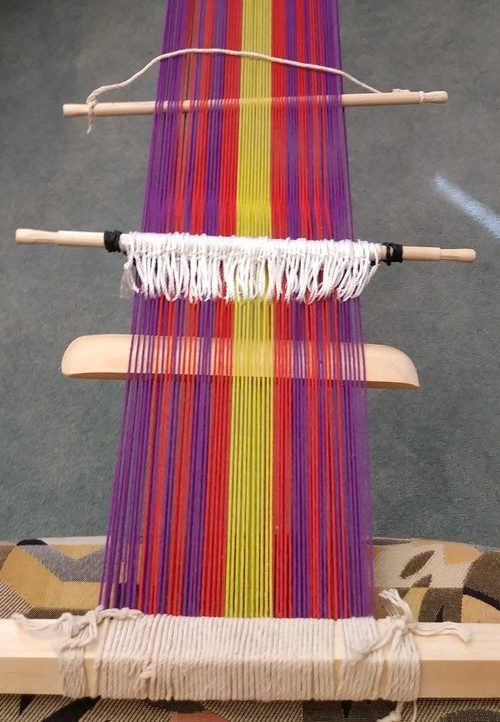
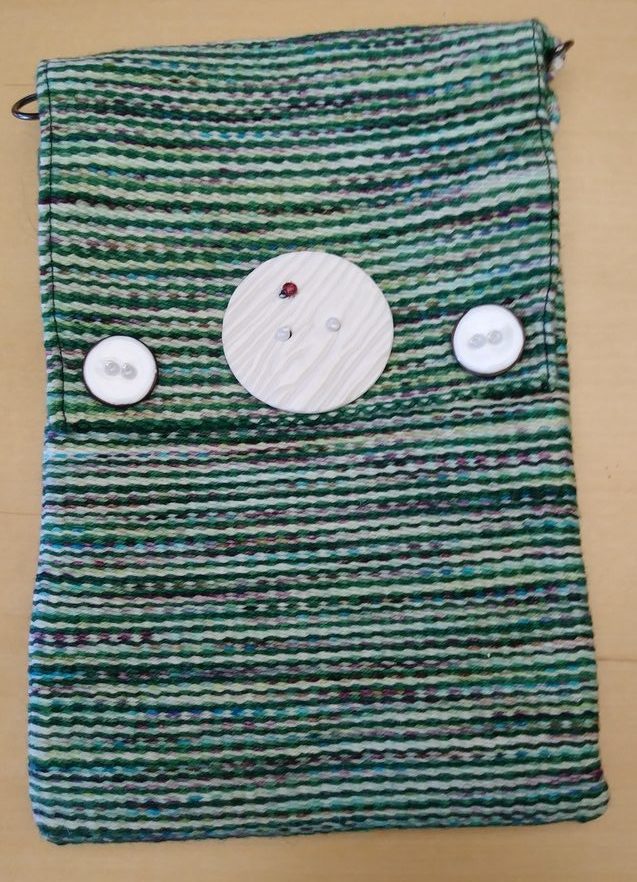
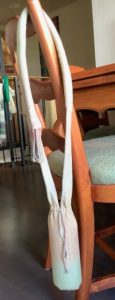
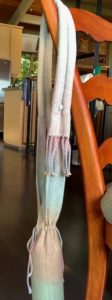
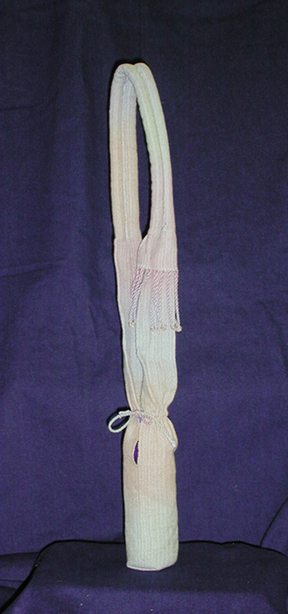
Kitty:  Water bottle holder exchange with Sandra Rude

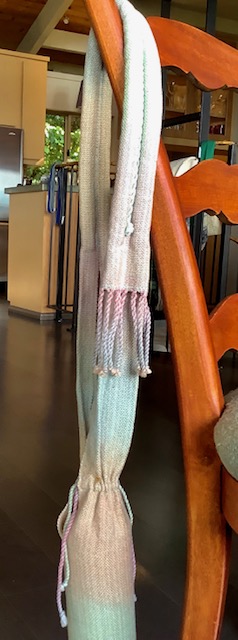
Sandra’s bottle holder is a double weave, padded for the shoulder, and has beautiful attention to detail.

Kitty’s bottle holder is Andean backstrap weaving with plain weave and a traditional motif in pebble weave.


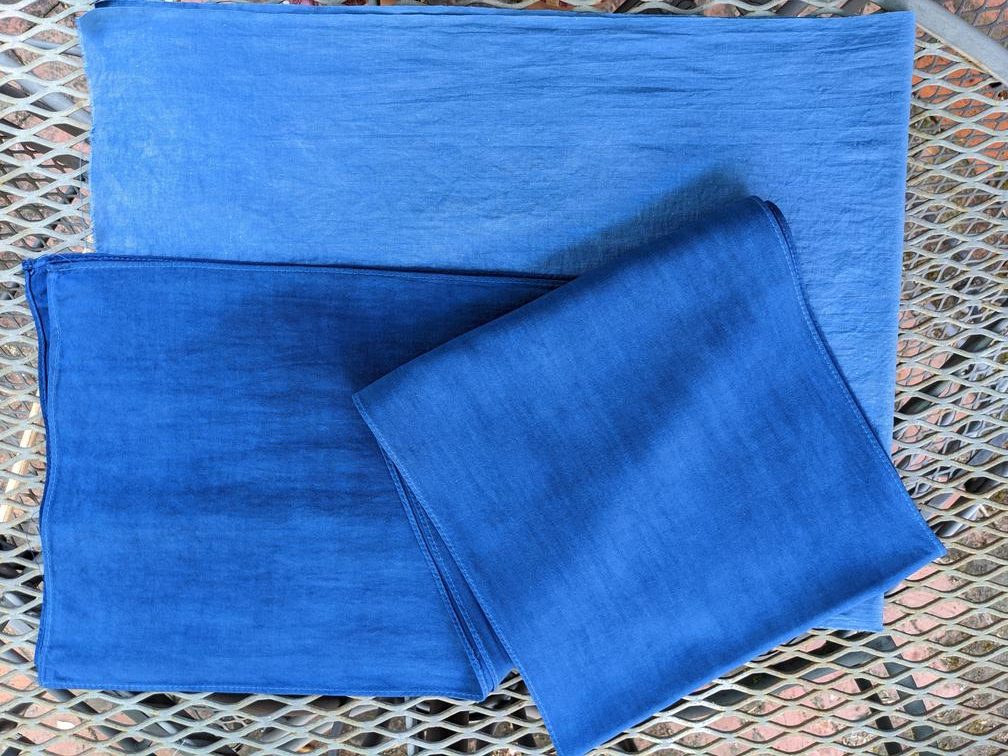
Ann: 3 day online indigo workshop with Aboubakar Fofana
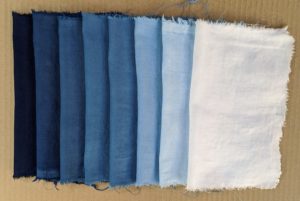
 

He had us work on creating 7 shades of blue from our vats.
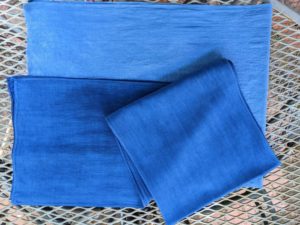


Then taught us how to create even colors on large pieces.
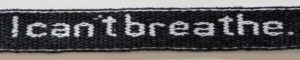


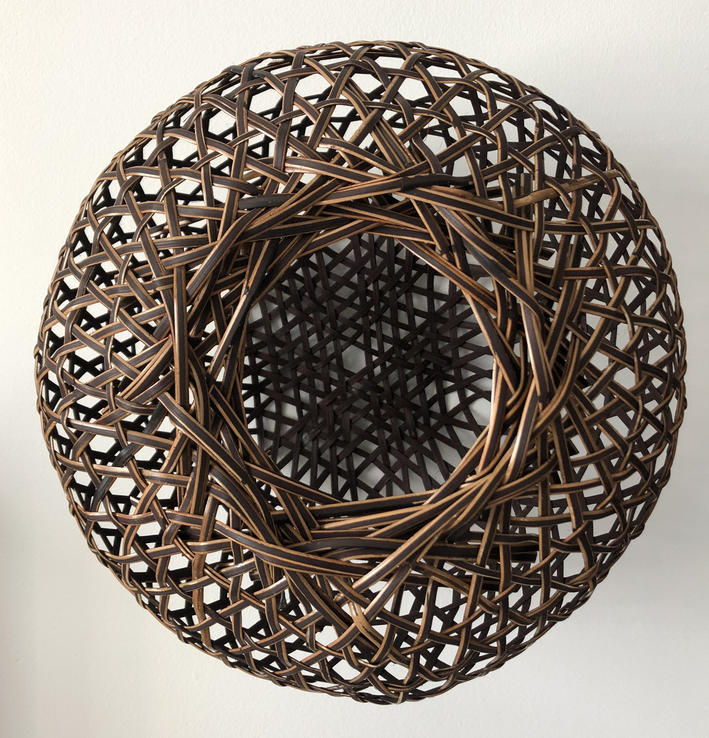
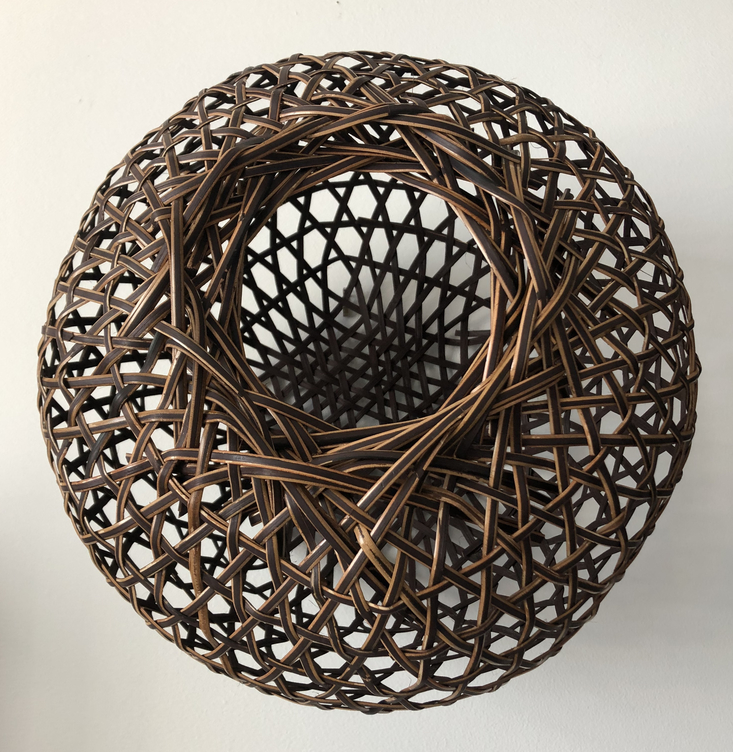
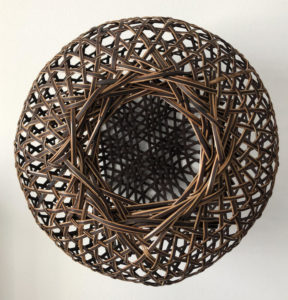
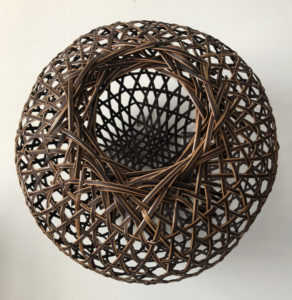
Barbara S:    Hex plaited Globe – 14 x 14 x 14″,  dyed Sedori cane.

I hung it on the wall and like the view to the base. I am not sure just where this one will go next, but the shape is nice as it is.
 

Barbara O:    I bought the Glimakra when I knew nothing about weaving – it was a good deal! It is wonderful to weave on once it is set up! But the counterbalance is much easier than countermarche to tie up. Glad I tried it!
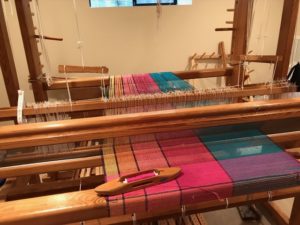
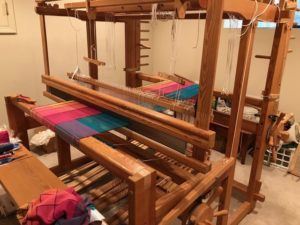
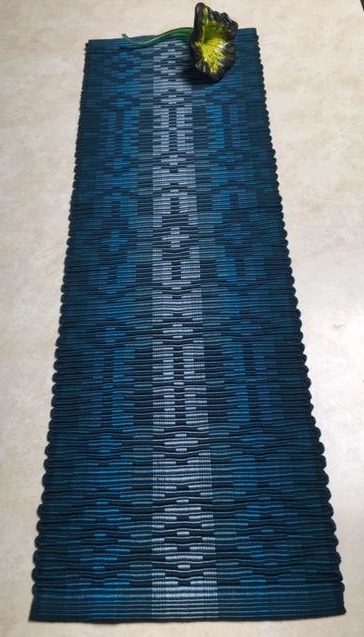
On the loom is a shawl-warp in 8/2 cotton and weft is Zephyr – 50% Merino, 50% silk.
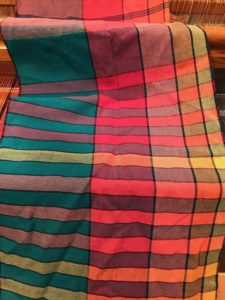
This piece is all 8/2 cotton – dish towels

Cathy D:  Felted Flower Bowl
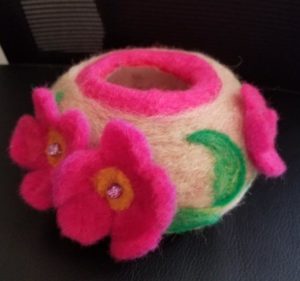
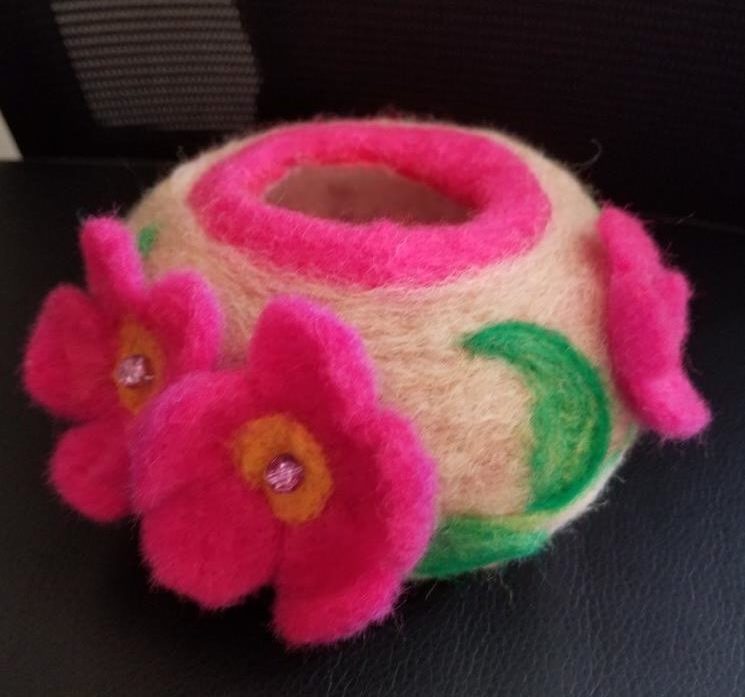
My process was to wet felt the basic bowl and pink rim. I added the green leaves by needle felting them onto the outside along with touching up the pink rim. The flowers were cut from a felted fabric I made and then attached by needling them to the outside. Beads were added to each flower for interest.
It was a fun project. I really like adding beads to felted items. It’s given me many more ideas!


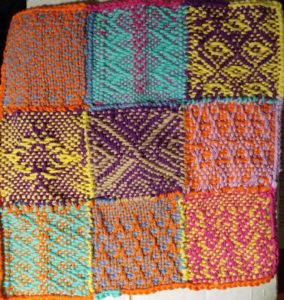
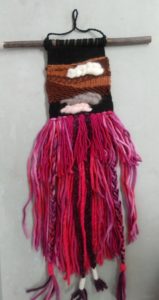
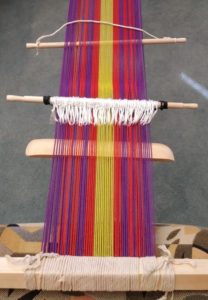
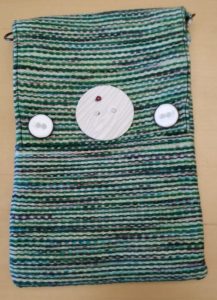
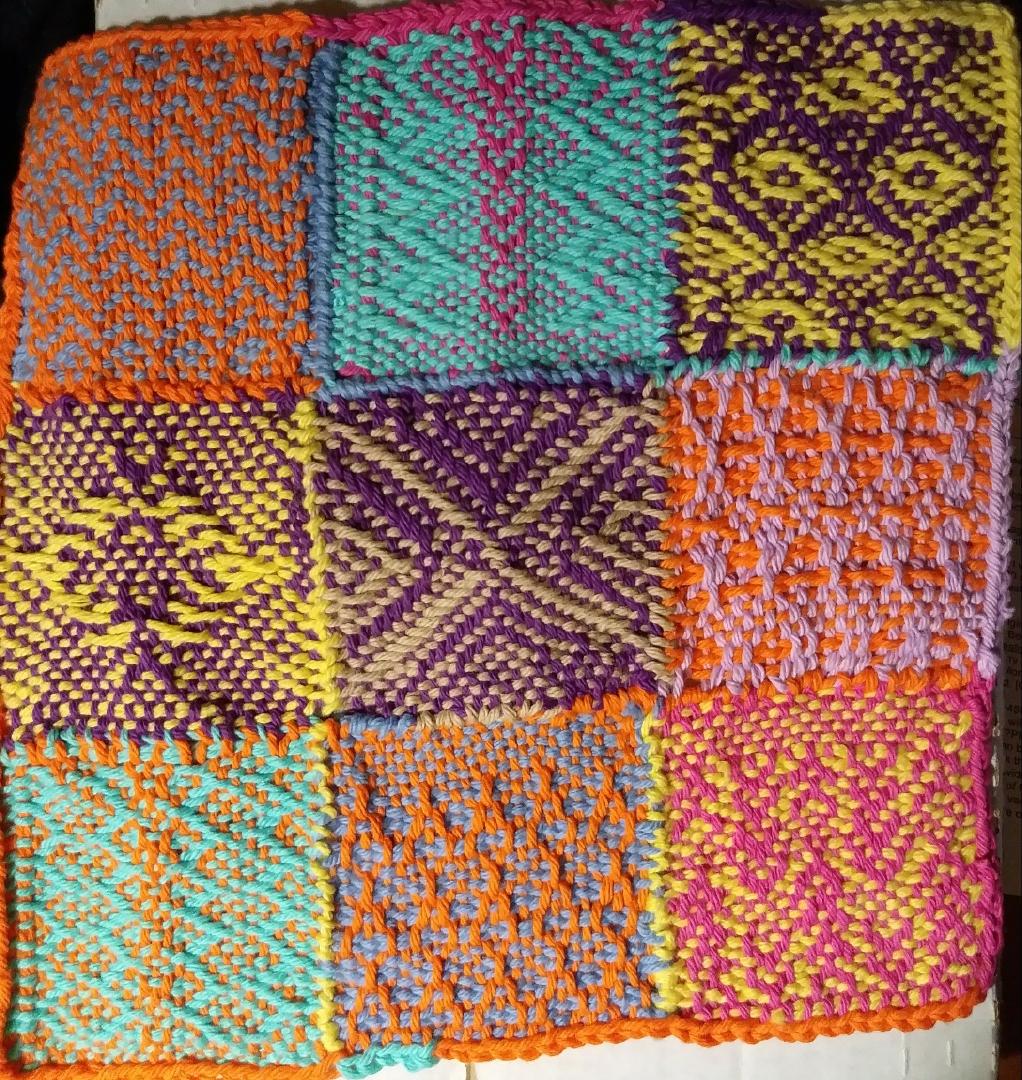
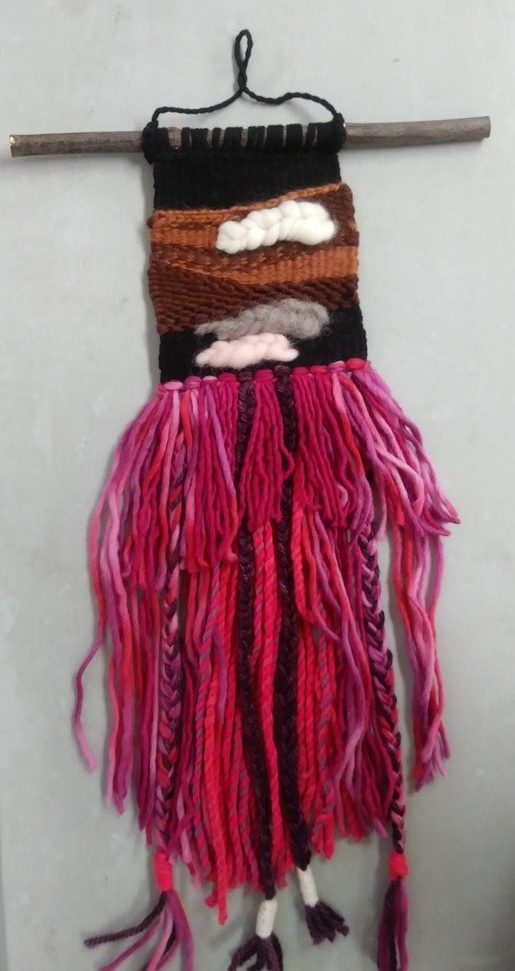
Cookie: 9 Squares for Bojo Bag,  a Tapestry, Back Strap Loom, a Pouch and a Scarf